Trump Funnels Billions Into ICE Expansion, Sparking Fears of a Personalized Enforcement Force
The Trump administration is quietly overseeing one of the most aggressive expansions of federal law enforcement power in modern American history, transforming U.S. Immigration and Customs Enforcement into what critics warn is a highly politicized, militarized force increasingly loyal to the president rather than to neutral rule-of-law principles.
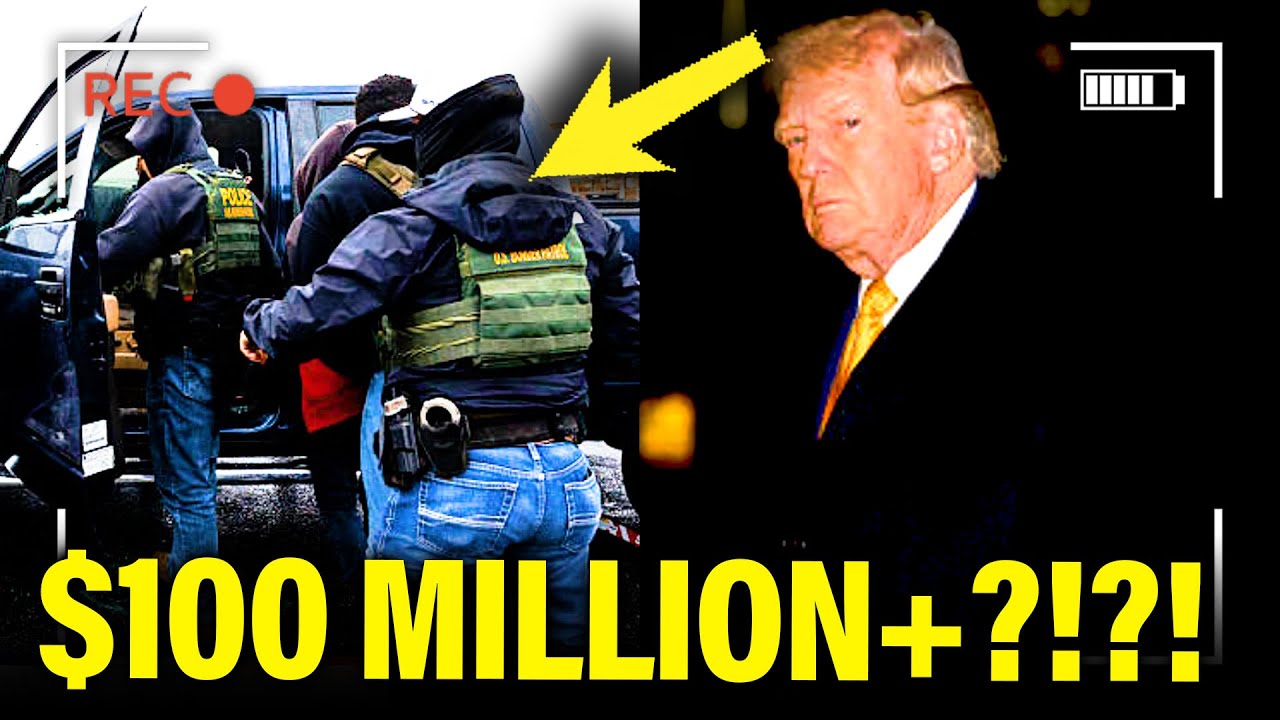
At the center of the controversy is a massive recruitment and funding blitz. ICE is backed by a $100 million advertising campaign and an estimated $77 billion in new congressional funding tied to immigration enforcement and detention. The stated goal is to hire roughly 14,000 new officers in a single year—nearly doubling the agency’s enforcement arm—while dramatically accelerating deportations nationwide.
According to the Department of Homeland Security, more than 2.5 million undocumented immigrants have left the United States since early last year, including over 605,000 deportations and nearly 1.9 million alleged “self-deportations.” President Trump has framed these figures as proof of success, while openly pushing for an even more expansive campaign targeting between 11 and 14 million people.
But data complicates the administration’s narrative. A June report from the libertarian Cato Institute found that only about 7 percent of individuals booked by ICE had serious or violent criminal convictions. The overwhelming majority—roughly 93 percent—either had nonviolent records or no criminal convictions at all, raising questions about the stated focus on public safety.
Internal planning documents have intensified those concerns. ICE’s recruitment drive has reportedly been described internally as “wartime recruitment,” language that alarms civil rights advocates and historians who say it reframes immigration enforcement as a national survival struggle rather than a civilian legal process. Recruitment materials increasingly depict deportation work as a “sacred duty,” often portraying immigrants as invaders or predators rather than people navigating civil immigration law.
The agency’s advertising strategy reflects that shift. ICE has deployed geo-fenced digital ads at gun shows, UFC events, NASCAR races, and near military bases, while paying millions to influencers in tactical fitness and military-lifestyle online spaces. New recruits are being offered incentives rarely seen in civilian federal agencies, including signing bonuses of up to $50,000, student loan repayment packages reaching $60,000, and fast-tracked hiring decisions.
Marketing experts and sociologists warn that such messaging risks attracting applicants motivated by ideology and confrontation rather than professional public service. They argue that combative rhetoric wrapped in patriotic symbolism tends to appeal to individuals seeking authority and sanctioned aggression—particularly when enforcement is framed as combat.
On the ground, ICE’s evolving tactics are fueling further alarm. Immigration arrests have surged since Trump’s return to office, with documented cases of masked agents conducting surprise detentions in public spaces and near workplaces. Detainees are often moved rapidly across jurisdictions, limiting their ability to contact family members or legal counsel.
Civil rights organizations argue these practices deliberately blur the line between lawful arrest and enforced disappearance. A ProPublica investigation found that more than 170 U.S. citizens have been mistakenly detained by immigration agents, in some cases kicked, dragged, or held for days. Democratic lawmakers and state officials, including Minnesota Governor Tim Walz, have publicly compared ICE’s evolving methods to historical secret police forces, citing unmarked vehicles, lack of visible identification, and restricted oversight.
Those fears are compounded by growing barriers to congressional scrutiny. Several members of Congress report being blocked from inspecting ICE detention facilities despite statutory authority to do so. Critics say the agency is becoming increasingly insulated from oversight while operating under direct political direction from the White House.
The symbolism embedded in ICE recruitment materials has also drawn scrutiny. Posters and AI-generated imagery frequently invoke frontier mythology and classical figures celebrating territorial dominance, while omitting the violence historically associated with expansion. Scholars who study extremist movements note that similar imagery has long been used by white nationalist groups to frame demographic change as an existential threat.
The administration has dismissed such criticism as exaggerated, but the policy trajectory is clear. Enforcement has been prioritized over expanding legal immigration pathways, and detention numbers are reaching record highs. Employers are being warned to prepare for a sharp rise in workplace raids, I-9 audits, and compliance penalties, threatening disruption across industries reliant on immigrant labor.
Ultimately, critics argue this is not merely a bureaucratic expansion. They see the construction of an enforcement apparatus increasingly personalized to one leader’s political vision—an agency whose power, messaging, and operational style resemble authoritarian models more than traditional American law enforcement.
Whether Congress and the courts will successfully reassert oversight remains an open question. What is clear, civil rights advocates warn, is that the normalization of mass detention, dehumanizing rhetoric, and ideologically driven enforcement marks a profound test of democratic norms—one with consequences that will extend far beyond immigration policy itself.