When “America First” Becomes an Unanswered Question: Jim Jordan’s Remarks and Congress’s Crisis of Authority
Washington —
For years, Donald Trump’s “America First” slogan was promoted as a clear and simple promise: avoid endless foreign wars, focus government resources on Americans at home, and end what Trump repeatedly described as reckless global interventionism. Yet recent public remarks by Trump’s top allies in Congress—most notably Representative Jim Jordan of Ohio—have begun to transform that slogan into an unresolved and increasingly contradictory question.
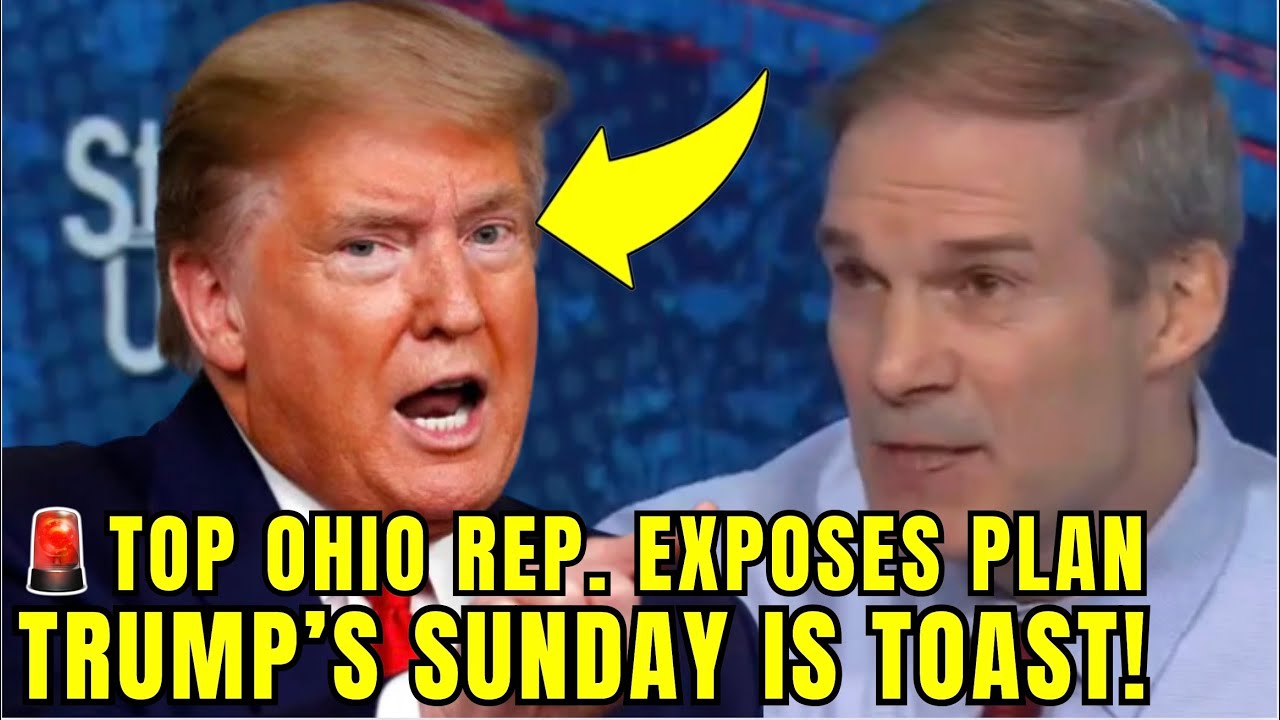
In a televised interview that spread rapidly across American social media platforms over the past 24 hours, Jordan, the chairman of the House Judiciary Committee, forcefully defended President Trump’s approach to Venezuela. When asked directly about the possibility of deploying U.S. troops and Trump’s public claim that the United States would now be “running” Venezuela, Jordan offered little in the way of policy analysis or strategic explanation. Instead, he returned again and again to a single line: “I trust the president.”
For critics, that repetition was precisely what made the exchange so revealing.
The Erosion of the “America First” Argument
Jordan argued that Trump’s actions were justified by the need to confront what he described as a “narco-terrorist criminal operation” and to protect Americans from fentanyl trafficking and the growing influence of China and Iran in the Western Hemisphere. But the interviewer quickly pushed back, noting that fentanyl does not primarily originate from Venezuela and that the drug crisis is far more complex than any single military action could resolve.
That moment quickly circulated on X (formerly Twitter), YouTube, and cable news highlight reels, where political analysts argued that Jordan had inadvertently underscored the widening gap between Trump’s campaign rhetoric and his governing reality. Trump once vowed to end “stupid wars.” Now, according to Jordan’s own words, the president is “totally open” to putting American boots on the ground in South America—and signaling that other countries in the region could follow.
“I Trust the President” and a Silent Congress
Shortly after Jordan’s appearance, Representative Jim Himes, a Democrat who serves alongside him on the same committee, went on air and delivered a sharp rebuttal. Himes suggested that Jordan had effectively “given the game away” regarding how Congress currently functions under Trump’s influence.
“This is an imperial adventure,” Himes said. “And the only answer we’re getting from the chairman of the House Judiciary Committee is, ‘I trust the president.’”
Himes argued that such deference represents a fundamental abandonment of Congress’s constitutional role. The American system, he emphasized, is built on checks and balances—on lawmakers approaching any president, regardless of party, with skepticism, oversight, and restraint. Instead, he warned, much of Congress now appears to measure its success by displays of personal loyalty rather than institutional responsibility.
Clips of Himes’s remarks quickly gained traction online, with many viewers commenting that the legislative branch seemed to be voluntarily shrinking its own authority.
Social Media and the Question of Power

Across American social media platforms, particularly X, journalists, legal scholars, and former government officials framed Jordan’s comments as part of a broader pattern within Trump’s political orbit. In that ecosystem, they argued, personal loyalty to the president increasingly outweighs allegiance to constitutional norms.
Names such as Stephen Miller, JD Vance, Steve Bannon, Pam Bondi, and Tom Homan frequently surfaced in these discussions, portrayed by critics as architects of a political project aimed at consolidating power in the executive branch. According to those critics, the issue is not Venezuela alone, but a sustained effort to weaken the independence of Congress and the judiciary in favor of a presidency with minimal constraints.
A President—or a Chief Executive Officer?
Trump has long cast himself as a businessman uniquely qualified to “run the country like a company.” Supporters praise that framing as evidence of decisiveness and efficiency. But critics argue that the analogy breaks down when applied to foreign policy and military power.
A nation, they note, is not a corporation that can be acquired, restructured, or managed through unilateral directives. Decisions involving sovereignty, war, and international law demand transparency, debate, and consent—especially from Congress. In this context, Jordan’s remarks did not so much shield Trump as they exposed the extent to which congressional oversight has faded from view.
An Unanswered Question
Perhaps the most unsettling moment of the interview came when Jordan was asked what comes next. After declaring the Venezuela operation a success, he offered only a vague response: “We’ll see.”
For many analysts, that uncertainty is the core of the problem. In a democracy, “we’ll see” is not an adequate answer to questions about military engagement, taxpayer costs, or the long-term consequences of American power abroad. Yet that ambiguity—broadcast live on television and amplified across social media—has become emblematic of the current moment.
What troubles critics most is not merely what has happened in Venezuela, but what Jordan’s comments suggest about the future. As “America First” continues to collide with an increasingly expansive vision of presidential authority, a growing number of Americans are left asking whether an independent Congress still exists—or whether it has chosen, quietly and willingly, to step aside.