Washington — The assertion arrived suddenly, wrapped in the language of breaking news and amplified across social media and partisan commentary: that the United States had carried out overnight strikes in Caracas and that Venezuelan President Nicolás Maduro and his wife had been captured. The claims, attributed to statements by former President Donald Trump and echoed by commentators, were sweeping in scope and severe in implication — amounting, if true, to a direct U.S. military action against a sovereign capital without a declaration of war.
What made the episode immediately combustible was not only the substance of the allegations, which remain unverified by independent government confirmation, but the stark contrast between the claims and Mr. Trump’s long-standing self-description as a “peace president.” During multiple campaigns, he repeatedly promised to end wars rather than start them, casting himself as uniquely capable of delivering stability through strength and deal-making.
The gap between rhetoric and the alleged action became the story.
According to the accounts circulating online, explosions were reported in Caracas shortly after 2 a.m. local time, with low-flying aircraft observed and power outages reported in some neighborhoods. The Federal Aviation Administration was said to have restricted U.S. commercial flights over Venezuelan airspace because of “ongoing military activity.” These details, while vivid, have not been corroborated by independent international reporting or official statements from the Pentagon or the White House.
Still, the claims alone were enough to trigger immediate reaction — and to revive a fundamental constitutional question: who has the authority to take the United States to war.
Under the Constitution, Congress holds the power to declare war, while presidents retain authority to conduct limited military operations under specific circumstances. Over decades, that balance has tilted toward the executive branch, often through authorizations passed after the fact. Critics argue that this drift has normalized unilateral action, even when the scale of force resembles open warfare.
If U.S. forces did strike Venezuela’s capital and detain its head of state, legal scholars say, the action would represent one of the most dramatic assertions of presidential military power in modern history. “An attack on a foreign capital and the seizure of a sitting leader would be extraordinary,” said one former national-security official. “It would demand immediate congressional review, regardless of one’s view of the Venezuelan government.”
Supporters of the alleged action framed it differently. In their telling, Mr. Maduro — widely criticized internationally for authoritarian rule, disputed elections and alleged corruption — had forfeited his legitimacy. Removing him, they argued, could be justified as a blow against criminal governance and regional instability. That argument has surfaced before in U.S. foreign policy, often with mixed or disastrous results.
Veterans and former intelligence officials quoted in the commentary you provided expressed deep skepticism. Several warned that even a technically precise operation could trigger cascading consequences: civilian casualties, retaliatory violence, regional destabilization and a rally-around-the-flag effect inside Venezuela. History, they argued, offers repeated examples of interventions that removed leaders without dismantling the systems beneath them.
The reaction among veterans was particularly pointed. Some described the alleged strike as illegal and immoral, cautioning active-duty personnel about the obligation to refuse unlawful orders — a reminder that obedience in the military is bounded by law. Such warnings, rarely issued publicly, underscored the seriousness with which some former service members viewed the claims.
Another layer of controversy involved motive. Commentators suggested that the alleged action served domestic political ends — diverting attention from legal and political pressures at home, including scrutiny over the handling of sensitive records and ongoing investigations. While such claims are speculative, they reflect a long-standing suspicion in American politics: that foreign crises can be used to reset narratives or consolidate support.
International implications loomed just as large. Even the suggestion that the United States would seize a foreign leader without multilateral backing raised alarms about precedent. Analysts warned that if powerful states normalize such actions, weaker states may conclude that international law offers little protection — encouraging arms races, preemptive strikes and alliances built on fear rather than trust.
Russia, itself engaged in an invasion of Ukraine, reportedly condemned the alleged U.S. action — a response critics labeled hypocritical but revealing. Condemnation from adversaries, allies noted, still carries diplomatic cost, particularly when it blurs moral distinctions the United States has historically relied upon.
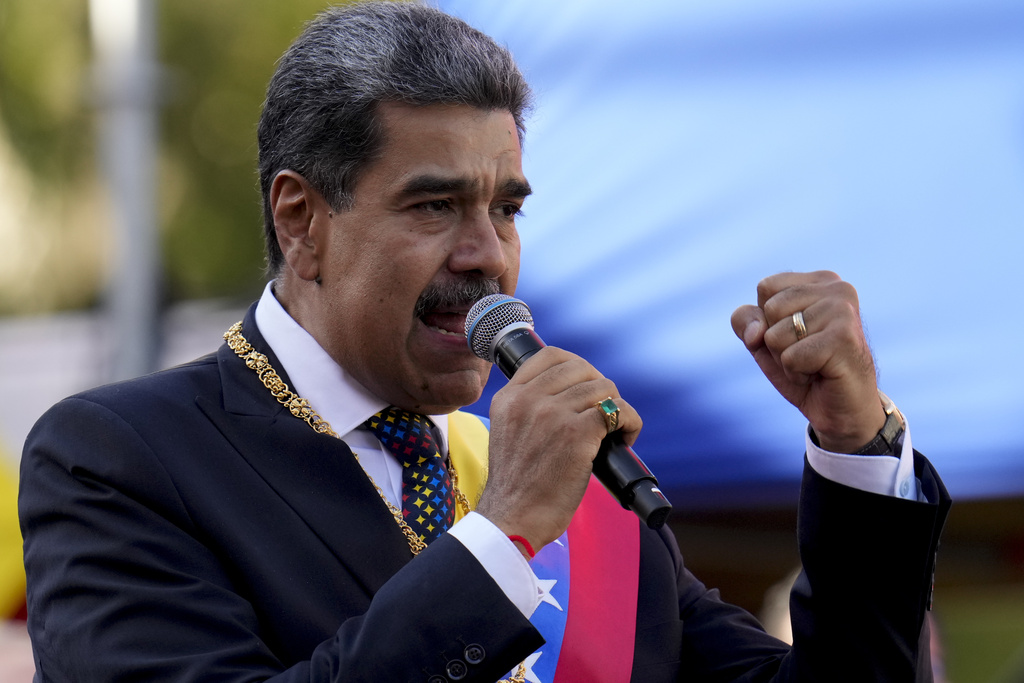
Inside Venezuela, the potential effects were uncertain. Some Venezuelans might welcome the removal of Mr. Maduro; others could view U.S. involvement as a return to interventionist patterns that have left the region wary. Political scientists note that foreign attacks often strengthen nationalist sentiment, even against unpopular leaders, and can fracture opposition movements rather than empower them.
What remained striking was the speed with which the narrative spread — and the absence of clarifying institutions. No immediate congressional address. No Pentagon briefing. No independent confirmation. In the vacuum, speculation flourished, and certainty hardened without verification.
That dynamic, experts say, is itself a warning sign. “When claims of war circulate faster than facts,” said a media scholar, “democratic accountability struggles to keep up.” In such moments, trust in institutions — already strained — can erode further, regardless of whether the claims prove true.
For Mr. Trump, the episode crystallized a contradiction that has followed him for years. His political identity has rested on rejecting the interventionism of previous administrations while projecting uncompromising strength. Reconciling those impulses has always been difficult. If he is seen — fairly or not — as initiating large-scale military action, the tension becomes unavoidable.
Congress, too, faces a test. Lawmakers previously considered — and narrowly rejected — measures aimed at restricting unilateral military action against Venezuela. If the allegations are substantiated, pressure to revisit those constraints would likely intensify. If they are not, the episode still highlights how fragile the guardrails have become.
In the end, the most consequential fact may be uncertainty itself. The claims have rattled observers not only because of what they allege, but because they expose how easily narratives of war can take hold in a polarized, media-saturated environment.
Whether the reports are confirmed, clarified or contradicted, they have already served as a stress test — of presidential credibility, of congressional authority and of the public’s ability to distinguish between verified action and viral assertion. In an era when declarations can precede evidence, the responsibility to slow down, verify and account may be the most urgent safeguard of all.