When Washington quietly circled July 1, 2026, it was never meant to be symbolic. It was designed as a pressure point—an automatic review date embedded in the trade framework that replaced NAFTA, formally known as CUSMA. Inside U.S. political circles, the assumption was blunt: Canada would face a deadline it couldn’t withstand. Markets would grow nervous, businesses would demand certainty, and Ottawa would be forced to concede rather than risk prolonged instability. The countdown was framed as leverage, and under Donald Trump, leverage was expected to do the work without open confrontation.
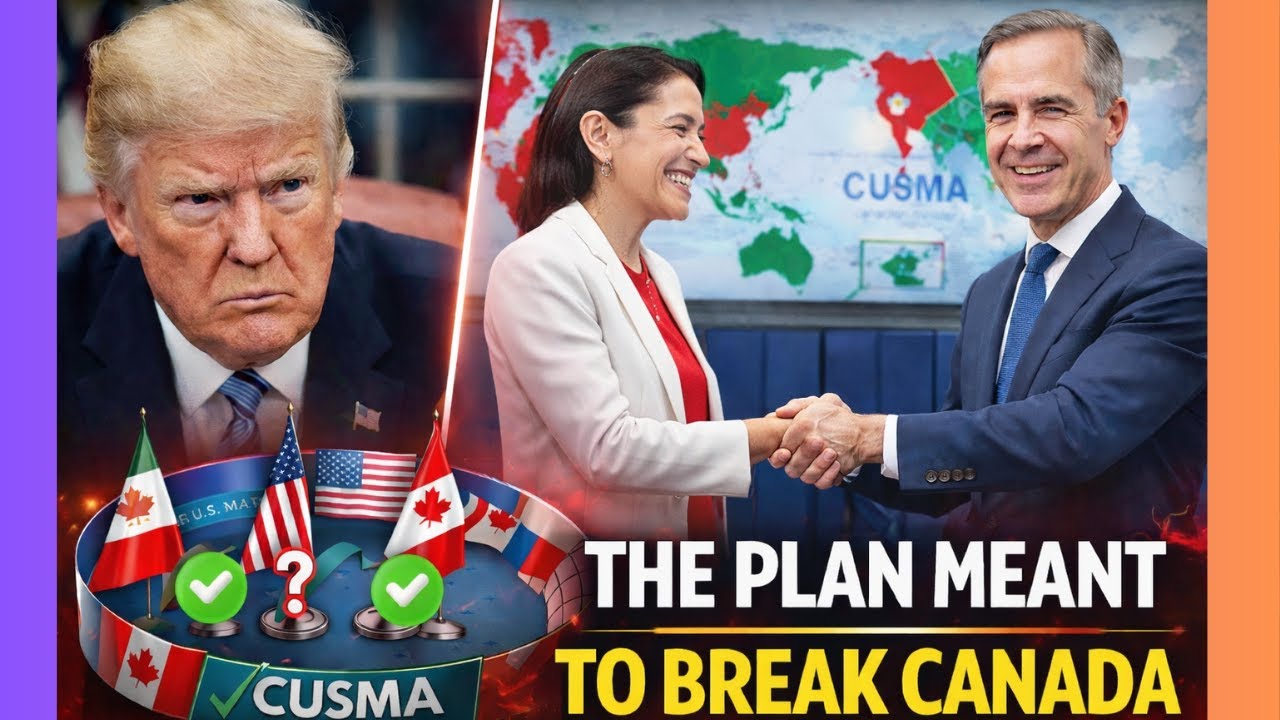
That expectation is now being quietly questioned. Instead of visible panic, Canada spent the years leading up to the review preparing for outcomes Washington assumed were unthinkable. While public messaging remained calm, policy signals began shifting beneath the surface. Trade diversification accelerated. Infrastructure investment focused on east–west corridors rather than the traditional north–south dependency. Energy, critical minerals, and logistics planning increasingly reflected a world where access to the U.S. market could no longer be treated as unconditional. These moves were not announced as defiance, but as insurance.
The review mechanism itself sits at the center of the controversy. On paper, it appears procedural: all parties meet, assess the agreement, and decide whether to extend it. In practice, it introduces rolling uncertainty if consensus is not reached. The deal does not collapse immediately, but it enters a cycle of repeated reviews, leaving investors unsure whether long-term commitments make sense. For manufacturing, supply chains, and capital-intensive industries, that uncertainty can be more damaging than a one-time shock. It was this psychological pressure that Washington expected to exploit.
Yet the political environment in the United States has complicated that strategy. Signals emerging from United States Congress suggest growing unease with prolonged brinkmanship. Lawmakers from border states and manufacturing-heavy regions are increasingly sensitive to the risk that trade instability could hurt their own economies. Auto production, agriculture, energy flows, and tourism all depend on predictable Canada–U.S. relations. Even without formal votes, hesitation and delays inside Congress have begun to slow the momentum of aggressive escalation, creating the perception that the pressure campaign is not as unified as it once appeared.
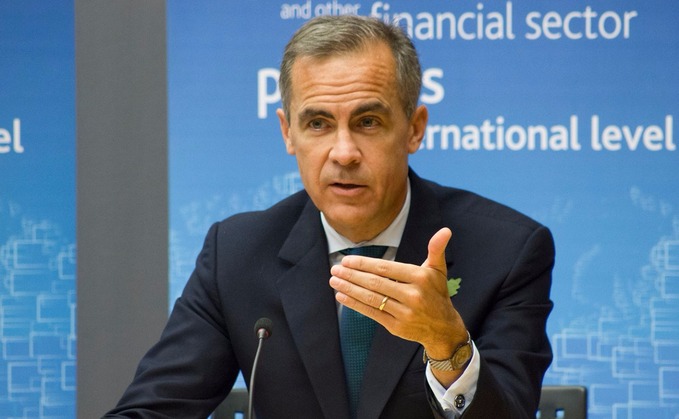
This is where the role of Mark Carney becomes central to the narrative. Rather than attempting to negotiate away leverage, his approach has been widely interpreted as an effort to neutralize it. By reducing structural dependence, Canada gains the ability to tolerate outcomes that were previously considered unacceptable. Analysts emphasize that this does not make trade conflict painless, but it changes the balance of risk. A country that can absorb uncertainty negotiates differently from one that cannot.
The miscalculation, critics argue, lies in the assumption that Canada needs the United States far more than the reverse. While export figures often support that claim at a surface level, they obscure how deeply integrated the two economies are. Canadian electricity powers parts of the northern U.S. grid. Energy and refined products move seamlessly across the border. Auto components cross multiple times before final assembly. Disrupting these systems would not isolate pain on one side—it would ripple outward, raising costs and creating political pressure domestically.

Uncertainty, rather than outright collapse, now looms as the most destabilizing outcome. For American businesses, endless review cycles make long-term planning difficult. For Canada, living with uncertainty has become more survivable due to diversification efforts already underway. This asymmetry is reshaping how the 2026 deadline is perceived. What was meant to function as a one-sided threat is increasingly viewed as a shared vulnerability, one that Washington cannot deploy without consequence.
As July 2026 approaches, the countdown has taken on a different meaning. Instead of forcing submission, it has exposed the limits of pressure-based trade politics in a world where alternatives, while imperfect, exist. The deadline remains real, but its power is no longer assumed. In that sense, the mechanism designed to keep Canada perpetually nervous may end up revealing something far more uncomfortable for Washington: leverage only works when the other side believes it has nowhere else to go.