U.S. Intervention in Venezuela Ignites Legal, Political, and Moral Firestorm at Home and Abroad

Washington — The United States’ sudden military operation targeting Venezuela has triggered a sweeping backlash across Washington, igniting constitutional debates, public protests, and deep divisions within American politics, even as the Trump administration insists the operation was both lawful and necessary for national security.
Within hours of the strikes and the reported capture of Venezuelan leader Nicolás Maduro, Democratic lawmakers, constitutional scholars, veterans, and foreign policy experts began questioning whether the United States had crossed a legal and moral red line — one that could entangle the country in yet another open-ended conflict in Latin America.
“This is war,” Senator Rubén Gallego of Arizona, a Democrat and member of the Senate Homeland Security Committee, said in a televised interview on Sunday. “When people are shooting and shooting back, that is war. And Congress did not authorize this.”
A War Without Authorization
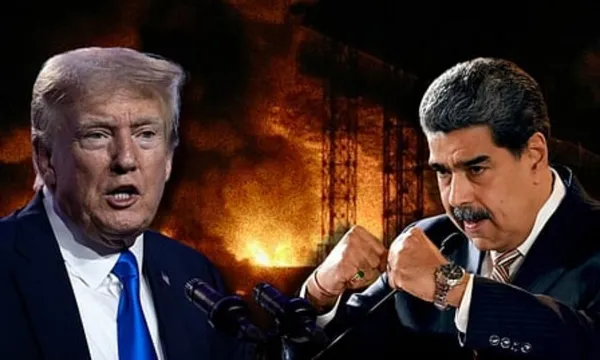
At the center of the controversy is a fundamental question: Did the president have the authority to launch large-scale military operations against Venezuela without congressional approval?
The Trump administration has offered shifting explanations. Initial statements framed the mission as a law-enforcement action aimed at arresting Maduro for alleged drug trafficking. Later remarks emphasized national security, regional stability, and — in some cases — the control of Venezuela’s oil resources.
Critics say the inconsistencies undermine the administration’s credibility.
“You can’t call this a ‘simple arrest’ when you deploy F-35s, naval fleets, and talk openly about running another sovereign nation,” Senator Gallego said. “That’s not policing. That’s occupation.”
Legal experts echoed that view on social media. Former Justice Department officials and constitutional scholars argued on platforms like X (formerly Twitter) and Bluesky that the operation likely triggers the War Powers Resolution, which requires congressional authorization within 48 hours of hostilities.
Notably, multiple members of Congress confirmed they were not briefed in advance, including the so-called “Gang of Eight,” a group that typically receives sensitive national security briefings.
Confusion Over Venezuela’s Leadership

The situation in Caracas has only added to the chaos.
While U.S. officials suggested Maduro was no longer in power, Venezuelan Vice President Delcy Rodríguez announced publicly that Maduro remains the country’s legitimate president. Venezuelan state media showed large demonstrations denouncing what protesters called an “imperialist kidnapping.”
Meanwhile, NBC News and other U.S. outlets reported that Maduro was expected to be transferred to New York, though the administration has not clarified under what international legal framework such a transfer would occur.
“This uncertainty is exactly the problem,” said Gallego. “The administration cannot tell us who is in charge of Venezuela, what the end goal is, or how this ends.”
Echoes of Iraq
For many lawmakers, particularly veterans, the operation stirred painful memories of the Iraq War.
Gallego, a former Marine who served in Iraq, described the moment as deeply personal. “I lost friends in a dumb, illegal war that was driven by ego and lies,” he said. “This feels disturbingly familiar.”
Representative Pat Ryan of New York, also a veteran, was blunt in a widely shared post on X: “This isn’t about democracy. It’s about oil. I watched my friends die for those lies 20 years ago.”
The comparison has resonated widely online. Hashtags like #NoWarWithVenezuela and #CongressMustDecide trended across American social media platforms throughout the weekend.
MAGA’s Fracture on Foreign Policy
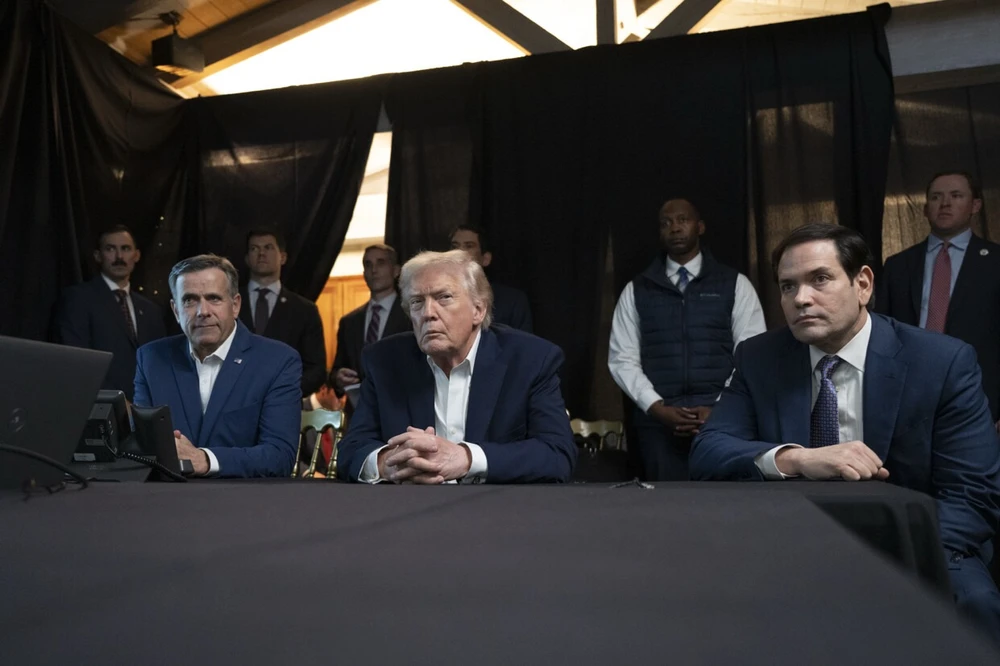
Perhaps most striking is the reaction among President Trump’s own political base.
For years, Trump campaigned on ending “forever wars” and rejecting U.S. military adventurism. Now, many conservative commentators and influencers are openly questioning the move.
“This is not what we voted for,” wrote one prominent right-wing podcaster with millions of followers. “You can’t claim to be anti-war and then occupy another country.”
The shift highlights a growing fracture within the MAGA coalition, as isolationist rhetoric collides with hard power realities.
Protests and Public Outrage
On the streets, protests erupted in several major U.S. cities, including Washington, New York, and Los Angeles. Demonstrators waved Venezuelan flags and chanted, “U.S. out of Venezuela.”
“It doesn’t matter who leads Venezuela,” said one protester interviewed by independent journalist Alex Wagner. “The Venezuelan people decide their future — not bombs.”
Activists emphasized that opposition to the intervention does not equate to support for Maduro, whom many accuse of authoritarian rule. Instead, they argue that foreign military force risks plunging Venezuela into civil war.
A Region on Edge
The international response has been cautious but tense. Leaders in Colombia and Mexico expressed concern about escalation, while Cuban officials warned the operation could destabilize the entire region.
Foreign policy analysts noted that unilateral action could undermine U.S. credibility in Latin America for decades.
“You can’t claim to defend international order while violating it,” one former State Department official wrote on LinkedIn.
What Comes Next
Congressional Democrats are now preparing to force votes aimed at restricting funding and invoking war powers limitations. Whether Republicans will join those efforts remains unclear.
What is certain is that the United States has entered a moment of reckoning — legally, politically, and morally.
“This didn’t have to happen,” Gallego said. “And we still have time to stop it from getting worse.”
As protests grow, allies express unease, and lawmakers demand answers, the question looming over Washington is no longer just why the United States acted — but how it plans to get out.