By XAMXAM
In a short, incendiary video that has raced across British social media, Alex Phillips delivers a monologue that is less a policy brief than a cry of alarm. Addressing Keir Starmer and Sadiq Khan by name, Phillips accuses the country’s political leadership of presiding over what she calls a breakdown of the most basic obligation of the state: keeping its citizens safe.

The clip is stark in tone and personal in detail. Phillips does not cite crime tables or ministerial reports. Instead, she catalogues behaviors—tying handbag straps around chair legs, scanning train carriages, feeling the heart rate spike at each stop—that many viewers recognize instantly. The power of the moment lies in that recognition. It is not the language of Westminster, but of lived experience.
At the heart of her argument is a charge of abandonment. Phillips contends that policy decisions—changes to policing tactics, border controls, sentencing practices, and restrictions on self-defence—have left ordinary people, especially women, feeling exposed. Her conclusion is blunt: when the state cannot or will not protect you, and simultaneously restricts your ability to protect yourself, the social contract has been broken.
The response has been polarizing. Supporters describe the monologue as an overdue articulation of everyday fear, particularly in urban settings. Critics argue that Phillips collapses complex issues into sweeping accusations, conflating distinct policy debates and employing rhetoric that risks inflaming divisions. Both sides, however, agree on one thing: the clip has struck a nerve.
Public safety has long been a political fault line in Britain, but the current moment feels especially raw. Recorded crime in England and Wales has risen in some categories over the past decade, while police visibility has declined in many neighborhoods. Trust in institutions is fragile, stretched thin by years of austerity, pandemic disruption, and political churn. Against that backdrop, emotional testimony can carry more weight than any spreadsheet.
Phillips’s focus on women’s safety is particularly resonant. Surveys consistently show that women report higher levels of fear in public spaces, even when their risk of victimization is statistically lower than that of men. The discrepancy underscores a broader truth: perceptions of safety matter as much as crime rates themselves. A city that feels dangerous is, in a meaningful sense, failing—regardless of how officials parse the numbers.
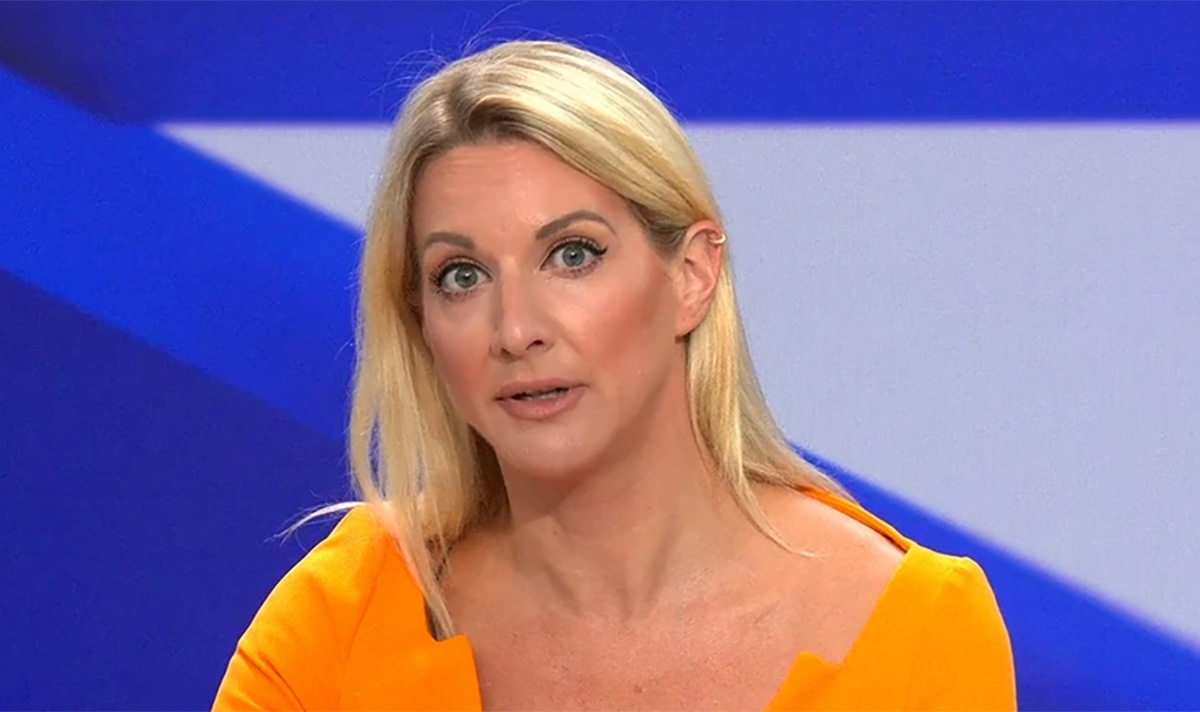
By naming Starmer and Khan, Phillips also performs a political maneuver that unsettles leaders: she personalizes responsibility. Rather than indicting “the system” or “society,” she points to those in power and asks a simple question—what have you done? It is a question that resists easy deflection. Policing is influenced by national policy and local governance; immigration by Parliament and international agreements. Accountability, in practice, is shared and therefore often blurred. Phillips’s intervention seeks to sharpen it.
The proposed remedies she gestures toward—stronger policing, tougher borders, changes to self-defence laws—are themselves deeply contested. Advocates argue they restore balance; opponents warn of unintended consequences, from civil liberties erosion to discriminatory enforcement. Britain’s history offers evidence for both caution and urgency. Hardline measures can reduce certain crimes while exacerbating others. Leniency can foster trust or breed impunity, depending on execution.
What the viral moment ultimately reveals is less about one commentator’s prescriptions than about a widening gap between governance and sentiment. When citizens feel compelled to narrate their fear in public, it suggests that official reassurances are no longer landing. The state may insist it is acting; the public may insist it is not enough. That dissonance is where politics turns combustible.
Starmer and Khan, for their part, have defended their records, pointing to investments, reforms, and long-term strategies. Such responses are familiar—and insufficient for those who experience danger as an everyday calculation. Policy operates on timelines; fear operates in real time.
There is a risk, of course, in elevating viral testimony to the level of national diagnosis. Outrage can distort priorities and oversimplify trade-offs. Yet dismissing such testimony outright carries its own peril. Democracies falter not only when they overreact to fear, but when they refuse to hear it.

Phillips’s monologue offers no comfort and little compromise. It is accusatory, urgent, and deliberately unsettling. Its popularity suggests that many Britons feel unsettled already. Whether leaders respond with policy shifts, rhetorical recalibration, or rebuttal, the underlying message will linger: safety is not an abstract promise. It is a daily expectation. When that expectation frays, politics follows—quickly, and loudly.