A Dangerous Convergence: Global Crises Accelerate as Trump Aligns With Authoritarian Narratives
Washington — In a span of less than 24 hours, a cascade of geopolitical flashpoints has erupted across Eastern Europe, the Middle East, and East Asia, prompting growing concern among diplomats and analysts that the world is entering its most unstable moment in decades. At the center of this convergence stands President Donald Trump, whose public statements, private communications, and online behavior are increasingly being scrutinized by U.S. allies and foreign policy experts alike.

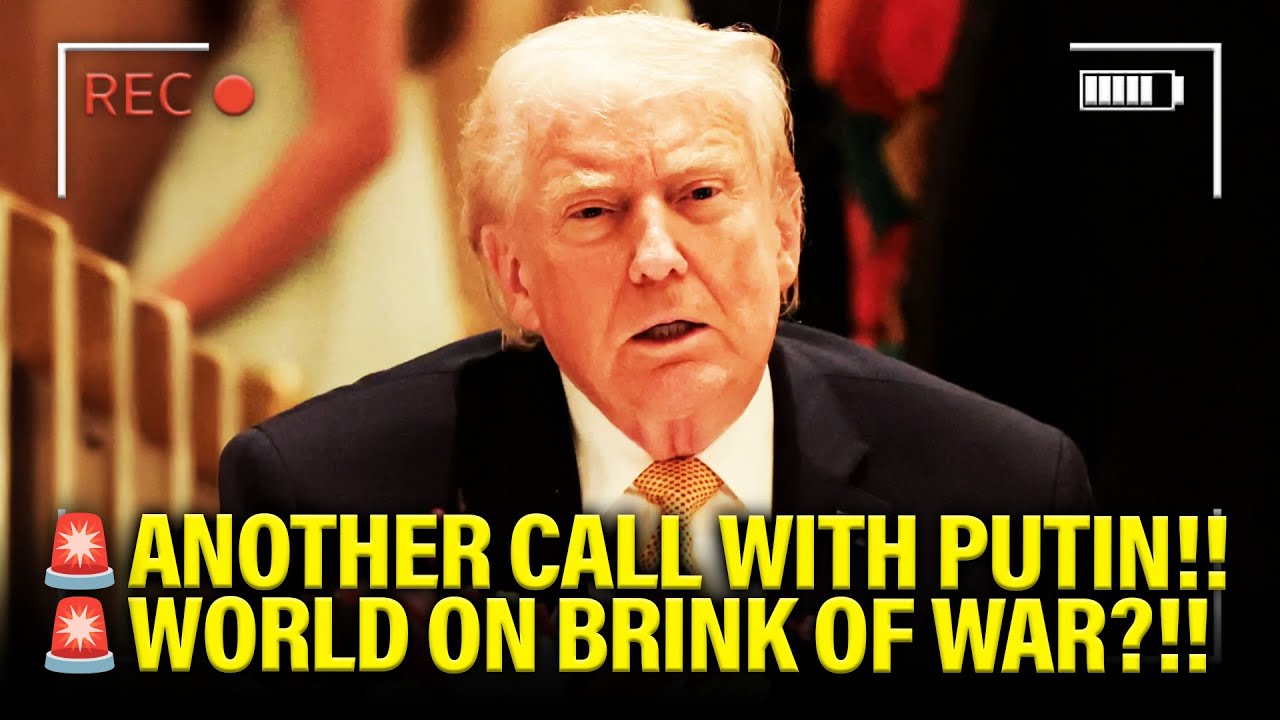
The immediate catalyst was a series of phone calls between President Trump and Russian President Vladimir Putin, confirmed by the White House and reported by multiple outlets including CNN, Reuters, and Axios. According to Kremlin-aligned media and later echoed by Russian officials, Putin informed Trump of an alleged Ukrainian attack on his personal residence — a claim Ukrainian President Volodymyr Zelensky categorically denied, calling it a fabrication designed to justify further Russian military escalation.
Within hours of the call, Russian forces launched new missile and drone strikes on government buildings in Kyiv, renewing fears that Moscow is preparing for a broader offensive under the guise of retaliation. Western intelligence officials, speaking anonymously to The Washington Post and NBC News, said they had seen no evidence supporting Russia’s claim of a Ukrainian strike on Putin’s residence.
Yet the political implications in Washington were immediate.
A Pattern of Deference

According to statements attributed to Russian presidential aide Yuri Ushakov and carried by Russian state media, President Trump expressed shock at the alleged attack and remarked that he was “thankful” the United States had not provided Ukraine with long-range Tomahawk missiles. While the White House has not confirmed the precise wording, it has not disputed the substance of the call.
This marks at least the third known conversation between Trump and Putin in roughly 24 hours — an unusually high level of direct engagement with an adversarial leader during an active conflict. By Trump’s own admission during a recent press conference, one call alone lasted more than two and a half hours.
Foreign policy analysts interviewed by MSNBC and Foreign Policy magazine noted that the timing raised alarms. “This is not shuttle diplomacy,” said one former State Department official. “This looks like strategic alignment.”
Zelensky, in a statement posted on X (formerly Twitter), accused Russia of using “dangerous disinformation” to sabotage diplomatic efforts involving Trump’s team. “This alleged attack is a complete fabrication intended to justify additional strikes on Ukraine and to undermine peace efforts,” he wrote, urging the international community not to remain silent.
Ceasefire Rejected, Escalation Embraced

Russia’s position on diplomacy has grown increasingly explicit. Moscow has rejected proposals for a temporary ceasefire backed by Ukraine and several European Union members, arguing — in statements reported by Reuters — that any pause in fighting would only “prolong the conflict.”
The rhetoric echoes a familiar authoritarian inversion: peace as provocation, war as necessity.
President Trump appeared to echo similar themes during a tense press appearance alongside Zelensky, where he suggested that Putin “wants to help Ukraine succeed,” a claim that drew visible discomfort from the Ukrainian leader. Footage of the moment circulated widely on social media, particularly on TikTok and X, where analysts dissected Zelensky’s reaction frame by frame.
In a subsequent interview with Fox News, Zelensky addressed Trump’s claim that a large majority of Ukrainians support territorial concessions. “Yes, people want peace,” Zelensky said. “But they want a just peace. Eighty-five percent do not support withdrawing from the Donbas. Giving up territory is not peace — it is an invitation to more war.”
When asked whether Putin’s actions suggested an interest in peace, Zelensky was blunt: “I do not see it. He speaks of going further, not stopping.”
A World on Edge
While Eastern Europe teetered, tensions elsewhere intensified.
China announced its most aggressive military drills to date around Taiwan, mobilizing naval, air, and rocket forces in exercises described by the People’s Liberation Army as tests of “combat readiness.” Taiwan responded by placing its military on high alert and activating emergency response measures, according to reporting by CNN and The New York Times’ Asia bureau.
In Northeast Asia, North Korea test-fired long-range cruise missiles, framing the launches as defensive preparedness amid regional instability. Analysts at the Center for Strategic and International Studies warned that the coordinated timing of these actions could signal a broader breakdown of deterrence norms.
Meanwhile, Iran declared it was engaged in what its president described as an “unprecedented all-out war” with the United States, Israel, and Europe. Iranian state media quoted President Masoud Pezeshkian as saying Iran’s military was “more prepared than ever” to respond to new aggression, as President Trump prepared for meetings with Israeli leaders in Washington.
A Provocative Digital Presidency
Amid this volatility, President Trump’s social media activity added fuel to the fire.
His most recent post, shared widely before being flagged by platform moderators, featured an image of a nuclear explosion over Manhattan accompanied by incendiary language attacking Democrats and immigrants. Civil rights groups and former national security officials condemned the post as reckless, with one former Pentagon official telling Politico it was “the kind of rhetoric you expect from extremist forums, not a sitting president.”
The post has since become a focal point of criticism on cable news and across social media platforms, where commentators questioned the psychological and strategic implications of such imagery during a period of heightened nuclear tensions.
Economic Anxiety at Home
Domestically, the instability is being felt economically. Consumer confidence has plunged, according to recent surveys highlighted by Justin Wolfers, an economist at the University of Michigan. Speaking on national television, Wolfers cited “policy chaos, tariff uncertainty, and daily headline volatility” as key drivers of public unease.
“The share of Americans who rate macroeconomic policy as poor is at an all-time high,” Wolfers said. “It’s not even close.”
Markets have responded with caution, while business leaders privately express concern about unpredictability emanating from the White House, according to reporting by Bloomberg.
An Inflection Point
Historians and security experts are increasingly drawing comparisons to the pre-World War I and pre-World War II periods — not because war is inevitable, but because miscalculation is.
“This is how global systems fail,” said one former NATO official in an interview with PBS. “Not from one decision, but from many reckless ones made simultaneously.”
As multiple crises accelerate at once, the question facing the world is no longer whether the international order is under strain — but whether it can survive leadership that appears to blur the line between diplomacy and provocation.