Canada’s debate over replacing its aging fighter fleet has erupted into far more than a routine defense procurement. What began as a pause to reassess the multi-billion-dollar F-35 purchase has evolved into a high-stakes argument about sovereignty, alliance politics, and who ultimately controls a nation’s security choices. When U.S. officials publicly linked Canada’s fighter decision to trade and diplomatic consequences, the message landed sharply in Ottawa: this was no longer just about aircraft performance, but about obedience within an alliance.
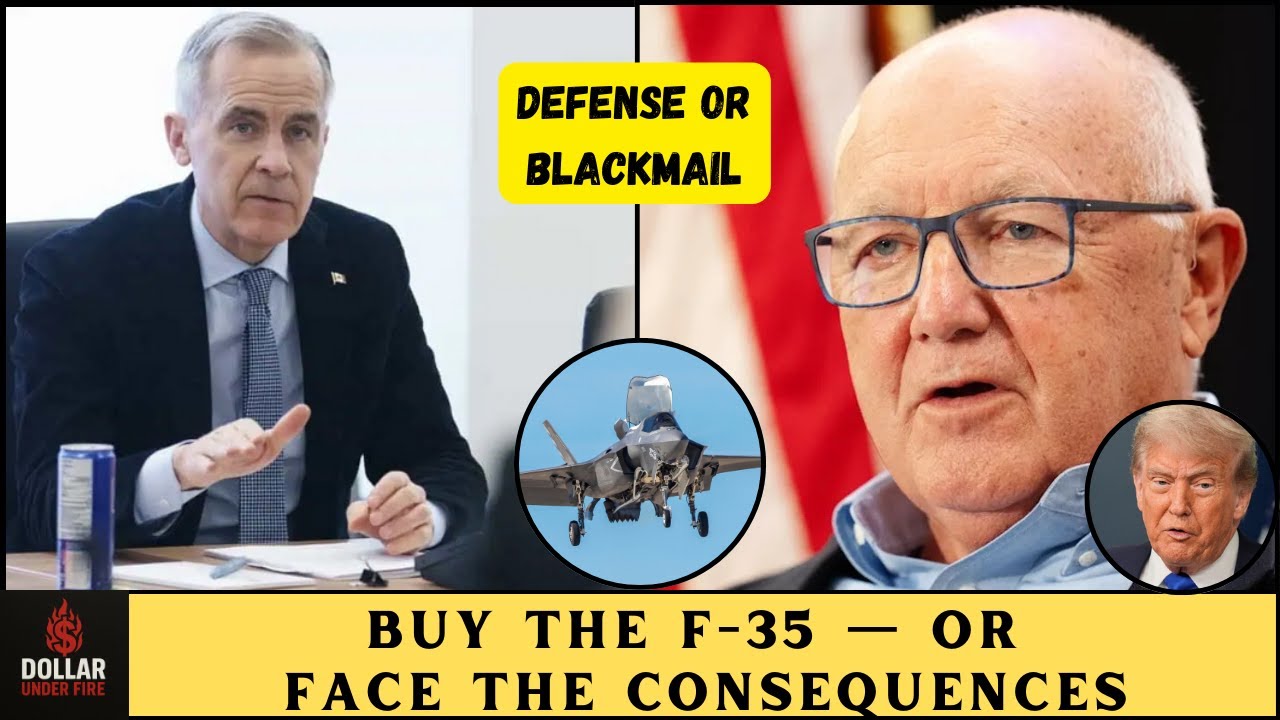
For years, the F-35 was presented as inevitable—expensive, complex, but the price of staying inside NATO’s inner circle. Yet critics argue the jet represents not full ownership, but conditional access. Key software, mission data, upgrades, and logistics remain controlled through centralized systems outside Canada. Under stable political conditions, this model is framed as efficiency and shared security. But defense experts warn that in times of political tension, even minor administrative restrictions can quietly limit operational readiness without a single public announcement.
Those concerns intensified as questions emerged around availability and cost. The F-35 has struggled with readiness rates, maintenance delays, and long-term sustainment overruns. For a country with vast airspace, harsh climates, and a relatively small fleet, availability matters as much as stealth. High operating costs reduce training hours, and fewer training hours translate directly into weaker deterrence. The issue, critics stress, is not that the F-35 lacks capability, but that its complexity and cost impose structural limits on how freely Canada can use it.
Into this debate stepped an unexpected alternative. Sweden’s Gripen fighter was offered with a radically different model: technology transfer, domestic assembly, local maintenance control, and thousands of Canadian jobs. More importantly, it promised sovereign sustainment—Canada would not just operate the aircraft, but control its lifecycle. Lower operating costs mean more flight hours, better pilot readiness, and consistent coverage. The contrast was stark: centralized authority abroad versus domestic capacity at home.
What truly shifted the conversation was not political rhetoric, but voices from within Canada’s own defense community. Retired commanders and senior officers who once backed the F-35 began questioning what “ownership” means in an era of digital warfare. Their concern was structural, not ideological. When software updates and supply chains depend on foreign approval, autonomy becomes conditional. In future political disputes, that conditionality could become a strategic vulnerability.
At its core, Canada’s fighter jet debate is a referendum on alliance dynamics. Alliances thrive on trust, not pressure. When persuasion gives way to public warnings and leverage, confidence erodes—especially in decisions meant to last 30 years. Canada now faces a choice larger than any single platform: prioritize access within a powerful system, or insist on control over its own skies. The outcome will echo far beyond procurement spreadsheets, shaping how sovereignty is exercised in an increasingly conditional world.