Beneath the constant noise of rallies, viral clips, and Donald Trump’s endless controversies, a quieter but potentially more consequential shift is taking place inside the Republican Party. It is not being driven by Democrats or the mainstream media. Instead, it is unfolding through the calculated moves of a man many assumed was politically finished: Mike Pence.
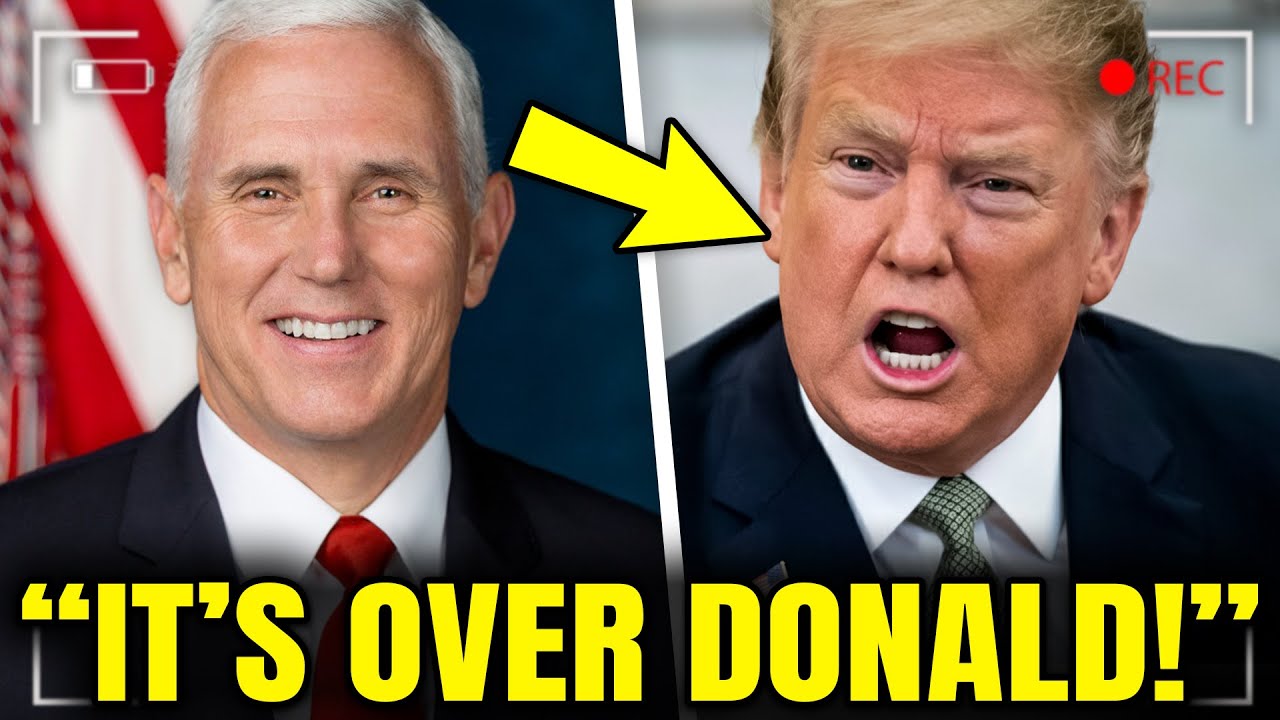
After January 6, 2021, Pence all but disappeared from the public spotlight. Once Trump’s loyal vice president, he became a target of MAGA fury for refusing to overturn the election results. He avoided social media battles, stayed out of cable news warfare, and declined to engage Trump directly. But while Pence appeared silent, he was laying the groundwork for a long-term strategy.
That strategy took shape in the form of Advancing American Freedom (AAF), a policy and advocacy organization Pence launched to promote what he calls traditional conservative values. On the surface, AAF looks like just another Washington think tank. In reality, it is rapidly becoming a refuge for Republicans who feel trapped between loyalty to Trump and discomfort with the party’s accelerating extremism.
The moment that exposed this internal fracture came with Tucker Carlson’s highly controversial interview with Nick Fuentes, an openly racist, antisemitic, and extremist figure. Carlson’s decision to give Fuentes a massive platform sent shockwaves through conservative circles. For many establishment Republicans, this was no longer a debate about free speech—it was evidence that the GOP was drifting into dangerous territory.
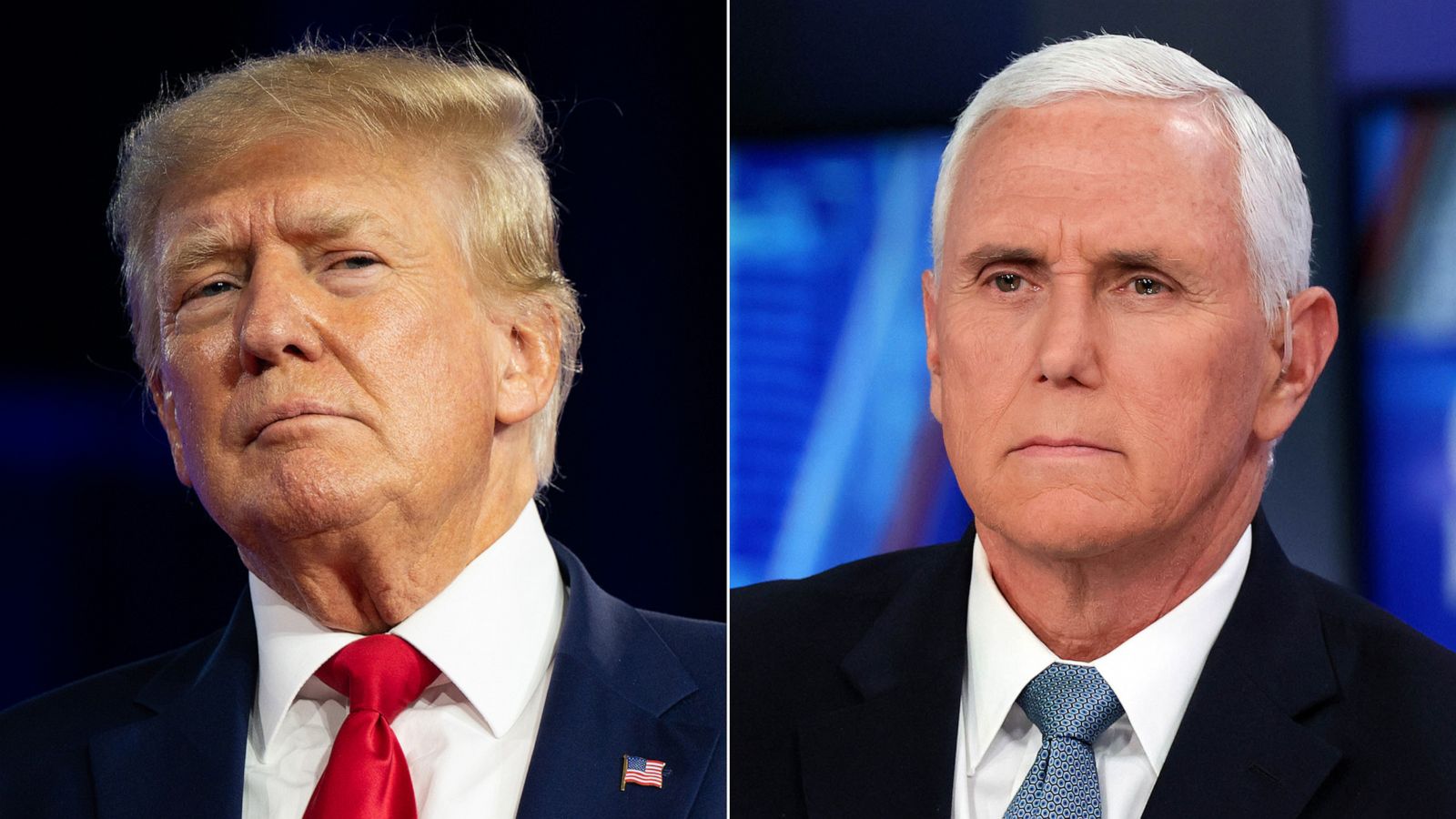
The fallout was swift. At the Heritage Foundation, one of the most powerful conservative institutions in American politics and a key force behind Project 2025, tensions boiled over. When Heritage leadership defended Carlson and downplayed concerns about Fuentes, a wave of resignations followed. More than a dozen senior figures—experts in law, economics, and public policy—left the organization. Their destination was not political exile, but Mike Pence’s AAF.
This is where Pence’s move becomes strategically threatening to Trump. MAGA is not sustained by rallies and slogans alone. It depends on an ecosystem of think tanks, legal experts, policy architects, donors, and institutional networks. As those figures quietly migrate away from Trump-aligned institutions, the movement’s intellectual and financial infrastructure begins to weaken.
Notably, Pence has avoided personal attacks. He has not gone on television to mock Trump, nor has he turned social media into a battleground. Instead, he is building something parallel—a separate power structure that allows conservatives to distance themselves from Trump without abandoning the Republican identity altogether.
That distinction matters. Trump’s dominance relies on absolute loyalty. But AAF offers an alternative: a way for Republicans to say, “I’m still conservative, just not MAGA.” As more influential figures take that path, the glue holding Trump’s coalition together starts to dissolve.
The implications extend well beyond internal party drama. Heading into the 2026 midterms and eventually the 2028 election cycle, a fractured GOP faces serious challenges. Fundraising could become more complicated. Candidate recruitment may suffer. Messaging may splinter. While Trump loyalists celebrate the departure of so-called “RINOs,” they may be overlooking a deeper cost—the gradual erosion of the party’s governing capacity.
Meanwhile, Trump’s allies, including Donald Trump Jr., have cheered the shake-up, framing it as a purification of the movement. But history suggests that political movements that narrow themselves too aggressively often weaken over time. Energy without structure rarely survives the long haul.
Mike Pence may not represent the future of the Republican Party. Yet his role as a catalyst is undeniable. By quietly consolidating talent, funding, and institutional credibility, he is accelerating a realignment that had been building for years. The struggle now is not simply about personalities, but about the soul and direction of the GOP.
The central question is no longer whether Pence can defeat Trump directly. It is whether Trump can maintain control when the most critical, behind-the-scenes pillars of his movement are slowly slipping away. In politics, the most decisive blows are often the quiet ones—and this time, the silence may be doing the loudest damage of all.