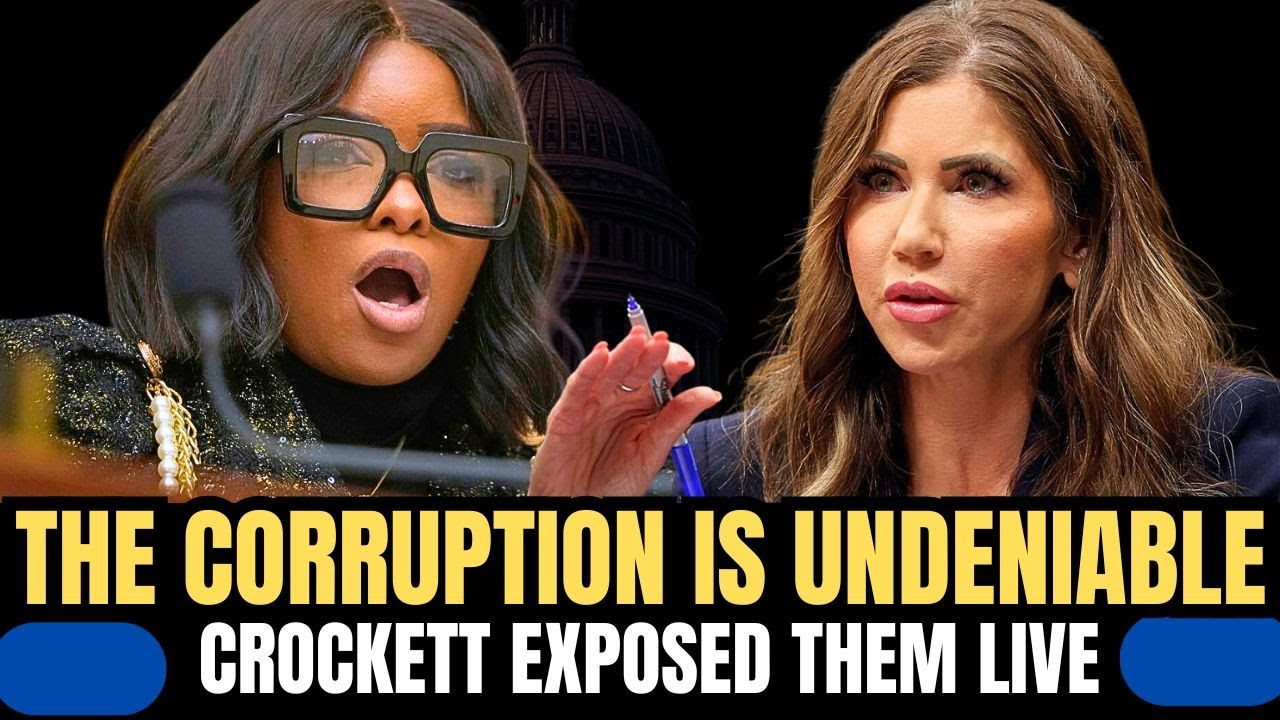
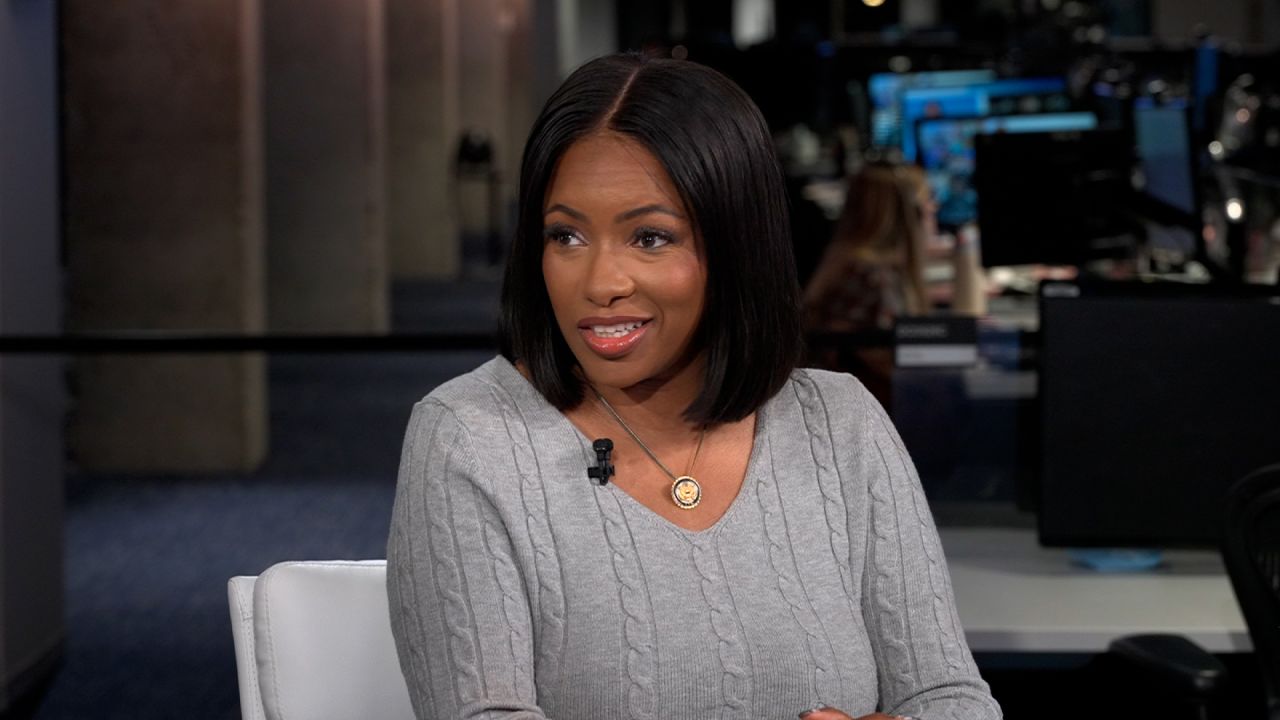
Washington — The moment did not hinge on a single accusation or dramatic exchange. Instead, it unfolded as a methodical presentation, structured less like a speech than a brief. Representative Jasmine Crockett, a Democrat from Texas, used her time in a congressional hearing to outline what she described as a pattern: the consolidation of executive power, the erosion of accountability, and a justice system that appears increasingly uneven in its application.
Crockett’s remarks came amid intensifying scrutiny of the United States Department of Justice and the Department of Homeland Security, as lawmakers debate whether oversight mechanisms are functioning as intended. Rather than focus on a single case, Crockett assembled a series of examples, each meant to illustrate how power, in her telling, is exercised differently depending on who holds it.
At the core of her argument was the idea that oversight is not merely reactive. Congress, she said, has a responsibility to ask uncomfortable questions before abuses become entrenched. To make that case, she cited court rulings from judges appointed by presidents of both parties, including opinions warning that the executive branch cannot disregard statutes or court orders when they prove inconvenient. Those rulings, Crockett argued, undermine claims that concerns about executive overreach are partisan inventions.
She then turned to specific controversies. One involved the administration’s shifting explanations around the release of records related to Jeffrey Epstein. Crockett noted that officials initially promised transparency, followed by high-profile photo opportunities, then claims that no comprehensive list existed, and later assertions that requests for disclosure were politically motivated. That sequence, she argued, illustrates how public trust erodes when official narratives change repeatedly.
Crockett emphasized that her concern was not to prove guilt in a courtroom, but to question whether investigative processes were being short-circuited. In a democracy, she said, investigations should not depend on political utility or proximity to power. When they do, the damage is institutional, not partisan.
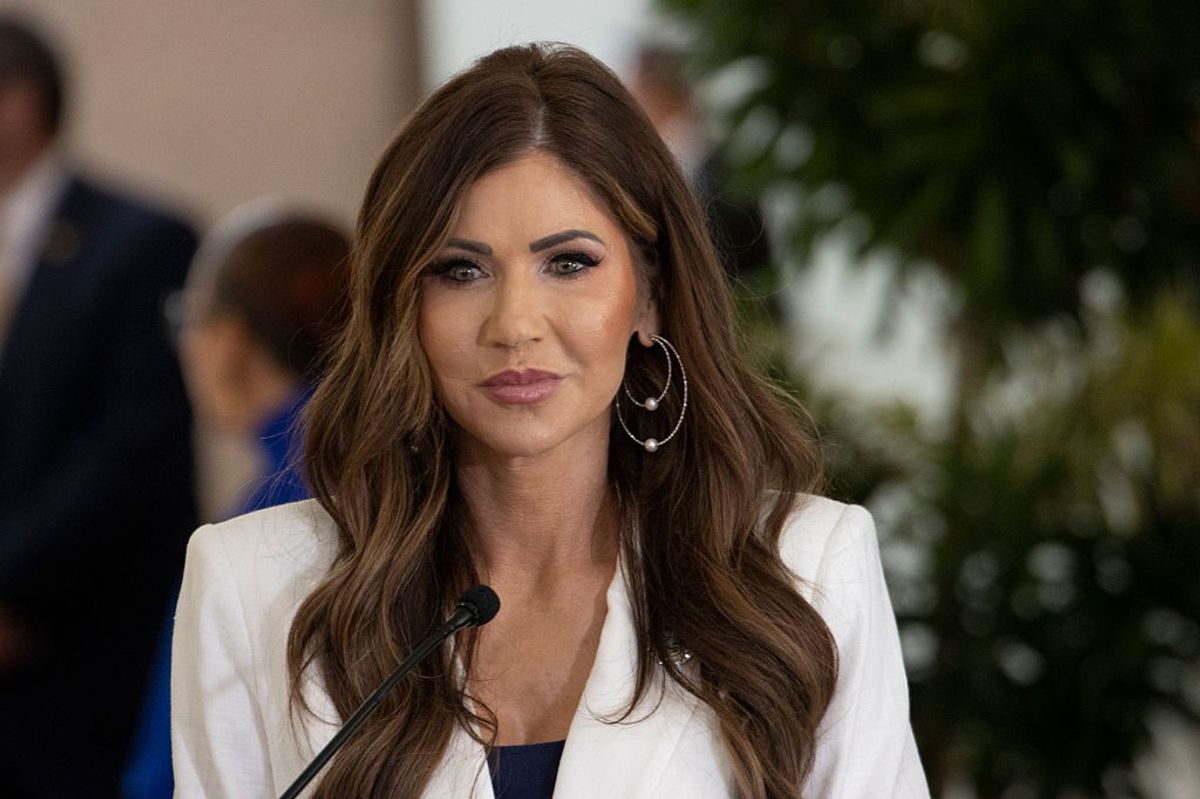
She raised similar concerns about DHS spending under Secretary Kristi Noem (referred to in the hearing transcript as “Christy Gnome”). Crockett questioned contracts awarded to firms with past political ties, arguing that even the appearance of self-dealing demands scrutiny. Oversight, she said, exists precisely to ensure that taxpayers do not learn about potential conflicts only after they have hardened into scandal.
Another portion of her remarks focused on immigration enforcement and domestic security. Crockett described what she characterized as increasingly militarized federal actions and warned that aggressive tactics risk sweeping up lawful residents and even U.S. citizens. She framed this not as an abstract concern but as a lived reality for communities already wary of federal power.
To underscore the stakes, Crockett contrasted alleged insulation for senior officials with budget proposals that would reduce resources for violence-prevention programs, juvenile justice initiatives, and investigative capacity at agencies like the F.B.I. and the A.T.F. The contradiction, she argued, reveals priorities: rhetoric about law and order paired with cuts to programs designed to prevent crime before it occurs.
Republicans on the committee rejected Crockett’s conclusions, accusing her of exaggeration and conflating unrelated issues. They argued that closed investigations reflect evidentiary judgments, not favoritism, and that enforcement policies fall squarely within executive authority. From their perspective, Crockett’s presentation blurred oversight with insinuation.
Yet even critics acknowledged the structure of her argument. She did not rely on anonymous claims or speculation alone; she cited court opinions, publicly reported facts, and documented budget proposals. The approach gave her remarks a legalistic quality that distinguished them from more rhetorical floor speeches.
For legal scholars, the episode illustrates a broader tension in American governance. Oversight depends on access to information, while law enforcement depends on discretion and restraint. When those principles collide, transparency can look like intrusion, and silence can look like concealment.
“The health of democratic institutions is tested in moments like this,” said one constitutional law expert. “Not by whether everyone agrees, but by whether the questions are allowed to be asked and answered seriously.”
Crockett concluded by returning to first principles. Accountability, she said, is not a favor granted by those in power but an obligation owed to the public. When federal agencies drift from neutral enforcement toward political utility, the costs are borne by ordinary people — through uncertainty, unequal treatment, and declining trust.
The hearing did not resolve the disputes Crockett raised. It did, however, place them on the record. In doing so, it highlighted a reality often obscured by partisan noise: that the struggle over oversight is not simply about individual officials, but about whether the rule of law is applied consistently, even — and especially — when doing so is politically inconvenient.