For years, Washington operated on a deeply rooted assumption: that Canada, bound by geography and integrated supply chains, would always negotiate from a position of quiet dependence. Trade pressure, tariffs, and repeated renegotiations were viewed as effective tools—levers that could be pulled whenever the United States wanted concessions. But that assumption collapsed almost overnight when Canada responded to new U.S. trade demands with two simple, unemotional words: not negotiable.
There was no fiery speech or public confrontation. No dramatic walkout. Instead, Canada calmly shut down demands targeting its supply-managed dairy system, digital services taxation, provincial procurement rules, and retaliatory alcohol restrictions. What Washington initially framed as a show of strength began to look like something else entirely. The demands focused on consumer-facing issues—milk, streaming platforms, bourbon—rather than the industrial pillars that actually sustain the North American economy. That contrast revealed an uncomfortable truth: the U.S. was negotiating from vulnerability, not dominance.
Canada’s response marked a decisive shift in tone. Rather than defending itself, Ottawa reframed the entire conversation around what Canada already provides—and controls. Integrated automotive supply chains, steel and aluminum inputs, forestry products, and energy-intensive materials critical to modern manufacturing were brought back into focus. These are not symbolic sectors. They are foundational. And they are not easily replaced.

One statistic quietly changed the math. Canadian aluminum production, powered by vast hydroelectric resources, saves the United States the equivalent of multiple Hoover Dams worth of electricity. Replacing that supply would require years of energy infrastructure development inside the U.S.—time Washington does not have. Canada, by contrast, has options. Europe and Asia are actively seeking clean, stable aluminum suppliers, and global demand does not stop at the U.S. border.
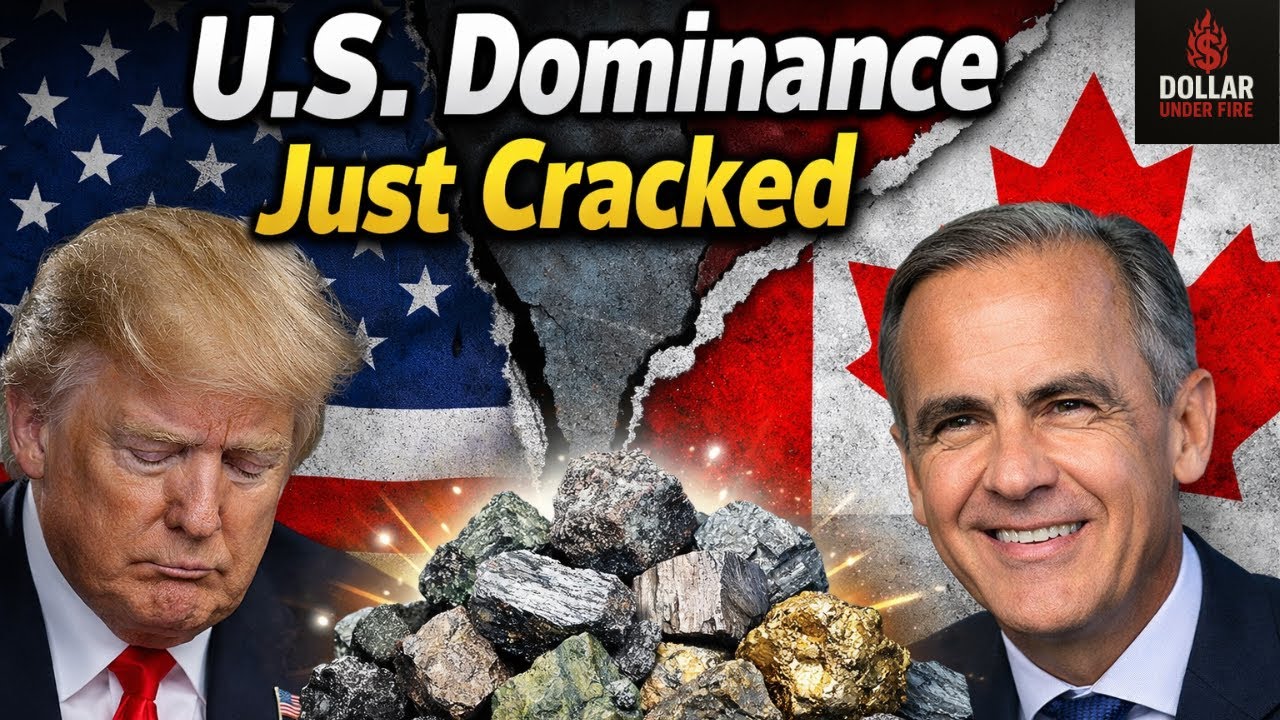
What truly unsettled Washington, however, was the long-term strategy becoming visible beneath the surface. When discussion turned to Canada’s Ring of Fire—a massive, largely untapped reserve of critical minerals in Northern Ontario—the shift was unmistakable. Nickel, cobalt, chromite, and rare elements essential for electric vehicles, defense systems, and advanced technology are no longer treated as automatically available to U.S. industry. Mark Carney framed these resources as national assets first, opportunities second, and guarantees to no one.
That distinction matters. In a world racing to secure critical mineral supply chains, access is no longer assumed—it is negotiated. Europe has expressed interest. Asian economies are watching closely. Investment attention is global, not regional. The United States now faces a reality in which pressure tactics no longer ensure preferential access to materials essential for its energy transition and industrial competitiveness.
Meanwhile, attempts to punish Canada through tariffs and provincial alcohol restrictions produced unintended consequences. Domestic wine and spirits industries expanded. Local producers gained shelf space. Provincial leaders made clear that restrictions were conditional, strategic, and reversible—but only under fair terms. Rather than weakening Canada, pressure accelerated self-reliance.
Underlying all of this is a broader structural change. Canada has spent years diversifying trade routes, expanding ports on three coasts, strengthening Atlantic and Pacific shipping capacity, and building energy corridors that move resources west and overseas rather than exclusively south. Trade agreements across Europe, the United Kingdom, and the Indo-Pacific are already in place. These are not emergency pivots; they are the result of deliberate long-term planning.

The result is a recalibration of power. The United States is no longer Canada’s only viable customer. It is one partner among many. A convenient one when terms are balanced, and a replaceable one when they are not. This does not signal hostility or disengagement. It signals independence.
What caused panic in Washington was not defiance, but confidence. Canada did not threaten. It did not escalate. It simply set boundaries backed by real leverage—energy, minerals, infrastructure, and global alternatives. Once the assumption of dependency disappeared, so did the effectiveness of pressure.
This moment represents more than a trade dispute. It marks the end of an era in which proximity was mistaken for subordination. Canada is no longer negotiating to avoid loss; it is negotiating from choice. And when a country enters talks with options instead of fear, the balance of power shifts permanently.