Canada has made a decision that Washington long assumed would never happen. Not a delay, not a compromise framed as diplomacy, but a direct and unmistakable refusal. What began as a routine phase in preparations for the upcoming CUSMA review has quickly evolved into a revealing test of power, sovereignty, and leverage inside North American trade relations. The fallout from Canada’s “no” is only beginning, and its implications stretch far beyond dairy.
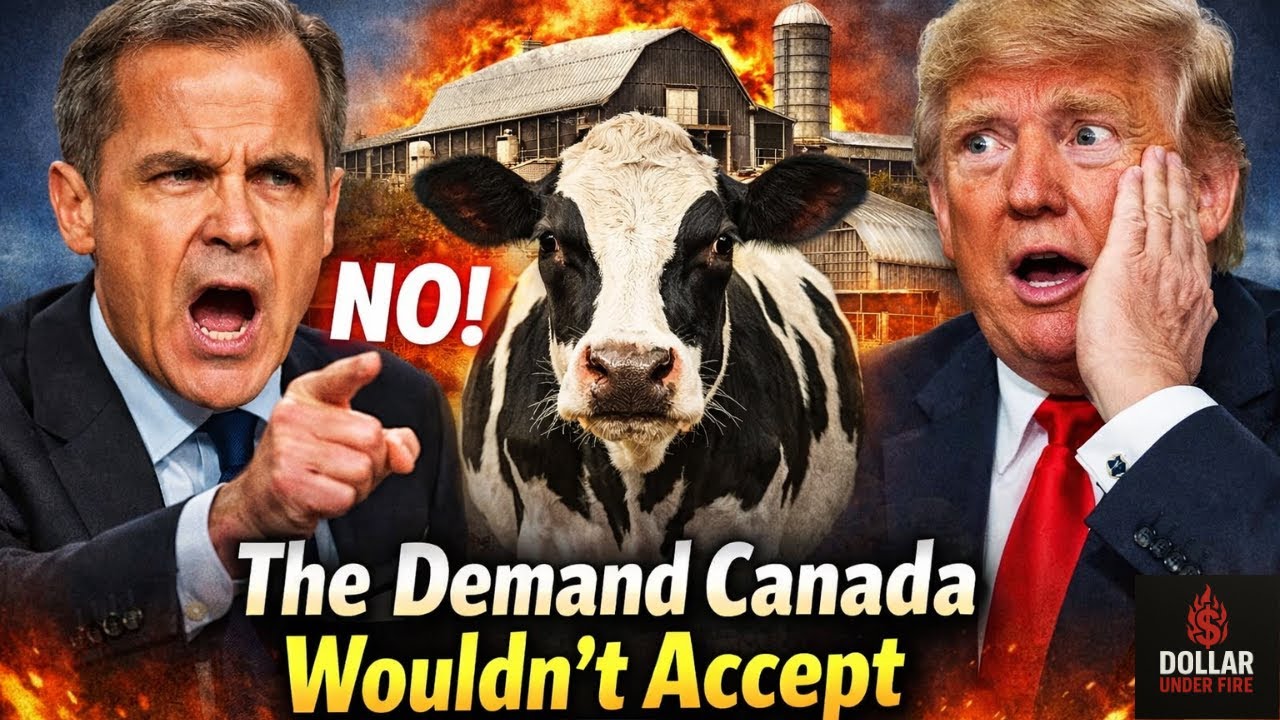
At the center of the dispute is the United States’ renewed push for expanded access to Canada’s dairy market. For years, American negotiators and industry groups have argued that Canada’s supply management system unfairly restricts competition and limits U.S. exports. During earlier trade negotiations, Washington secured limited concessions, reinforcing the belief that further pressure would eventually produce more. This time, U.S. officials signaled that expanded dairy access was not simply a request but a prerequisite for productive talks going forward.
The assumption behind the strategy was clear. Canada, heavily integrated into U.S. trade networks, would ultimately prioritize market access over domestic policy. Financial analysts and trade observers largely echoed that view, predicting that Ottawa would defend supply management rhetorically while offering quiet concessions behind closed doors to preserve overall trade stability. From Washington’s perspective, this was the moment Canada would be forced to choose between principle and pragmatism.
What American officials did not anticipate was that Ottawa had already made that choice. When Canada responded, the message was deliberately brief and definitive. Supply management, officials stated, was not on the table. There would be no renegotiation, no reframing, and no extended debate. The refusal was followed by an immediate pivot away from the topic, signaling that Canada did not view the issue as open for discussion.
The delivery mattered as much as the substance. When M.a.r.k C.a.r.n.e.y addressed the issue publicly, he did so in a way that underscored the domestic significance of the policy, particularly in Quebec, where supply management underpins rural economies, agricultural stability, and political identity. By declining to justify the policy or respond to U.S. grievances, Canada rejected the premise that its internal governance required external approval.
On the surface, supply management can appear technical: production quotas, pricing mechanisms, and market controls. But for Canada, the system represents food security, predictable farmer incomes, and long-term planning insulated from volatile global markets. Conceding under pressure would have established a precedent that core domestic frameworks could be traded away when leverage is applied forcefully enough. Canadian officials viewed that risk as far greater than any short-term trade friction.

The dairy dispute did not exist in isolation. Alongside it, Washington raised concerns about Canada’s digital platform regulations, which require companies such as Netflix and YouTube to contribute to Canadian content production, as well as provincial decisions affecting U.S. alcohol products. From the U.S. perspective, these measures were framed as protectionist. From Canada’s perspective, they reflected constitutional realities, cultural sovereignty, and provincial jurisdiction. Bundling these issues together was intended to amplify pressure. Instead, it clarified the underlying conflict.
At its core, the standoff is about governance. The United States sought harmonization around American commercial preferences. Canada insisted on retaining the authority to set domestic policy without external veto. Those positions leave little room for compromise, and the refusal on supply management hardened the lines before formal negotiations even begin.
This shift has been years in the making. Canada has worked to diversify trade relationships beyond the United States, deepening ties with Europe and the Indo-Pacific while expanding domestic industrial capacity. These efforts did not eliminate dependence on U.S. trade, but they reduced vulnerability. As a result, Ottawa is no longer negotiating from a position of urgency or fear of immediate fallout.
The strategy Canada adopted was notable for its consistency. There were no threats, no retaliatory measures, and no escalation in rhetoric. Each time pressure increased, the response remained unchanged. In trade negotiations, ambiguity often invites further demands. Absolute clarity, by contrast, closes off entire lines of attack. By treating supply management as settled law rather than a bargaining chip, Canada forced Washington to recalibrate.
The implications extend beyond the bilateral relationship. Other governments and investors are watching how this dispute unfolds. Credibility in trade is built not only on economic size but on predictability and resolve. Canada’s refusal signaled that certain boundaries will not move, regardless of pressure, and that signal carries weight on the global stage.
As the CUSMA review approaches, the dynamics of the talks have already shifted. The central question is no longer whether Canada will concede on supply management, but whether the United States is willing to negotiate around a clearly defined limit. That change alters where responsibility for any impasse ultimately falls.
What happened was not a dramatic confrontation or a public escalation. It was a quiet assertion of sovereignty, delivered with precision and repetition. By saying “no” once and then refusing to elaborate, Canada reshaped the rules of engagement. The long-term consequences of that decision are still unfolding, but one thing is clear: Washington was not prepared for a refusal that did not seek approval, permission, or compromise.