Washington — What had long been treated as routine press-room theater is now being scrutinized as a potential vulnerability, after a series of White House briefing clips involving Karoline Leavitt went viral and prompted renewed debate over message discipline as the midterm elections draw closer.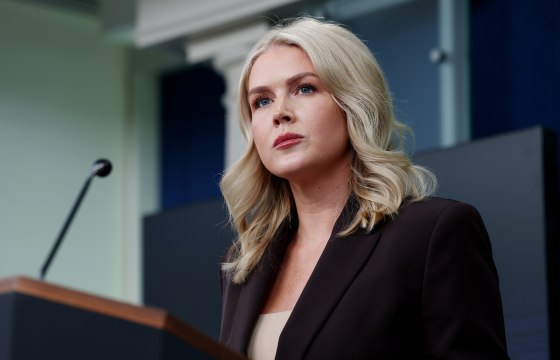
The catalyst was deceptively small: a familiar phrase Leavitt repeated across multiple briefings in response to pointed questions. The wording—intended to deflect—was seized upon by critics and stitched into montages that spread rapidly online. Within days, the clips had amassed millions of views, reframed by opponents as evidence of evasion rather than clarity.
What surprised many strategists was how quickly the moment migrated from social media to campaign chatter. The attention snapped back to a prior congressional race involving Leavitt, once considered a footnote, now recast as a case study in how press performance can shape political narratives. That reframing accelerated after a former opponent, speaking publicly for the first time in months, offered a pointed assessment of the briefings—one that some Democrats described as a “playbook hiding in plain sight.”
According to people familiar with Democratic strategy discussions, the remarks crystallized a broader approach: let repetition and tone do the work, rather than aggressive attacks. “If voters see the same dodge over and over, they draw their own conclusions,” said one Democratic consultant, who spoke on the condition of anonymity to discuss internal planning. “You don’t need attack ads when the footage already exists.”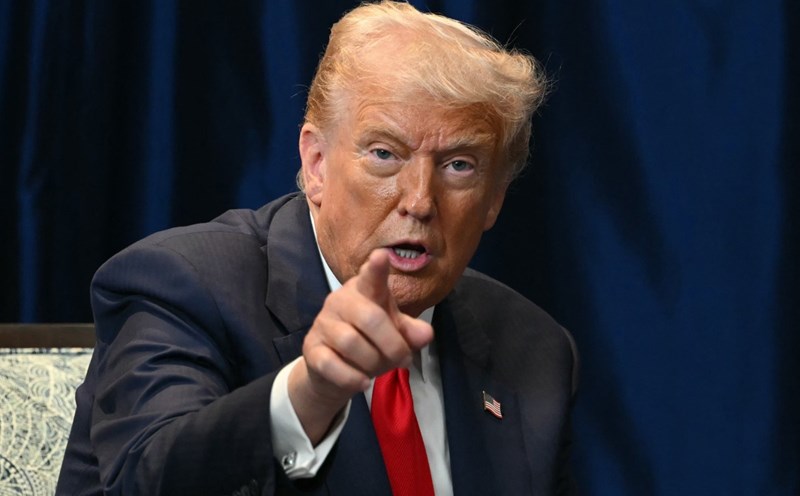
The development has reverberated inside the political orbit of Donald Trump, whose team has spent months trying to impose message discipline amid overlapping legal, political, and electoral pressures. While Trump himself did not address the viral clips directly, allies moved swiftly to defend Leavitt, arguing that press secretaries are routinely forced to repeat talking points amid hostile questioning.
Supporters say the criticism reflects a double standard. “Any spokesperson would look repetitive if you cut together answers from different days,” said one Republican communications adviser. “This is a manufactured controversy.”
Still, the timing has unsettled some in Republican circles. With midterms approaching, strategists worry that small moments can snowball into broader perceptions—particularly among independent voters who consume political content through short-form video rather than long-form news. Several advisers privately acknowledged concern that the viral edits could harden impressions before the campaign has a chance to reset.
Reporters, sensing momentum, pressed harder in subsequent briefings. The exchanges grew sharper, and attempts to pivot sometimes produced more of the same language that critics had already highlighted. Each new clip fed the cycle, reinforcing the narrative that something intended to project confidence was instead exposing rigidity.
Democrats have been careful not to overplay their hand. Rather than launching coordinated attacks, party leaders have largely allowed the clips to circulate organically, amplified by influencers and commentators. The approach reflects a lesson learned from recent cycles: authenticity—real or perceived—often travels farther than polished messaging.
The episode underscores a broader shift in modern campaigning, where press rooms double as content factories and every answer can be replayed endlessly. In that environment, repetition is no longer just a tactic; it can become a liability.
For Leavitt, the moment is both a challenge and a test. Allies insist she remains a skilled communicator under pressure and note that viral storms often pass as quickly as they form. Critics counter that the damage is cumulative, particularly when opponents frame it as evidence of a larger pattern.
As midterms loom, the stakes are rising. What began as routine briefing exchanges have become fodder for strategy memos and late-night group chats among operatives on both sides. Whether the episode proves fleeting or formative remains uncertain. But for now, it has handed Democrats a rare advantage: a narrative that appears to be writing itself.