Ottawa — Reports that Canada is quietly revisiting discussions with Sweden over the Saab Gripen have injected fresh uncertainty into a fighter-jet decision long assumed to be settled. While officials have not confirmed new negotiations, people familiar with defense procurement debates say the renewed attention reflects a shift in priorities that goes beyond airframe performance or radar signatures.
At the center of the conversation is control.
For years, Canada’s fighter replacement process has been framed largely around capability and interoperability within the North Atlantic Treaty Organization. The assumed endpoint was the Lockheed Martin F-35, prized for stealth and deep integration with allied systems. But analysts say the current discussion has broadened to include software authority, upgrade autonomy, and the degree to which a buyer can modify and sustain aircraft without external permission.

Those questions have taken on new urgency as militaries grapple with software-defined warfare. Modern fighters are no longer upgraded primarily with hardware; they are updated through code. Who writes that code, who can change it, and how quickly changes can be deployed are increasingly decisive.
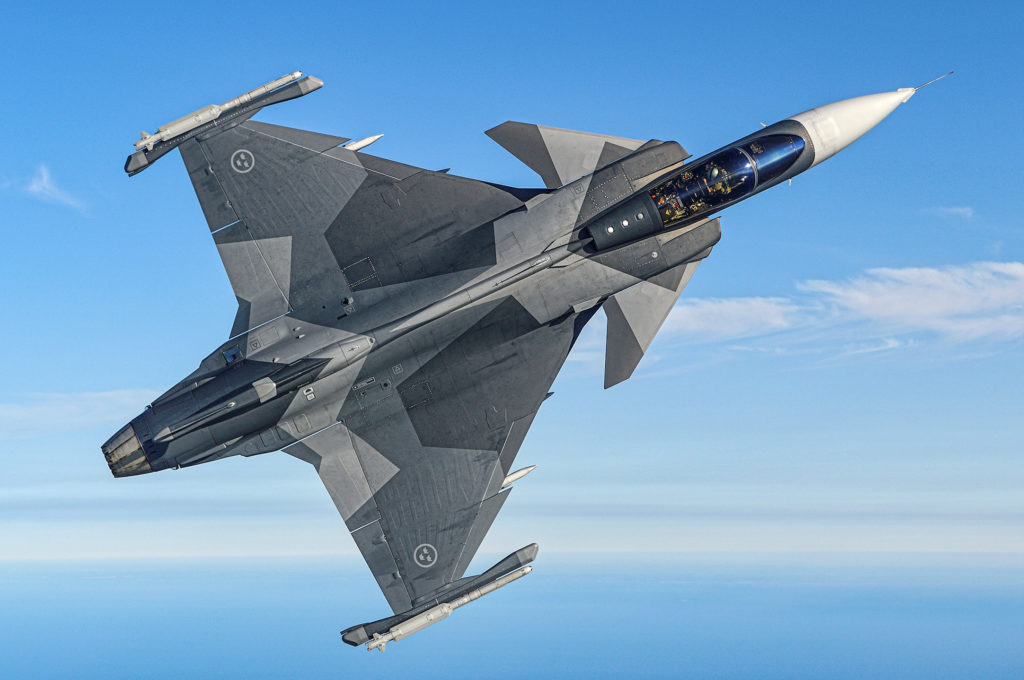
People briefed on the talks say Sweden’s pitch emphasizes access. The Gripen’s architecture, they argue, would allow Canada to control mission software, integrate domestic sensors, and pace upgrades independently. Saab has long marketed the aircraft as adaptable for smaller air forces seeking sovereignty over their systems, an argument that resonates amid concerns about reliance on foreign supply chains.
In Canada, the sovereignty angle carries political and industrial weight. Officials have repeatedly said any fighter deal must deliver economic benefits at home. According to people familiar with industry proposals, Saab has highlighted potential assembly work in Canada, long-term maintenance contracts, and high-skill jobs tied to software and systems engineering.
That promise has attracted attention, even as it raises questions about alliance dynamics.
Canada’s air force operates closely with the United States, particularly in continental defense through NORAD. Critics of a Gripen pivot warn that diverging from the F-35 ecosystem could complicate interoperability and logistics. Supporters counter that interoperability is not synonymous with uniformity, and that modern data links can bridge platforms.
“This is not a debate about whether Canada would still fly with allies,” said a former defense official. “It’s about whether it can decide how its aircraft evolve.”

Sweden, a close Western partner, has positioned itself as a flexible collaborator rather than a gatekeeper. While not part of the F-35 consortium, Stockholm has emphasized transparency in technology transfer and a willingness to tailor arrangements to partner needs. Any agreement, however, would still require regulatory approvals and alignment with Canadian security requirements.
Washington has watched such discussions closely in the past. The United States has invested heavily in the F-35 as a shared platform, arguing that common systems reduce costs and strengthen coalition operations. U.S. officials have typically avoided public pressure, but privately emphasize the advantages of standardization.
Canadian officials have sought to balance those considerations with domestic priorities. The fighter replacement program has faced delays, cost scrutiny, and shifting strategic assumptions, including increased attention to Arctic operations. Gripen proponents argue the aircraft’s operating costs and cold-weather performance deserve renewed evaluation.
None of this means a decision has been made. Procurement processes move slowly, and governments are cautious about signaling reversals. But the reported talks have already altered the conversation, reframing the choice as one between different models of control rather than a simple ranking of jets.
Defense economists note that the issue is part of a broader trend. Countries are increasingly wary of becoming locked into proprietary ecosystems that limit flexibility over decades-long service lives. Software control has become a proxy for sovereignty.
“The aircraft you buy today determines who you depend on tomorrow,” said a defense technology researcher at Carleton University. “That’s what this debate is really about.”
Environmental, budgetary, and workforce considerations also loom. Any fighter fleet will operate for 30 to 40 years, intersecting with shifting industrial policy and labor markets. Decisions made now will shape Canada’s aerospace sector for a generation.
For allies, the implications are nuanced. A Gripen-equipped Canada would still be a capable partner, but with a different industrial footprint and upgrade cadence. For Ottawa, the calculation is whether those differences enhance resilience or introduce friction.
Officials in Canada and Sweden have declined to comment on the specifics of any discussions, citing procurement confidentiality. Saab has said previously that it remains ready to engage if invited.
As the debate continues, one thing is clear: the fighter question has evolved. It is no longer only about stealth versus sensors, or range versus payload. It is about who controls the aircraft’s future.
In that sense, the reported Gripen talks may matter less for whether Canada changes course than for how it defines success. The decision ahead will signal whether sovereignty in the digital age is treated as a feature — or a requirement — of national defense.