By XAMXAM
OTTAWA — When the White House widened its trade war beyond China and onto its closest partners, Canada became an early proving ground for a familiar American theory: that tariffs, applied at scale, could force concessions, revive domestic manufacturing and reassert U.S. leverage. But by the end of 2025, the story taking shape on both sides of the border was messier — and, for Washington, more uncomfortable.

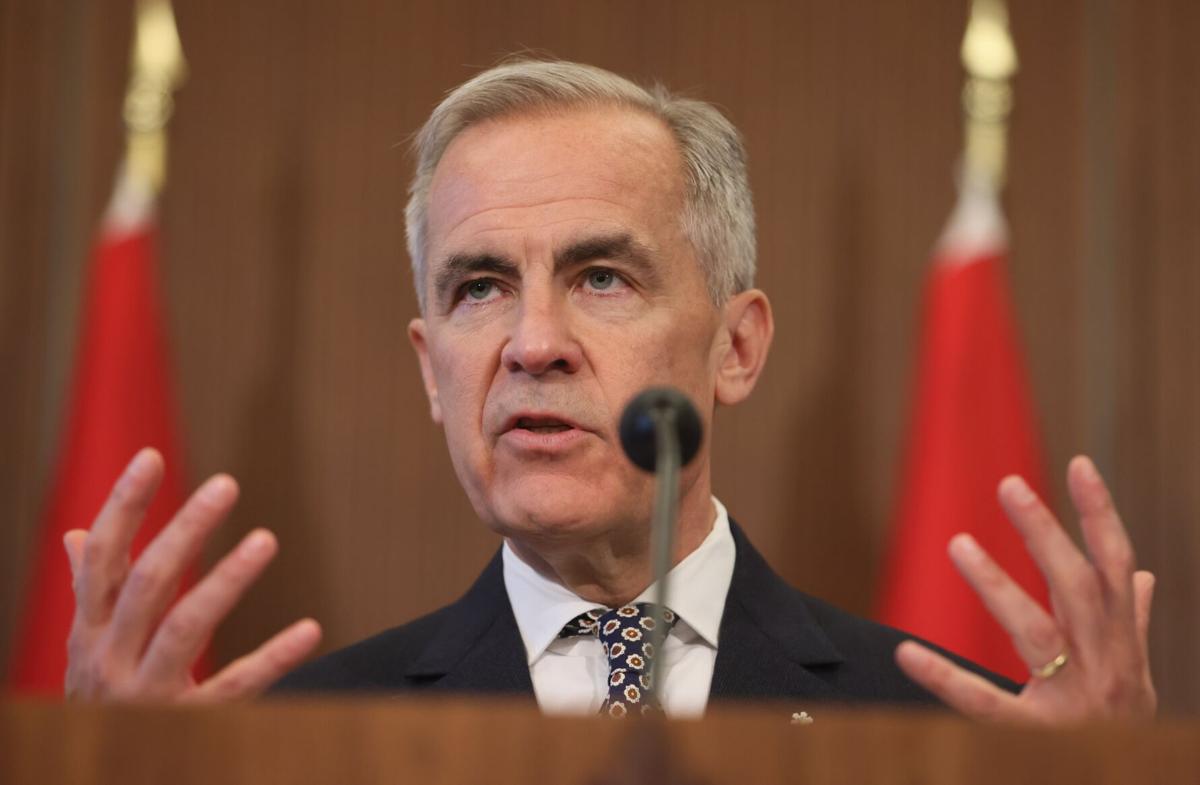
Prime Minister Mark Carney has argued that the United States is “driving itself into a recession” by turning tariffs into a governing ideology. The remark was not simply rhetorical flourish. It reflected a Canadian assessment that the costs of a sustained tariff regime would not remain contained inside Canada’s industrial regions, but would boomerang into American supply chains, consumer prices and investment confidence.
For months, U.S. policy makers framed the measures as a necessary correction to “unfair trade practices.” Yet the Canadian response — calibrated retaliation, consumer mobilization and accelerated diversification of trade relationships — has complicated the political narrative that tariffs can be applied like a clean instrument of national renewal.
Early in 2025, the pressure campaign arrived with a blunt figure: 25 percent tariffs on selected Canadian goods, including steel and aluminum, with threats of escalation. The message from President T.r.u.m.p was characteristically direct: Canada would pay, and if it did not adjust, it would pay more.
The economic forecasts were grim. Analysts circulated predictions that Canada’s gross domestic product could fall sharply — numbers like a 2.6 percent drop and a multibillion-dollar hole became shorthand for an assumed recession. In Canadian industrial corridors — in auto plants, metals fabrication shops and communities tied to cross-border supply chains — anxiety was not theoretical.
But Ottawa did not respond as a smaller neighbor seeking relief. It responded as a state seeking leverage.
Within days, the government announced a retaliatory package valued at 155 billion Canadian dollars, structured in phases: immediate tariffs on roughly 30 billion dollars’ worth of American goods, with a larger second wave — about 125 billion — held as a looming threat. The targeting was strategic: consumer products and politically sensitive sectors, designed to spread pain across U.S. regions that rely on Canadian markets.
If the aim was to convey resolve, it worked. The government described the confrontation in unusually stark terms, treating it as an “existential fight” for industrial stability. Those words mattered. They signaled that Canada’s leadership believed the dispute had crossed from ordinary bargaining into a test of sovereignty.
By early March, as the U.S. tariff posture expanded into what critics described as a blanket assault on Canadian imports, the atmosphere grew darker. Energy exports, metals and autos were dragged into broader uncertainty; headline writers reached for catastrophe; economists began bracing for second-order effects.
And yet, in a shift that surprised even some Canadian officials, the response on the ground hardened into something like coordinated civic behavior. Stores shrank displays of U.S. products. Bars swapped out American whiskey. Social media campaigns pushed consumers toward domestic alternatives. In surveys referenced in public discussion, large majorities reported intentions to buy fewer American goods. What might once have been dismissed as symbolic became, over time, a measurable signal: trade wars do not remain confined to ports and boardrooms. They seep into shopping carts.
Carney’s argument rests on a broader claim: that modern manufacturing is less about national pride than networked supply chains. A 25 percent tariff, in that view, is not a neat penalty imposed on a foreign producer; it is a disruption that reverberates through parts suppliers, logistics firms, and assembly lines — including American ones.
The Canadian strategy, however, has not been cost-free. By late 2025, unemployment reached 7.1 percent — the highest outside the pandemic era — and the strain showed up in small businesses and households. The pain was real, and Carney has not pretended otherwise. His political wager is that Canadians will tolerate near-term hardship in exchange for greater long-term control: more domestic capacity, stronger global trade ties and less vulnerability to U.S. political cycles.
In public remarks, Carney has emphasized partnership “on our terms,” a phrase that captures the new Canadian posture. The objective is not rupture, he insists, but a rebalanced relationship — one that recognizes Canada and the United States as sovereign countries whose economic integration cannot be managed by threats alone.

Diplomacy, too, has become theater. At an international gathering in Alberta in mid-June 2025, T.r.u.m.p arrived expecting a pliable counterpart, according to the storyline circulating in Canadian commentary. Instead, he met an unflappable Canadian delegation that appeared determined to withhold concessions absent tangible progress. Deadlines were discussed; patience was signaled; firmness was projected.
Then came fresh uncertainty: another round of threatened tariff increases — numbers as high as 35 percent discussed for certain sectors — timed to maximize pressure. Ottawa’s public response remained notably restrained, even as Canadian officials signaled that countermeasures would remain “focused” and “calibrated.”
What complicates the American narrative is Canada’s endurance. Rather than collapsing, Canada posted roughly 1 percent growth by year’s end — modest, but symbolically potent given the forecasts of inevitable recession. The feared catastrophe did not fully materialize; the country’s institutions held; and international observers, including major financial bodies cited in Canadian discourse, described Canada as “shaken but stable.”
That stability does not mean victory, and it does not erase the damage. But it does suggest a lesson Washington may not welcome: coercive trade policy can create its own counter-mobilization, and the target of pressure can adapt faster than expected.
In the end, the trade war became less a demonstration of American power than a stress test of North America’s economic interdependence. Canada has not escaped the shock, but it has shown that it can absorb it, retaliate precisely and pivot outward — and, in doing so, complicate the idea that tariffs automatically produce submission.
If T.r.u.m.p’s aim was to remind Canada who holds leverage, Carney’s response has been to redefine leverage itself: not as a threat delivered from Washington, but as resilience built at home — and choices made, deliberately, beyond the United States.