Donald Trump believed aluminum was leverage. In his view, tariffs were a blunt but effective weapon: raise the cost, apply pressure, and force Canada to bend. When he announced steep tariffs on Canadian aluminum imports, the message was unmistakable — Washington was prepared to use economic force to assert dominance in North American trade. But the strategy rested on a critical miscalculation: Trump assumed the United States held power simply because it was the buyer.
The reality of the aluminum supply chain told a very different story. The United States is structurally dependent on Canadian aluminum, importing more than half of its total supply from Canada. This dependency exists not because of preference, but necessity. Domestic U.S. aluminum production has declined for decades, leaving American manufacturers reliant on Canadian smelters that are geographically close, highly integrated, and capable of delivering consistent volumes. When tariffs were imposed, they did not create leverage — they exposed vulnerability.
As Trump escalated his rhetoric and briefly threatened to double tariffs, markets reacted instantly. Stocks fell, uncertainty spiked, and American manufacturers were left scrambling. The tariffs disrupted pricing, delivery schedules, and long-term contracts across industries ranging from automotive and construction to packaging and consumer goods. Aluminum costs rose sharply, and companies faced a dilemma: absorb higher prices or pass them on to consumers in an already competitive global market.

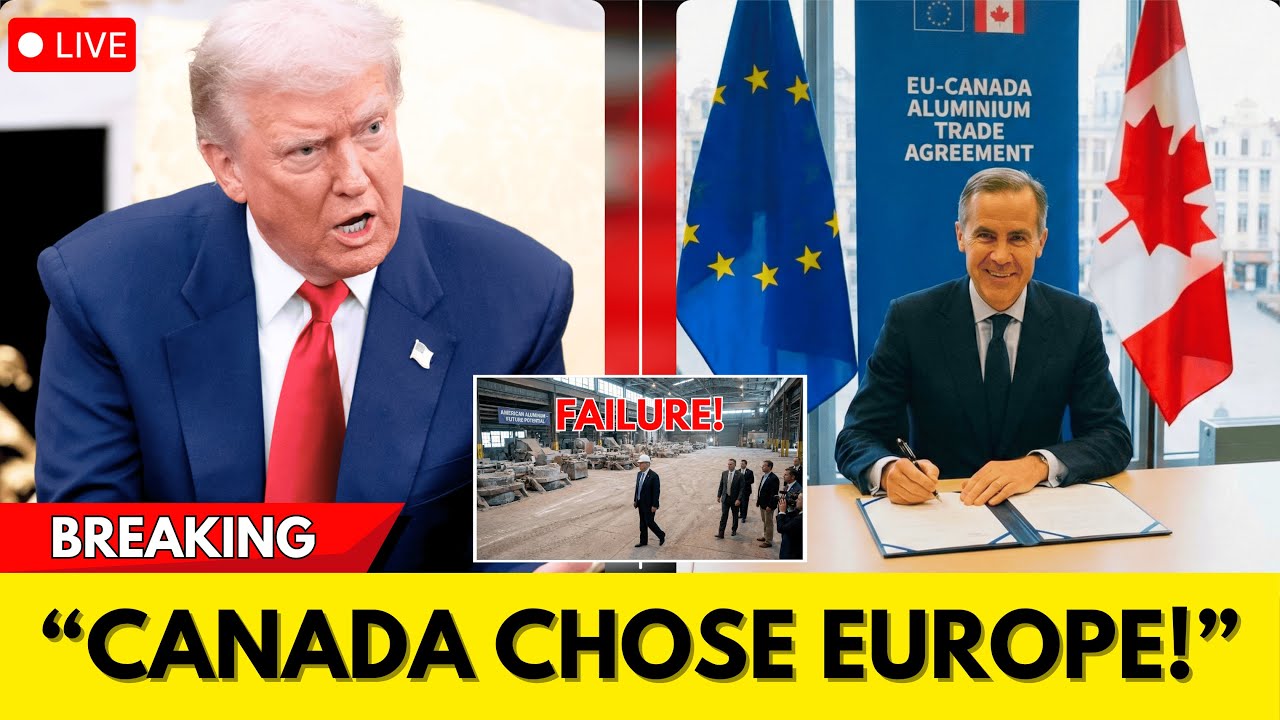
Canada, however, did not respond with panic or public confrontation. Instead, Canadian aluminum producers adjusted their strategy. Aluminum is a globally traded commodity, and Canada had options. As tariff uncertainty made the U.S. market less predictable, Canadian producers began redirecting shipments toward Europe. What initially appeared to be a defensive move quickly became a strategic advantage.
European demand for Canadian aluminum surged. The shift was not accidental. Canadian aluminum is produced primarily using hydroelectric power, giving it one of the lowest carbon footprints in the world. As Europe prepares to implement stricter environmental regulations and carbon border adjustments, low-carbon aluminum has become increasingly valuable. European buyers were not simply filling a temporary gap; they were securing long-term supply from producers aligned with future regulatory and sustainability goals.
Within months, supply chains that had remained stable for decades began to change. Canadian aluminum exports to the United States declined, while shipments to European countries increased sharply. Major European manufacturers in automotive, aerospace, and construction sectors signed longer-term agreements with Canadian suppliers, prioritizing reliability, environmental compliance, and supply security. These were contracts American producers wanted — and could not match under tariff-driven uncertainty.
Meanwhile, American manufacturers felt the consequences. Reduced access to Canadian aluminum meant higher costs, production delays, and competitive disadvantages against foreign rivals operating without tariff burdens. Some companies attempted to source aluminum from alternative suppliers, but few could offer the same combination of quality, volume, and logistical efficiency. Others postponed investments or altered production plans, creating ripple effects across the U.S. industrial economy.
The episode also revealed a deeper imbalance in economic leverage. While Trump wielded tariffs aggressively, Canada demonstrated restraint — and effectiveness. A single suggestion by Ontario officials that electricity exports to U.S. states could be reconsidered was enough to trigger panic in Washington and a rapid policy reversal. The contrast was stark: Canada held tools it never had to use, while the United States deployed its weapon and suffered the fallout.
By the time tariffs stabilized, the damage was already done. Trust had eroded. Supply chains had shifted. Canadian producers had diversified into markets that may prove more profitable and stable in the long run. Europe, recognizing both the economic and environmental advantages, positioned itself as a long-term partner rather than a temporary alternative.
Trump’s aluminum strategy was intended to demonstrate strength. Instead, it accelerated a structural realignment of global trade flows. Canada emerged with expanded options, Europe gained a reliable low-carbon supplier, and American manufacturers were left navigating higher costs and reduced certainty. What began as an attempt to pressure an ally ended as a lesson in how leverage truly works in an interconnected global economy — and how quickly the board can flip when assumptions collide with reality.