Trump’s Secret Bunker and the Golden Ballroom: A White House Drama Unfolds
In a court proceeding that has captivated political observers, the Trump administration revealed details about a secretive project beneath the White House that has sparked a mix of intrigue, speculation, and controversy. The Department of Justice, representing President Donald Trump, argued before Federal Judge George W. Leyon that ongoing construction work cannot be halted for reasons tied to national security. At the center of this argument is the so-called “Golden Ballroom,” a lavish renovation that, on the surface, appears to be a grandiose enhancement of the White House. But insiders and investigative sources suggest that the true focus may lie beneath the glittering façade: a secret bunker intended to serve as a reinforced presidential emergency operations center.
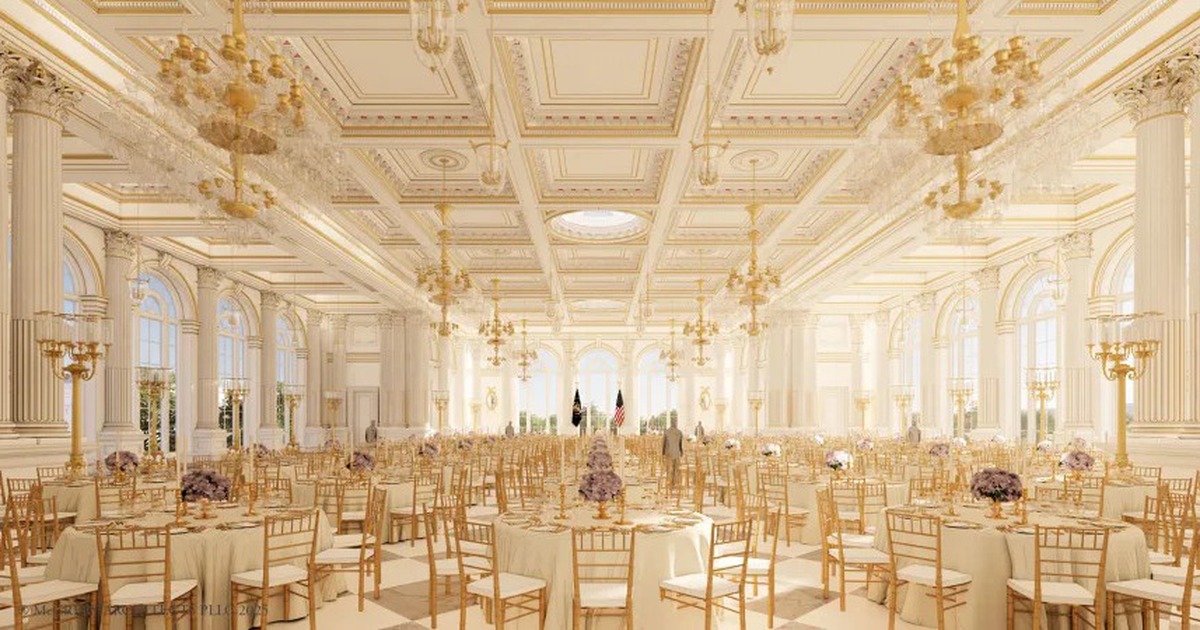
The project first drew attention when Trump himself publicly noted military involvement in the construction, raising eyebrows among journalists and historians alike. “The military is very much involved,” Trump remarked in October 2025, as he described the elaborate interior design of the Golden Ballroom. He also highlighted a $130 million contribution from a private donor allegedly earmarked for military purposes, an announcement that left some questioning whether funds were indirectly supporting the subterranean work. Such statements prompted renewed scrutiny from investigative networks like Midas Touch, which have long speculated that Trump’s renovations are reminiscent of authoritarian leaders’ grandiose architectural ambitions, blending personal vanity with strategic utility.
Historically, the White House has included underground facilities designed for emergency use. The presidential emergency operations center, originally constructed under President Franklin D. Roosevelt and subsequently reinforced to withstand nuclear threats, is situated beneath what was the East Wing. Images from post-9/11 operations show former Vice President Dick Cheney and his staff within this secure complex, emphasizing its centrality to executive safety. Sources indicate that demolition of portions of the East Wing may have cleared space for Trump’s current work, allowing for expanded or upgraded underground facilities. Observers note parallels between these efforts and historical authoritarian projects: Adolf Hitler’s Reich Chancellery combined ceremonial spaces with fortified bunkers, while Napoleon commissioned triumphal arches that intertwined legacy with power projection. Trump’s reported interest in creating both a Golden Ballroom and a triumphal arch in Washington, D.C., appears to echo these precedents, intertwining spectacle and security in one ambitious agenda.

The court proceedings highlight the delicate balance between presidential prerogatives and public accountability. Judge Leyon, appointed by President George W. Bush, scrutinized the administration’s claim that halting the work would imperil national security. While he allowed certain subterranean work to continue, he also made it clear that if any connection between the bunker and the ballroom’s construction is discovered, the project could be stopped and prior construction potentially undone. The Trump administration, in response, indicated that they would submit formal construction plans to federal agencies and projected completion of the ballroom by 2028, framing immediate legal challenges as moot.
Beyond the legal intricacies, the public reaction has been electric. Social media platforms are awash with speculation, with commentators questioning the scale, cost, and true purpose of the renovations. Some see the Golden Ballroom as a vanity project emblematic of Trump’s tendency to prioritize personal image over administrative competence. Others suggest a more strategic motive: the creation of an expansive, fortified underground complex that could serve as both a command center and a private sanctuary. Journalists covering the proceedings have noted that the DOJ repeatedly declined to discuss the project publicly, citing national security concerns, a stance that has only fueled speculation about what lies beneath.
The financial dimension adds another layer of intrigue. The reported donor contributions, including the $130 million pledge, raise questions about the intersection of private wealth, military involvement, and presidential authority. While Trump’s administration frames these contributions as support for security infrastructure, critics suggest they may facilitate the construction of an elaborate personal facility under the guise of public safety. Analysts point out that such high-profile donations are rarely devoid of political and social implications, especially when linked to projects as visibly opulent as the Golden Ballroom.
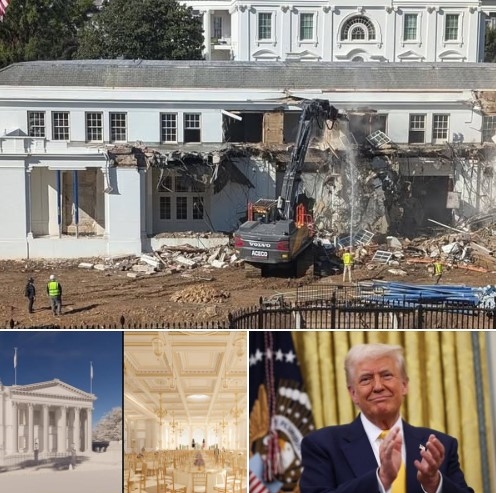
As the story continues to unfold, investigative reporting has sought to connect the dots between Trump’s public statements, historical analogues, and the ongoing legal process. While the administration maintains that the ballroom and the bunker are functionally separate, the layered secrecy surrounding the project, combined with the military’s involvement and substantial private funding, ensures that public curiosity remains at a fever pitch. Experts in presidential history note that while underground facilities are standard for national security, the scale, cost, and public visibility of Trump’s efforts are unusual in modern executive architecture.
Ultimately, the Golden Ballroom and its hidden infrastructure reflect a convergence of politics, personal ambition, and security concerns that few administrations have attempted on this scale. As Trump’s renovation plans proceed, federal oversight, media scrutiny, and public speculation will continue to shape the narrative. The coming months may reveal whether the project represents a strategic enhancement of executive safety, a personal vanity project, or a combination of both. For now, the story remains one of intrigue, secrecy, and escalating drama at the very heart of the American presidency.