As trade tensions resurface across North America, Canada is sending a message that Washington did not expect: Ottawa is no longer governing its economic future around U.S. volatility. While former president Donald Trump publicly claims trade negotiations under CUSMA are finished, Canadian officials are quietly operating on a very different assumption. Talks continue behind closed doors, but the strategic posture has shifted. This is not a trade standoff driven by panic. It is a recalibration driven by experience.
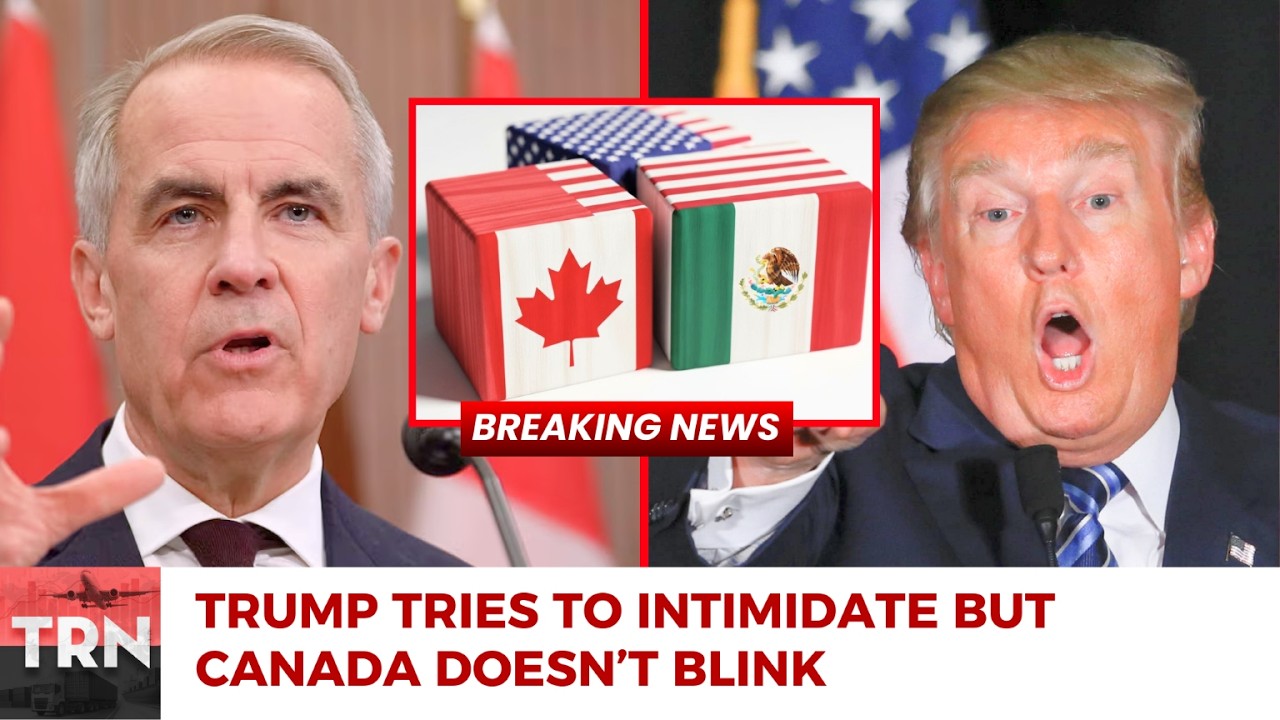
At the center of the moment is Canada’s recognition that unpredictability has become a structural feature of U.S. trade policy. Under Trump, tariffs appear, disappear, and reappear with little warning. Long-standing agreements are treated as leverage rather than commitments, and negotiations increasingly play out through public threats instead of private diplomacy. Canadian officials no longer frame this as a temporary disruption. They now treat it as a permanent risk that must be managed rather than endured.
Ottawa’s response has been deliberate. While the United States uses pressure to extract concessions, Canada has focused on insulating itself from future shocks. Senior officials have emphasized that a significant majority of Canada–U.S. trade remains protected under CUSMA, giving Canada continued access to the American market while it adjusts its long-term strategy. That breathing room is critical. It allows Canada to remain engaged without being cornered, buying time to strengthen alternatives rather than reacting emotionally to every escalation.

This shift is visible in both tone and policy. Canadian leadership has acknowledged openly that Canada cannot control decisions made in Washington. Instead of pretending otherwise, Ottawa is concentrating on what it can control: domestic resilience, supply chain security, and trade diversification. The emphasis has moved away from dependence and toward durability. Canada is no longer treating preferential access to the U.S. market as an untouchable guarantee, but as one component within a broader global strategy.
The human impact of tariffs has not been ignored. Canadian officials have been explicit about the uneven burden trade disruptions place on workers in steel, autos, forestry, agriculture, and fisheries. Communities deeply integrated into North American supply chains feel these shocks first and hardest. Yet Ottawa’s response has been targeted rather than reactive, combining sector-specific support with longer-term investments designed to reduce exposure to future policy swings.
Those investments point to a deeper transformation. Canada is accelerating efforts to strengthen domestic manufacturing, expand clean and reliable energy capacity, and secure critical minerals essential to advanced technologies. These are not short-term fixes, but structural adjustments aimed at positioning Canada as a stable partner in an increasingly fragmented global economy. As trade becomes inseparable from national security, countries are seeking reliability as much as market size, and Canada is leaning into that role.
International interest reflects this shift. Canada has seen growing engagement from Europe, Asia, and the Middle East, where investors and governments are looking for predictable jurisdictions governed by clear rules. While Washington debates tariffs and political leverage, Canada is deepening ties with allies, hosting high-level summits, and positioning itself as a steady anchor in a volatile system. The contrast is not ideological. It is practical.
The implications for the upcoming mandatory CUSMA review are significant. Canada enters the process more prepared than it was during previous negotiations. Trade relationships are broader, domestic capacity is stronger, and the psychological dynamic has changed. Pressure no longer carries the same weight when alternatives exist. Ottawa continues to engage the United States constructively, but it no longer assumes stability flows automatically from proximity.
This does not mark a break with the United States. It marks a maturation of Canada’s approach. The relationship is evolving, whether Washington acknowledges it or not. Each swing in U.S. trade policy reinforces Canada’s incentive to diversify and strengthens its credibility with global partners. Over time, that credibility becomes leverage of its own.
What is unfolding is not loud or theatrical. It is a quiet power shift rooted in preparation rather than confrontation. Canada remains committed to North American cooperation, but it is no longer willing to have its economic future dictated by political cycles beyond its control. As the trade landscape continues to fracture, Ottawa’s refusal to blink may prove less about defiance and more about strategy.