In Washington, where avoidance can be as revealing as confrontation, Speaker Mike Johnson’s recent public reticence has become a story of its own. As controversy tied to Donald Trump once again ripples through Capitol Hill, Mr. Johnson’s careful words — and, at times, conspicuous silence — have prompted speculation about deeper unease within the Republican caucus and a Congress increasingly anxious about what lies ahead.
The episode unfolded amid renewed political turmoil involving Trump, when reporters pressed Mr. Johnson for clarity on his party’s position. Rather than offering a forceful defense or a decisive rebuke, the speaker delivered a measured response that emphasized process, unity and a desire to “lower the temperature.” To critics, it sounded evasive. To allies, it reflected a leader trying to keep a fragile coalition intact.
Video clips of the exchange quickly spread online, fueling commentary that Mr. Johnson was “ducking” the issue. The reaction highlighted a broader problem facing Republican leadership: how to respond to Trump-driven controversies without alienating either the party’s base or its more cautious members.
Behind the scenes, several lawmakers and aides describe a growing sense of fatigue. According to people familiar with internal discussions, frustration has been building for weeks as members are repeatedly asked to defend rhetoric and decisions that overshadow legislative priorities. Some worry that the cycle of controversy is not only politically damaging but personally exhausting.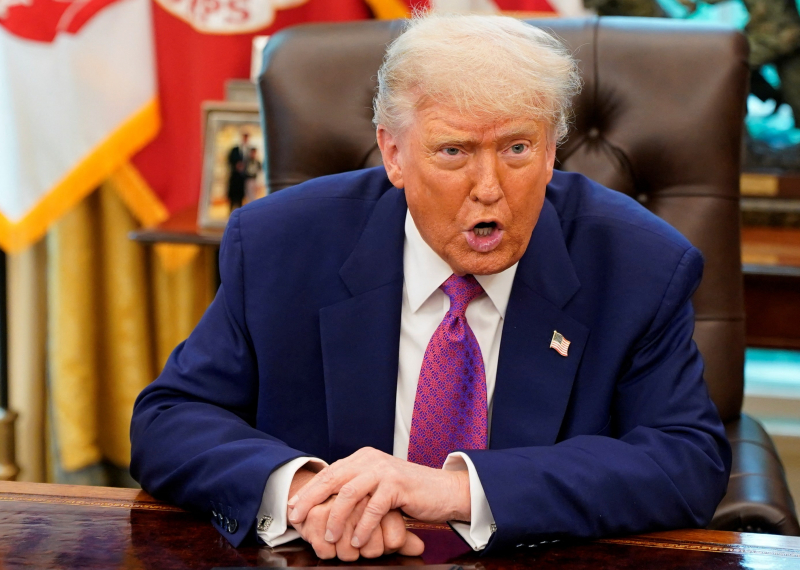
“There’s a lot of quiet anxiety,” said one Republican aide, speaking on the condition of anonymity to discuss internal dynamics. “People are asking themselves how much longer they can keep doing this.”
Those concerns have taken on added urgency as the 2026 midterm elections loom. While two years may seem distant, campaign planning and donor conversations are already underway. Several lawmakers, particularly those from competitive districts, are said to be weighing their options carefully — including whether to seek re-election at all.
The idea of a “mass exodus” from Congress remains speculative, but it is not unprecedented. In recent cycles, waves of retirements have reshaped the House, often signaling dissatisfaction with leadership or the political climate. For Republicans, the risk is that departures could weaken the party’s bench and complicate efforts to maintain control.
Mr. Johnson, a relatively new speaker, has been navigating an especially narrow path. Elevated to the role after months of intraparty turmoil, he inherited a conference divided not just ideologically but temperamentally. Some members demand aggressive confrontation; others want stability and a focus on governance. Silence, in this environment, can be both a shield and a liability.
Democrats have seized on the moment to argue that Republican leadership is unwilling to hold its own accountable. “When leaders won’t speak clearly, voters notice,” one Democratic lawmaker said. Republicans counter that constant outrage is precisely what they are trying to avoid.
The tension reflects a deeper question about leadership in an era dominated by rapid media cycles and viral clips. Is restraint a virtue, or does it create a vacuum that others rush to fill? For Mr. Johnson, the answer may depend on how voters interpret his approach.
So far, the speaker has shown no sign of backing away from his strategy. In recent remarks, he emphasized his commitment to keeping the House focused on legislation and avoiding what he called “performative politics.” Supporters argue that this steadiness is exactly what the conference needs after years of upheaval.
Still, even allies acknowledge the risk. Silence can calm a room, but it can also amplify suspicion. As one longtime Republican strategist put it, “In Washington, if you don’t define the moment, someone else will.”
Whether the current unrest leads to significant departures or fades into the background remains to be seen. Congress has weathered many storms, and predictions of collapse often prove exaggerated. Yet the intensity of the chatter suggests a real discomfort that cannot be easily dismissed.
For now, Mr. Johnson remains in place, carefully choosing his words as the political temperature rises around him. But as controversies continue to flare and elections draw closer, the pressure on leadership to speak — or risk being defined by silence — is only likely to grow.