An old interview with Rob Reiner has surged back into public view this week, igniting renewed political debate and an emotional online reaction that reflects the volatile intersection of celebrity, grief and American politics. The clip, recorded months earlier and largely overlooked at the time, has gone viral after being reshared amid a wave of Hollywood tributes following unrelated tragic news in the entertainment world.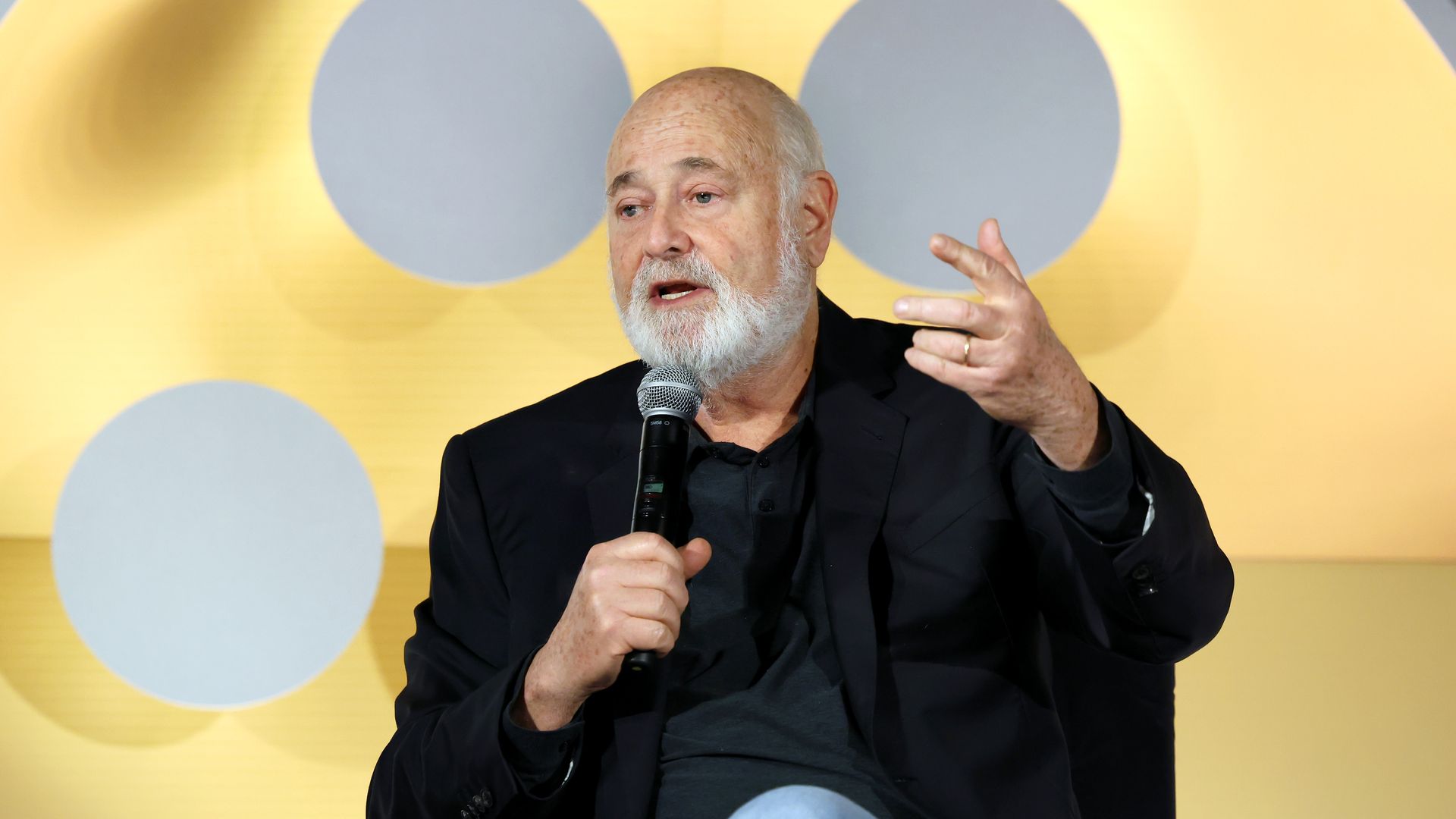
The timing alone was enough to capture attention. As social media filled with memorial posts honoring figures from film and television, users began circulating the Reiner interview, framing it as “prescient” and “chilling” in tone. Within hours, the clip was trending across platforms, with viewers parsing Reiner’s words line by line and debating their relevance to the current political climate.
In the interview, Reiner — the director and actor best known for films like All the President’s Men, When Harry Met Sally and The Princess Bride — speaks bluntly about his concerns regarding Donald Trump and the long-term health of American democracy. His remarks, delivered calmly but firmly, reflect views he has expressed publicly for years: that political norms are fragile, and that citizens should not take democratic institutions for granted.
At the time it was recorded, the interview drew modest attention. Its resurfacing now, however, has taken on a different resonance. Commentators on cable news and digital platforms have suggested that the clip feels newly urgent, not because of new information, but because of a heightened sense of political anxiety across the country.
Producers familiar with the original segment said they were surprised by the speed and scale of its revival. “It was never framed as a dramatic moment,” one person involved said. “It was thoughtful, serious, and very much in line with what Reiner has been saying for years. The reaction now says more about the moment we’re in than about the clip itself.”
Public response has been intense and divided. Supporters praised Reiner for his consistency and moral clarity, describing the interview as a reminder of the role artists have historically played in political discourse. Critics accused him of fear-mongering and politicizing moments of public emotion, arguing that Hollywood figures wield outsized influence without accountability.
The episode underscores how quickly cultural artifacts can be repurposed in a digital media environment shaped by algorithms and emotional amplification. A clip recorded months earlier, in a controlled setting, can suddenly feel like a live intervention when reshared at the right — or wrong — moment.
Reiner himself has not commented on the renewed attention. Friends and colleagues note that he has long accepted the consequences of speaking openly about politics, including backlash. “Rob doesn’t do subtle when it comes to democracy,” said one longtime associate. “He believes silence is more dangerous.”
The broader significance of the moment lies less in the interview’s content than in the public’s reaction to it. As lines between entertainment, politics and personal loss blur, audiences increasingly project meaning onto familiar voices. In times of uncertainty, even old warnings can sound new.
Whether the viral moment will have lasting impact remains unclear. Political storms driven by social media often burn hot and fast. Yet the intensity of the response suggests a lingering appetite for voices that frame political conflict in moral terms — particularly when delivered by figures whose careers have been shaped by stories about power and accountability.
For now, the resurfaced interview stands as a reminder of how memory, media and emotion collide in modern public life. A familiar figure speaks. An old clip circulates. And in the charged atmosphere of the present, it lands with unexpected force, reigniting questions that many Americans are still struggling to answer.