An Unscripted Moment With a U.S. Ambassador Reveals Unease Over Canada’s Growing Influence
Washington — A routine diplomatic interview took an unexpected turn t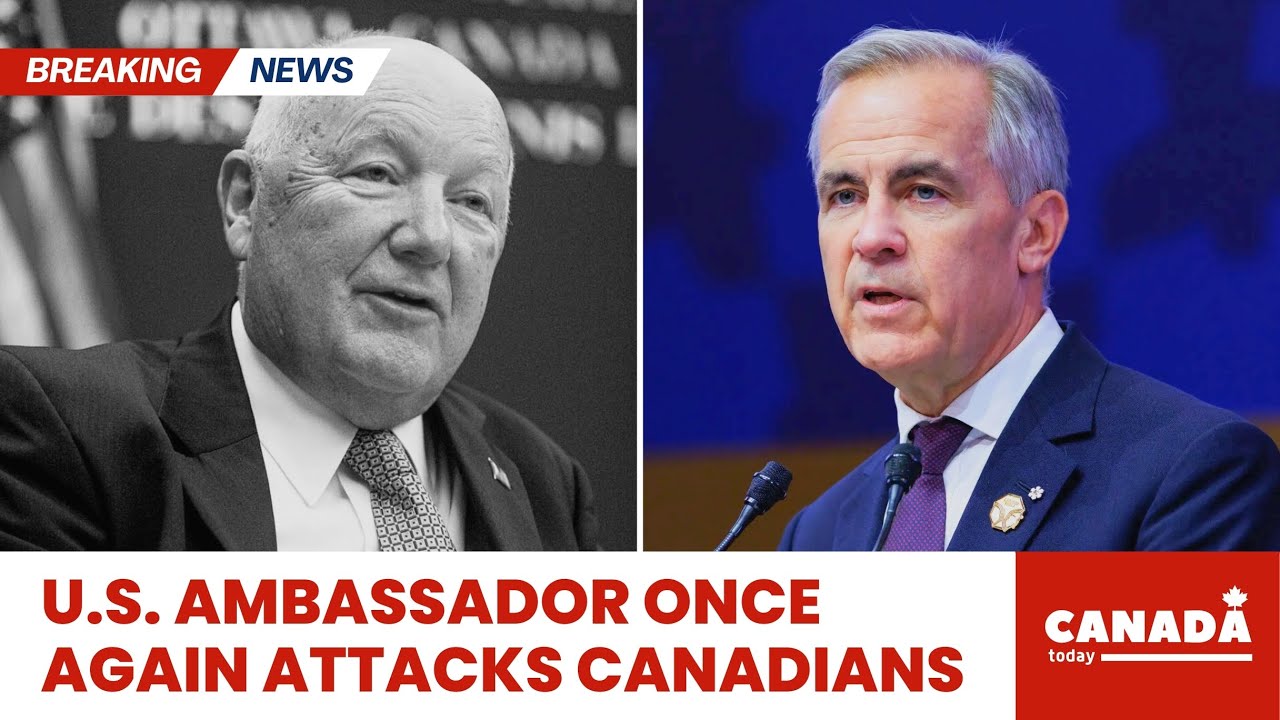 his week when a senior United States ambassador, speaking about relations with Canada, departed from prepared remarks and offered unusually candid observations that quickly reverberated through Washington. The exchange, broadcast live, was widely interpreted by analysts as a rare glimpse into growing American unease over Canada’s increasingly assertive economic and strategic posture.
The ambassador, whose comments were not cleared in advance, was responding to a question about Canada’s recent string of high-profile investment wins and trade realignments. Instead of reiterating standard language about partnership and shared values, he spoke at length about “competitive pressure,” “strategic recalibration,” and what he described as the need for the United States to “rethink assumptions” about its northern neighbor.
Within hours, the clip was circulating widely among diplomats, policymakers and market analysts, prompting hurried clarifications from U.S. officials and renewed debate about the shifting balance inside the North American alliance.
A Departure From Diplomatic Script
Diplomatic interviews are typically cautious affairs, tightly choreographed to avoid misinterpretation. That is why the ambassador’s remarks — delivered without visible notes and marked by an unusually reflective tone — stood out.
At one point, he acknowledged that Canada had “positioned itself very effectively” amid global uncertainty, citing its regulatory stability, trade diversification and success in attracting major industrial and technology investments. He added that Washington was “not accustomed to thinking of Canada as a strategic competitor,” a phrase that immediately caught the attention of viewers.
“That sentence alone changed the temperature of the conversation,” said Laura McKenzie, a former State Department official. “It suggested anxiety where the official line usually projects confidence.”
Swift Efforts to Contain the Fallout

Within hours of the broadcast, the State Department issued a brief statement emphasizing that the United States views Canada as “one of its closest allies and partners” and that the ambassador’s comments reflected “personal observations, not a shift in policy.” Privately, however, several officials acknowledged that the interview had landed uncomfortably at a moment of heightened sensitivity.
The remarks came amid a series of developments that have elevated Canada’s profile: major foreign investment commitments, expanding trade ties with Europe and Asia, and a more visible role in global economic forums. Together, these moves have fueled a narrative — particularly outside North America — that Canada is emerging as a stable alternative to the United States during a period of domestic political volatility.
Canada’s Strategy, Seen From Washington
Canadian officials declined to comment directly on the interview, but analysts said the reaction in Washington underscores how Ottawa’s strategy is being noticed — and quietly reassessed.
“Canada has been very deliberate,” said Daniel Brooks, a senior fellow at the Council on Foreign Relations. “It has avoided confrontation, but it has also stopped assuming that alignment with the U.S. will always be sufficient.”
That approach has included diversifying supply chains, courting European and Asian partners, and emphasizing predictability in trade and regulation — qualities that multinational firms increasingly prize.
From Washington’s perspective, this creates an unfamiliar dynamic. For decades, Canada was seen as an extension of the U.S. economic and strategic ecosystem. Now, analysts say, it is being viewed more as an independent actor with its own gravitational pull.
The Trump Factor
The ambassador’s comments also intersected with domestic political tensions. Allies of former President Donald J. Trump seized on the interview as evidence that Washington’s rivals — including close allies — are exploiting American divisions. Trump himself has repeatedly criticized Canada in recent months over trade and industrial policy, framing Ottawa’s moves as challenges to U.S. dominance.
While the ambassador did not mention Mr. Trump by name, his acknowledgment of “political unpredictability” was widely interpreted as a reference to the current U.S. climate — and to concerns among allies and investors about long-term consistency in American policy.
Markets and Media React
Financial markets showed little immediate movement, but analysts said the symbolism mattered more than the substance. “Markets don’t panic over one interview,” Brooks said. “They pay attention to patterns. This added to a pattern.”
Media coverage amplified the moment, with commentators describing it as an accidental admission of insecurity. Some argued that the reaction revealed more about Washington’s state of mind than about Canada’s intentions.
“This wasn’t a loss of control,” said McKenzie. “It was a crack in the façade.”
A Relationship in Transition
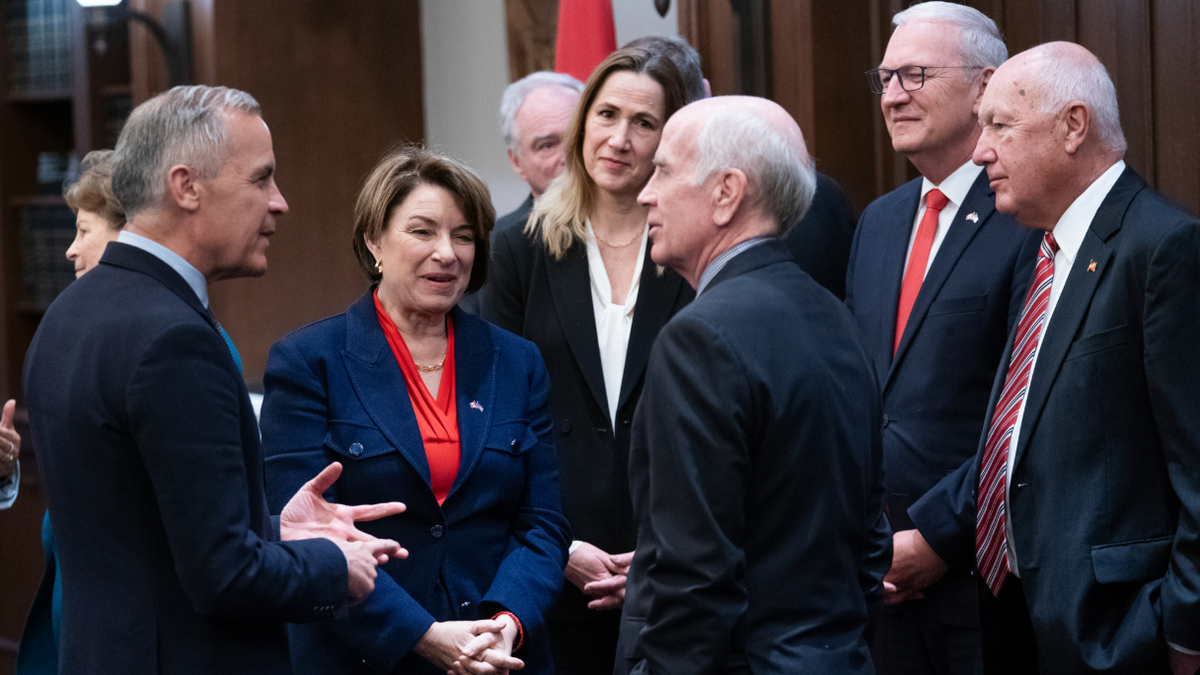
Despite the flurry of reaction, experts cautioned against overstating the episode. The U.S.–Canada relationship remains deeply intertwined, anchored by defense cooperation, intelligence sharing and integrated supply chains. But they also noted that relationships evolve — even among allies.
“What’s changing is not hostility, but hierarchy,” Brooks said. “Canada is no longer content to simply follow. And Washington is adjusting to that reality.”
What Comes Next
The ambassador has since returned to standard diplomatic messaging, and officials on both sides emphasized continuity. Still, the episode has lingered as a reminder that even unscripted moments can reveal underlying shifts.
In an era when alliances are being tested and redefined, the interview offered a rare, unguarded look at how power dynamics inside North America may be quietly changing — not through confrontation, but through competition, confidence and careful strategy.
As one former diplomat put it, “The most telling signals are often the ones no one meant to send.”
https://youtube.com/watch?v=UbZqZSoCq_A