Canada Breaks from America: Carney’s Historic Pivot to Asia Reshapes North American Power — and Triggers Washington’s Deepest Panic Yet
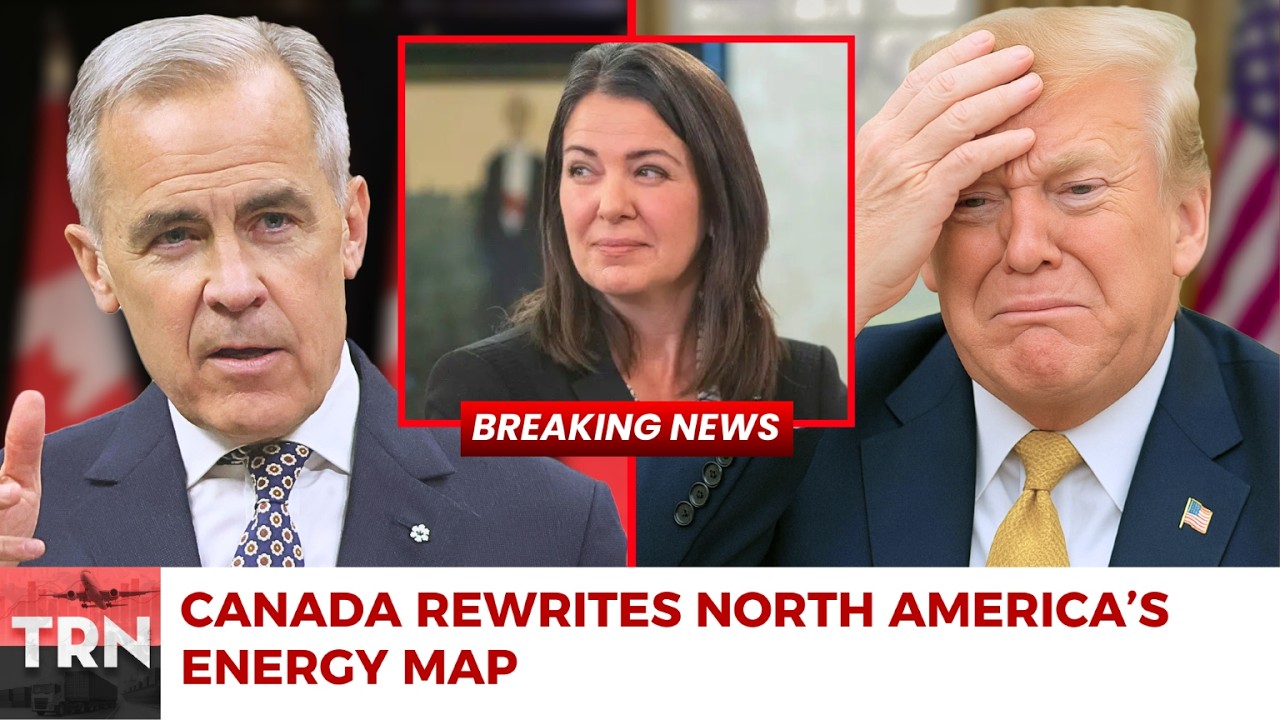
In Calgary, before a crowd that understood the weight of the moment long before the applause began, Prime Minister Mark Carney delivered the most consequential shift in Canadian strategy in a generation. “The U.S. has changed. That’s their right. We must respond. That is our imperative.” For decades, those words would have been unthinkable from a Canadian leader. But on this day, they marked the birth of a new era—an era in which Canada, for the first time in modern history, openly acknowledged that American stability can no longer be taken for granted, and that the nation must now build its future independently of decisions made in Washington.
Carney’s announcement stunned observers across the continent: Canada will build a new Pacific pipeline capable of transporting at least one million barrels of low-emission Alberta bitumen per day directly to Asian markets, bypassing the United States entirely. For generations, one unwritten rule defined North American energy: Canadian oil flowed south. It was structural, unchallenged, and politically immovable. But under Trump’s aggressive tariff regime, that stability shattered, and Ottawa responded not with retaliation, but with a move that rewrites the strategic balance of the continent.
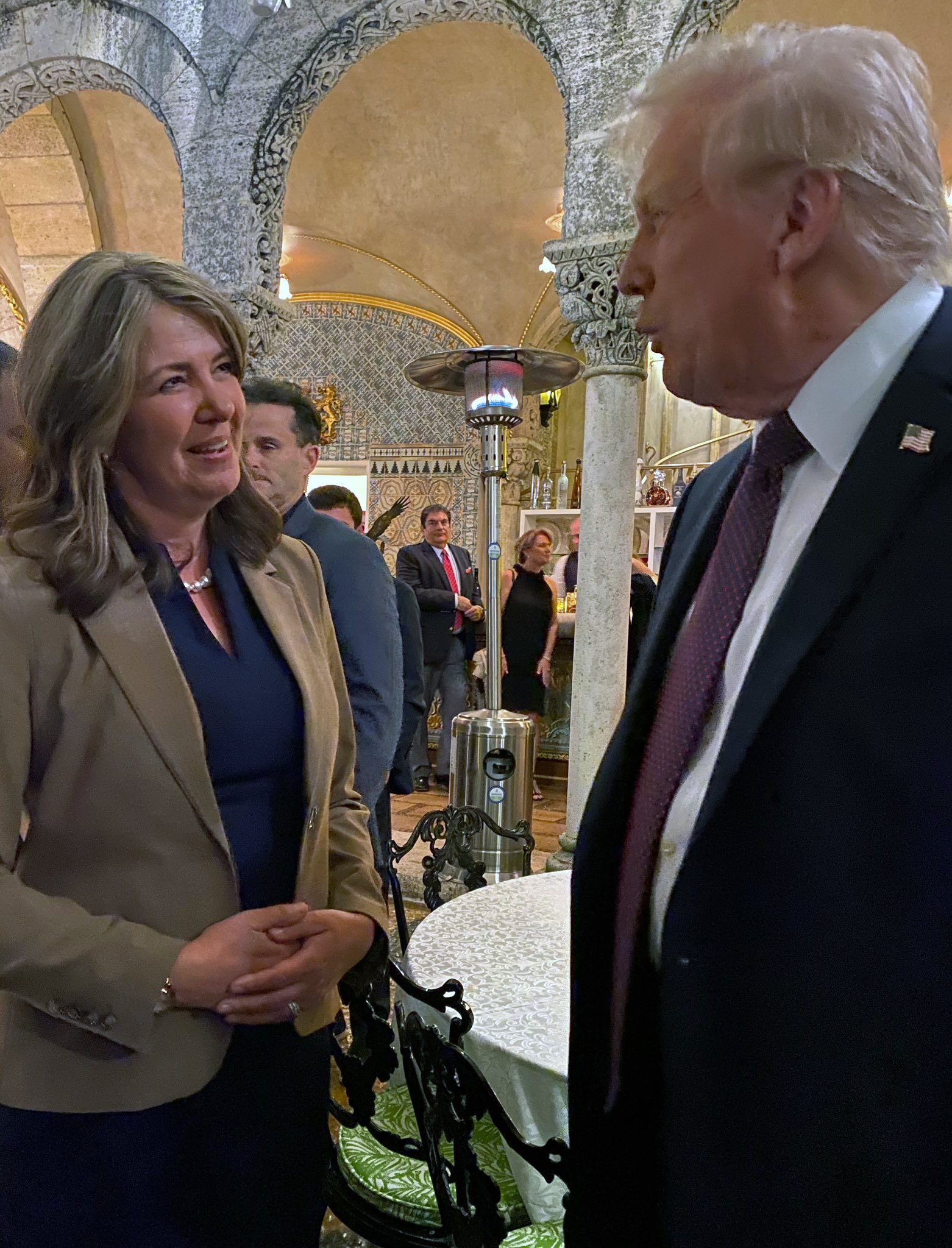
Standing beside Alberta Premier Danielle Smith, Carney unveiled a federal–provincial framework to greenlight a privately financed, Indigenous co-owned megaproject that will, for the first time, give Canada direct access to Asia’s rising energy demand—Japan, South Korea, India, and Southeast Asia. Ottawa’s new Major Projects Office will fast-track approvals, cut regulatory delays, and remove internal barriers long considered sacrosanct, including restrictions on West Coast tanker access. What once seemed untouchable is now negotiable in service of a single goal: Canadian economic sovereignty.
Behind the scenes, Trump’s escalating tariffs have inflicted an estimated $50 billion hit on Canada—an internal figure echoed by analysts across the industry. Steel, lumber, autos, aluminum, and energy have all been caught in Washington’s economic crossfire. Carney did not mince words: Canada’s dependence on the U.S. market has become a vulnerability. Ninety-five percent of Canadian energy exports still go to the United States. American refiners rely heavily on Canadian heavy crude because their complex Gulf Coast systems are physically designed for it. Reconfiguring them would take years and billions. That simple physical constraint gives Canada a structural advantage Trump cannot erase.
By building a new route to Asia, Canada weakens U.S. leverage not for a moment, but for an entire generation. For the first time, America risks losing its near-monopoly on Canadian crude. If Asian buyers bid up Canadian supply, the discount Canada historically accepts in the U.S. market evaporates. Revenues rise. Dependence falls. The negotiating table tilts.
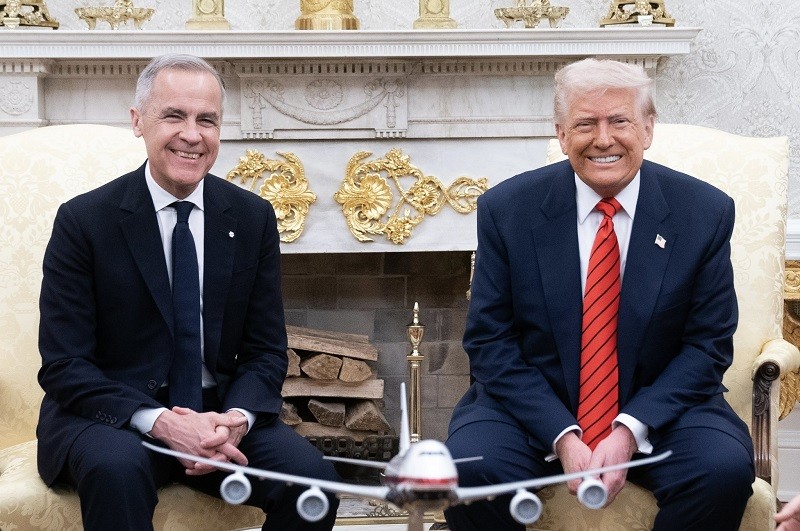
This is why Washington is rattled. Trump’s tariff doctrine relies on a single belief: that every partner needs access to the U.S. more than the U.S. needs access to theirs. Canada just shattered that logic. No ally—Japan, South Korea, Germany—has ever built a national energy strategy specifically designed to bypass the United States. Canada is the first. And the pipeline is only the beginning.
Carney paired the announcement with a sweeping five-year plan totaling over $1 trillion in national energy and industrial investment: nuclear power, hydro expansion, LNG export capacity, critical minerals, sovereign AI infrastructure, and a coast-to-coast modernization of Canada’s energy grid. These are not defensive measures. They are offensive, nation-building measures designed to anchor the next century of economic growth in Canadian hands rather than relying on the volatility of American politics.
As the U.S. turns inward, Canada is scaling outward. And nowhere is this shift more visible than at the Darlington nuclear site east of Toronto, where Carney and Ontario Premier Doug Ford announced four new small modular reactors—SMRs—backed by $2 billion in federal funding and $1 billion from Ontario. These GE Hitachi BWRX-300 units will form the largest SMR cluster in the G7, a landmark project designed to protect Canada’s manufacturing, strengthen its grid, and build an industrial backbone immune to tariff shocks. Once operational, the reactors will supply clean, stable power for factories, transportation, and the digital economy, supporting up to 18,000 jobs and reshaping Ontario’s industrial landscape.
Darlington is more than a provincial project; it is the national blueprint. Alberta responded immediately, announcing public consultations to bring nuclear power to its grid and potentially power its energy-intensive oil sands with SMR clusters. Suddenly, nuclear innovation is no longer an Ontario story—it is a pan-Canadian strategy to secure economic resilience and redefine Canada’s energy identity.
South of the border, the shift has sparked anxiety. Trump’s return to the White House has brought tariffs on autos, steel, aluminum, and imports from key sectors. The goal is simple: pull production back to the U.S. But the effect on Canada has been the opposite. Instead of retreating, Canada is reinventing itself. Tariffs meant to weaken Canada have accelerated its reindustrialization. While American firms seek tax breaks to offset rising costs, Canadian companies are benefiting from stable power, strong incentives, and long-term national investment. The pressure that was meant to break Canada is forcing it to build faster.
And yet the tensions go beyond energy. The Trump administration has now threatened a 100% tariff on all movies made outside the United States, dragging Hollywood into the trade war for the first time. Film is America’s cultural export engine—80% of its revenue comes from abroad. The move is so sweeping and so economically self-destructive that Hollywood executives are quietly in crisis mode, warning that it could cripple the very industry the policy claims to protect. Productions routinely film abroad—Canada, Italy, Thailand, Iceland—not to offshore work, but because the story demands it. Visual effects, animation, and post-production are globalized. A protectionist wall around filmmaking would not strengthen Hollywood; it would gut it.

Canada’s film sector, meanwhile, is preparing calmly. With over CA$12 billion in annual production—much of it coming from U.S. studios—Ontario and British Columbia are doubling down on stability, training, and global partnerships. If Hollywood hesitates, Canada won’t collapse. It will adapt. And that adaptability is precisely what now defines Canada’s strategy.
The deeper story beneath all these shifts is geopolitical: Canada is no longer reacting to Washington. It is repositioning itself in the world. Energy independence, nuclear expansion, trade diversification, and industrial sovereignty are now pillars of national policy. When Canada builds a direct energy corridor to Asia, it is not merely selling oil—it is reshaping the architecture of global flows. When Ottawa accelerates nuclear projects across provinces, it is declaring that Canadian manufacturing will not rely on American policy cycles. When Carney challenges tanker limits or pipeline bottlenecks, he is signaling that old constraints are no longer acceptable in a world defined by volatility.
And beneath the strategic shift lies a message Washington cannot ignore: Canada will no longer be cornered, economically or politically.That new self-confidence is why U.S. advisers are now asking a question they never expected to confront: If this is how far Canada goes defensively, how far could it go offensively?
Because Canada holds leverage the United States has always overlooked. The supply-managed sectors—dairy, poultry, eggs—are political dynamite in the U.S., concentrated in states that are the backbone of Trump’s base. If Ottawa ever slowed imports, tightened quotas, or redirected allocations, American farm states would feel the shock instantly. Trump may ignore retaliation on lumber or metals, but he cannot ignore rural voters. Eggs and poultry are not global commodities; they are electoral ammunition.
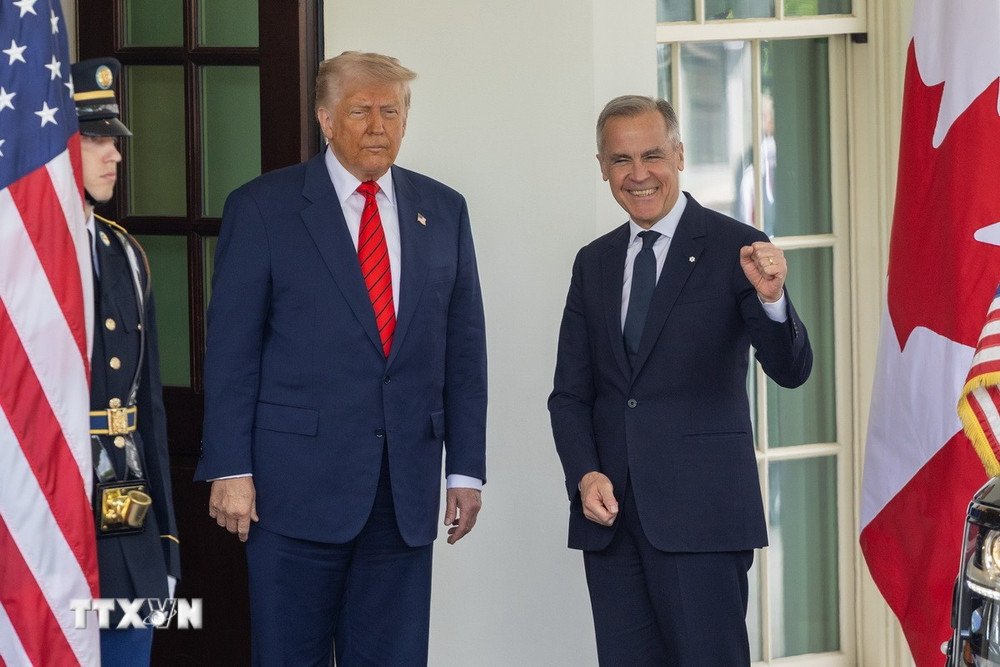
This scenario is not a prediction—only a reminder. In trade conflicts, quiet tools can be the most powerful. And Canada has more of them than Washington realizes. Taken together, the pipeline, the SMRs, the Asian energy strategy, the nuclear expansion, and the readiness to defend key sectors all point to a single reality: Canada is no longer building its future around the United States. It is building its future for itself.
Carney’s pivot marks a national awakening. For decades, Canadians were told they had no choice but to depend on the U.S. For decades, the structure of the North American economy reinforced that belief. But today, in 2025, that belief has cracked. Canada is becoming an energy superpower, a nuclear innovator, a diversified trader, and a country that chooses its partners rather than waiting for permission.
This is not a break fueled by anger. It is a transformation fueled by strategy. As the world becomes more dangerous and divided, Canada is stepping into a role it has long been told it could not lead: a sovereign, self-assured middle power capable of shaping its own destiny.And now the question hangs over Washington more heavily than over Ottawa: What will the United States do when it realizes that—for the first time in modern history—it no longer holds the leverage it once believed was permanent?