Canada Breaks Away: The Quiet Masterplan Reshaping Global Trade While Trump Faces His Biggest Strategic Blindside Yet
Canada has just pulled off one of the most consequential geopolitical shifts of the decade—one that few saw coming, and one that has left Washington scrambling to understand how it happened. With the European Union opening its €150-billion SAFE defence program to a non-EU country for the first time, Canada has been granted privileged access to a market the United States itself could not enter. It is a move that signals a deeper transformation underway: Canada no longer intends to anchor its economic future to Washington’s moods.
Behind this breakthrough lies a broader strategy quietly engineered over the past year. Facing tariffs, political volatility, and increasingly erratic U.S. trade behaviour, Ottawa began diversifying its alliances at a pace not seen in decades. SAFE is only the most visible result. It gives Canadian companies a foothold inside Europe’s next generation of weapons manufacturing—a space where American firms, for now, have no door to walk through.
What makes Europe’s decision even more symbolic is who was left out. The United Kingdom failed to secure the same access. The United States wasn’t invited into negotiations at all. And Canada, often overshadowed by its larger neighbours, suddenly found itself with a strategic advantage no G7 peer currently holds. Ottawa didn’t boast, didn’t provoke, didn’t gloat. It simply stepped through the opening Brussels offered.
While Canada expands into Europe, it is simultaneously reshaping the Arctic with a clean-energy push unlike anything the region has seen. The Aalloowit Hydro Project in Nunavut—small on a map but enormous in consequence—signals Ottawa’s intent to build permanent infrastructure in a region where sovereignty is rarely earned through speeches. Hydropower in the North means stability, investment, and a foundation for unlocking critical minerals that global powers are quietly competing for.
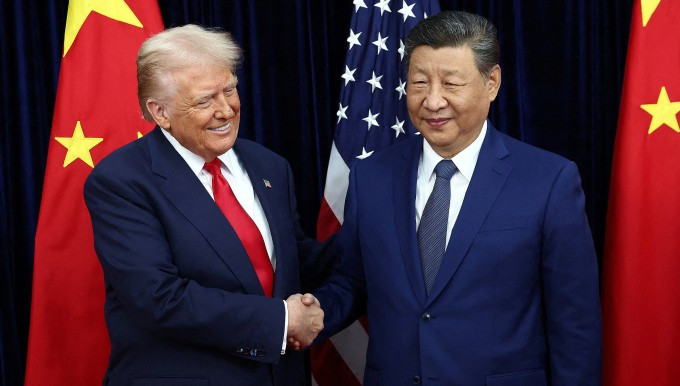
This shift is unfolding just as U.S. trade policy grows more unpredictable. Trump’s escalating tariffs on Canadian goods have disrupted industries on both sides of the border, but they’ve also produced an unintended effect: they pushed Canada further into Asia. At the APEC summit, Trump refused to meet with Prime Minister Mark Carney—but Carney met with Xi Jinping instead. While Washington paused, Ottawa moved forward, securing new talks with ASEAN countries and aiming to boost non-U.S. exports by 50%.
The consequences of U.S. protectionism are now visible across multiple sectors. American farmers face collapsing soybean exports as China shifts to Argentina and Brazil. Lumber tariffs are driving up U.S. homebuilding costs. Auto and steel duties are squeezing manufacturers. Yet Canada, instead of bending, has passed legislation protecting its most sensitive sectors—like supply management—from any negotiation pressure the U.S. hoped to exert.
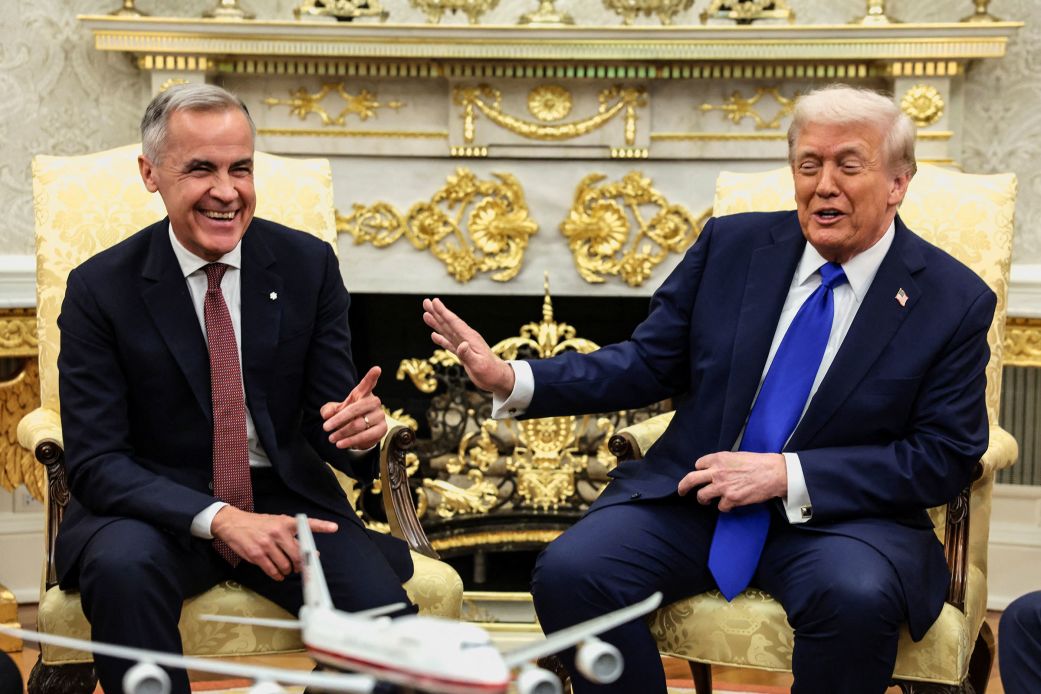
This divergence in strategy is becoming harder to ignore. Washington is fighting trade wars. Ottawa is building partnerships. Trump is closing doors. Carney is opening new ones—from Brussels to Jakarta. For the first time in modern North American politics, Canada is not simply reacting to U.S. decisions; it is charting a separate path, one that reduces vulnerability and multiplies global leverage.
The question now is whether the United States will adapt to a Canada that is no longer a junior partner—or whether it will realize, too late, that its closest neighbour has already outgrown the old script. Because with Europe’s defence market opening, Asia’s trade routes expanding, and the Arctic being rebuilt one hydro turbine at a time, one truth is becoming unavoidable: Canada is no longer waiting. Canada is leading.