Rubio MELTS DOWN As Gabe Amo Exposes Food Aid Failures In Explosive Hearing — The Moment That Left Washington Asking What’s Really Going On
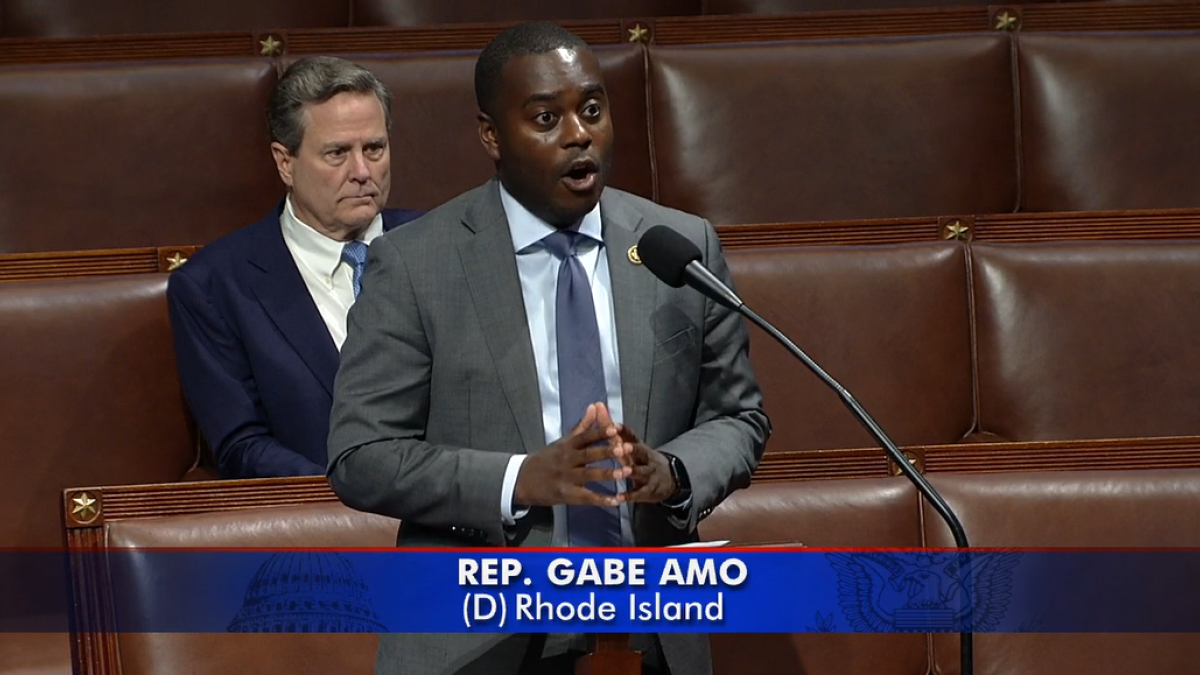
WASHINGTON — A routine oversight hearing on international food assistance erupted into one of the most tense and revealing confrontations on Capitol Hill this year, after Representative Gabe Amo confronted Secretary Marco Rubio with documents and photographs showing thousands of boxes of lifesaving therapeutic food stalled in a Rhode Island warehouse. What followed was a deeply uncomfortable exchange that left lawmakers in both parties questioning not only the State Department’s management but also its candor.
The flashpoint came early in Amo’s questioning. Holding up a single box of ready-to-use therapeutic food — a high-calorie, nutrient-dense product used globally to counter severe childhood malnutrition — the congressman revealed that more than 185,000 identical boxes were sitting idle in storage, despite urgent requests from humanitarian groups for immediate deployment. According to shipping logs and internal communications Amo introduced into the record, manufacturers had not been paid for months and distribution orders had been “paused indefinitely” pending additional review by the State Department.
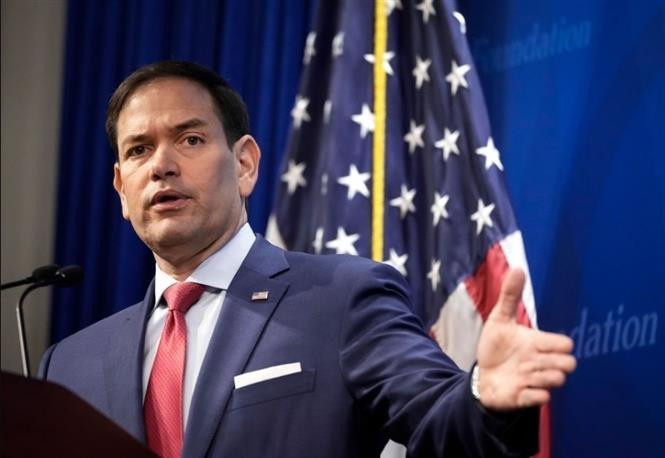
Rubio pushed back sharply, insisting the claims were “inaccurate,” “misleading,” and “politically motivated.” But each denial seemed to raise new questions. When Amo asked why the department had halted shipments already approved by the U.S. Agency for International Development, the secretary replied that there were “logistical inconsistencies,” but declined to specify whether those inconsistencies involved customs clearances, transportation contracts or internal compliance flags.
The tension escalated as Amo pressed him on the issue of consequences for children in crisis zones. Aid groups estimate that therapeutic food programs prevent tens of thousands of deaths annually, particularly in regions facing conflict, drought and famine. Delay, Amo said, was not an inconvenience — it was life-threatening.
Rubio rejected the premise, stating flatly: “No children are dying because of delays from this department.” Several members visibly reacted, and aides in the room exchanged looks. Outside experts quickly questioned the claim, noting that even short interruptions in therapeutic food supply chains can have devastating effects.
As Amo presented evidence from three NGOs, each documenting stalled shipments and unanswered payment requests, Rubio’s tone grew increasingly defensive. He accused Amo of “cherry-picking sources,” and suggested the congressman was “creating a narrative” to score political points. But Rubio did not dispute that thousands of food cartons remained undistributed, nor did he offer a timeline for when they would be shipped.
Lawmakers from both parties appeared unsettled by the secretary’s approach. Unlike other contentious hearings, where partisan lines determine the temperature of the confrontation, this dispute centered on administrative competence and transparency — issues that transcend party affiliation.
“What the congressman presented were facts,” said a senior Republican staffer familiar with the program. “We expected clarifications. We didn’t expect denials that don’t match the basic documentation.”
The State Department later issued a brief statement saying the food boxes were undergoing “routine quality verification,” though manufacturers and USAID officials said such checks typically occur before items leave production facilities, not months after they have been boxed and shipped to domestic staging warehouses.
The central question emerging from the hearing was not simply why the therapeutic food remained undelivered, but why the department appeared reluctant to acknowledge any problem existed. Congressional investigators said the payments issue alone warranted examination: several U.S. suppliers reported they had halted production in late spring after repeated failures by the State Department to reimburse contracted costs.
Experts say such lapses can ripple quickly through global aid systems. “When one bottleneck happens, it cascades,” said Dr. Naledi Masondo, an international nutrition specialist. “Children don’t wait. Malnutrition progresses in days, not months.”
The hearing also exposed internal tensions within the administration. USAID officials, speaking anonymously, said they had urged the State Department for months to resolve outstanding invoices and approve pending shipments. “We were told it was under review,” one official said. “We did not understand why the review was necessary when the need was immediate.”
Rubio offered only vague explanations, citing “interagency coordination,” and arguing that the State Department had acted “with prudence, not negligence.” When Amo asked whether the department had reassigned staff from the food assistance team or redirected resources meant for nutrition programs, Rubio said he “did not discuss internal personnel matters.”
The exchange culminated in a question that, according to several attendees, shifted the mood of the room. “If everything is functioning as you say,” Amo asked, “why does every answer you’ve given sound like someone trying to cover a crack in the wall?”
Rubio fired back that the insinuation was “offensive,” but he did not provide additional clarity.
In the aftermath, committee members signaled that a bipartisan request for documents — including payment records, internal emails, and shipment logs — is likely. Humanitarian organizations, meanwhile, renewed calls for immediate release of the stranded food.
For now, what remains is a troubling gap between the urgency presented by aid groups and the defensiveness displayed by the State Department. And as the boxes sit untouched in a Rhode Island warehouse, lawmakers are left with the question the hearing made unavoidable: If there is truly nothing to hide, why does the official response feel so deeply evasive?