In a shocking turn of events sending ripples through Washington, newly uncovered documents reveal that Trump’s officials secretly reached out to Canada for emergency military-grade support — despite years of political rhetoric insisting the United States needed “NO ONE.” This revelation has triggered widespread confusion, exposed deep contradictions inside the administration, and ignited urgent debate over what America may actually be preparing for behind closed doors.
For years, Donald Trump built his political identity around absolute independence. He launched tariff wars, imposed record-high duties on steel and aluminum, and repeatedly declared that America would rebuild alone. Supporters cheered as he insisted the U.S. could cut ties, stand firm, and rely solely on its own supply chain. But behind the scenes, the reality unfolding inside federal agencies told a very different story.
According to leaked procurement records, one of Trump’s own agencies — ICE — quietly contacted a Canadian manufacturer with an urgent request for battlefield-grade armored trucks. These weren’t ordinary law-enforcement vehicles. They were war-tested machines similar to those deployed in Ukraine, capable of withstanding armor-piercing rounds, improvised explosive devices, and high-risk tactical assaults. Even more surprising, U.S. suppliers confirmed they could not meet the demand, lacked the inventory, or were unable to deliver within the agency’s 30-day emergency deadline.
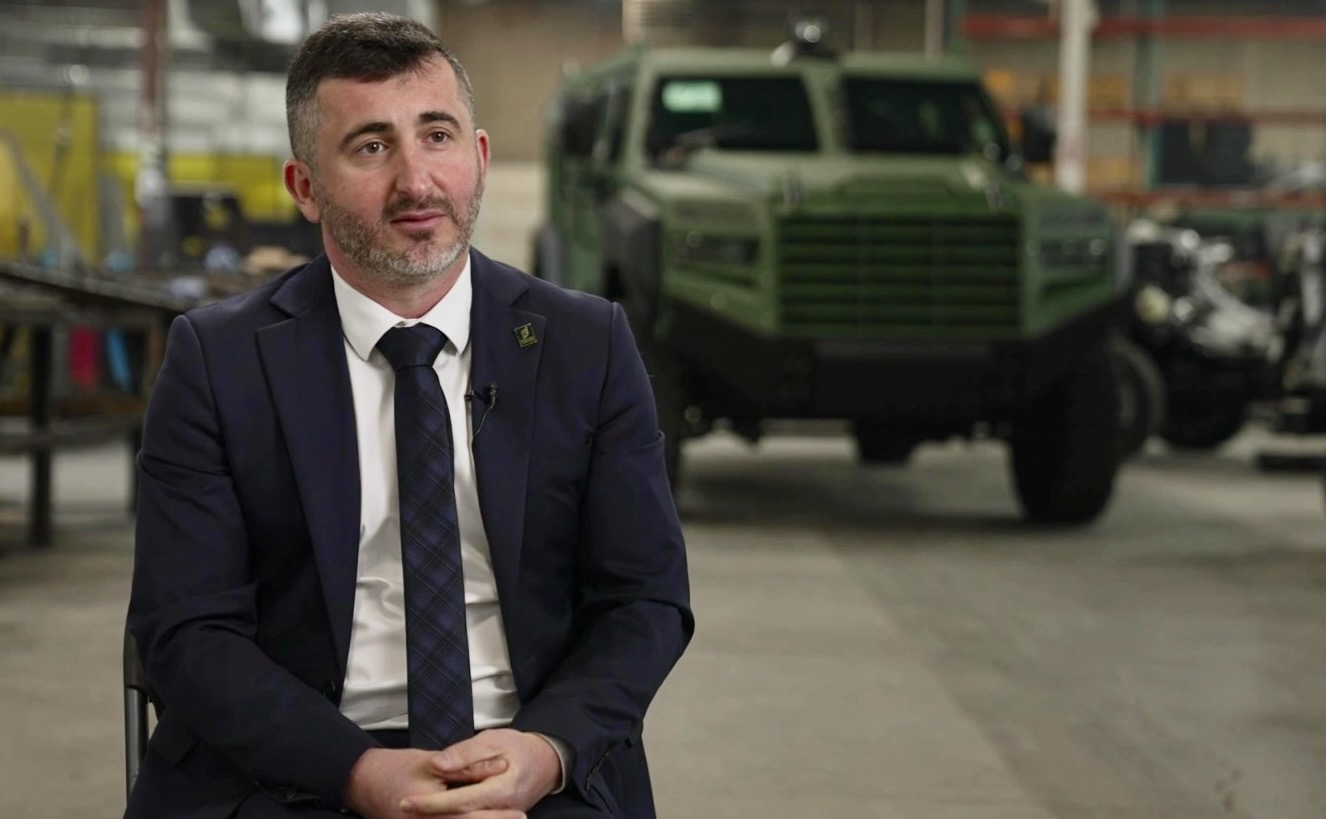
The documents show that ICE bypassed competitive bidding entirely, issuing a sole-source justification for a $7.22 million deal with a single Ontario-based company. Publicly, Trump declared America could produce everything it needed. Privately, his government admitted it could not.
The contradiction deepened as troop deployments inside the United States surged at unprecedented levels. Soldiers appeared in Los Angeles, Memphis, Portland, Chicago, and finally Washington D.C., where more than 2,200 National Guard members were stationed as if preparing for urban conflict. Governors resisted, courts intervened, and legal battles erupted nationwide — yet deployments continued. Analysts began noticing a pattern: militarized hardware arriving at the same moment federal authority was expanding aggressively into American cities.

The purchase of war-zone vehicles from Canada raised urgent questions. Why did ICE need machines capable of surviving artillery fire and roadside bombs? What threat was the administration preparing for? And why were these decisions kept hidden from the public?
Experts warn that the combined timeline — emergency armored vehicle requests, escalating troop deployments, attempts to federalize state forces, and rapid militarization of urban areas — suggests preparation not for foreign conflict, but for internal unrest. Rumors point to concerns over immigration clashes, economic instability, or unprecedented political polarization. While nothing has been confirmed publicly, the operational pattern is undeniable.

The situation exposes a fundamental contradiction: a government loudly promoting “America First” while quietly depending on Canada for critical national-security equipment. A movement promising strength while acting from urgency. A country claiming total independence while relying on foreign manufacturing for life-saving tactical vehicles.
As markets react and geopolitical tensions rise, the unanswered question grows louder:
If this is the level of force deployed in peace time — what exactly is America being prepared for?