A Legal System Under Strain as Federal Judges Confront the Trump Justice Department
WASHINGTON — The confrontation began quietly, almost bureaucratically, and then widened into one of the most unusual standoffs between the federal judiciary and the executive branch in recent memory. Over the past two weeks, a succession of rulings, orders, and sharply worded rebukes from federal judges has placed the Trump Justice Department under a strain that officials inside the department privately describe as “unmistakable turbulence.” At the center of the conflict is Judge James Boasberg, the chief judge of the U.S. District Court for the District of Columbia, whose handling of a contested immigration enforcement action has revived long-standing questions about government transparency and respect for judicial authority.

The dispute traces back to a flight of Venezuelan migrants who were placed on a removal plane despite what the court has insisted was a clear oral order halting the process. Government lawyers initially denied the existence of such an order, arguing that the operation had been authorized before the judge intervened — a sequence that Judge Boasberg later called “demonstrably inconsistent with the facts.” That discrepancy, along with testimony from a government attorney who contradicted the department’s account, prompted the judge to reopen the matter as a potential criminal contempt inquiry.
Though contempt findings against government agencies are rare, the significance of the moment extends beyond this specific case. Over the course of several days, appeals panels in Philadelphia and Atlanta issued unrelated decisions sanctioning government attorneys for procedural violations, and another federal judge removed a Trump-aligned lawyer from a civil matter after expressing concerns about candor. The individual rulings are not directly connected, but their timing has produced an unmistakable political resonance — a portrait of multiple courts simultaneously expressing distrust toward the administration’s legal apparatus.
Inside the Justice Department, the reaction has been divided. Senior officials have publicly maintained that the judges are “misunderstanding” internal processes and that the contested immigration operation was conducted in compliance with statutory authority. But interviews with more than a dozen current and former department employees suggest a more complex internal picture: a mixture of defensiveness, frustration, and a growing unease that the department’s credibility is being questioned not merely by critics, but by the courts themselves.
Privately, some officials have acknowledged that the department’s rapid turnover and increasingly centralized chain of command have complicated routine litigation tasks. “There’s no room for mistakes anymore, and mistakes still happen,” said one attorney who spoke on the condition of anonymity to discuss internal dynamics. “When a judge is already skeptical of the administration, even small missteps land harder.”
The most damaging element has been the testimony of the career immigration attorney who contradicted the department’s timeline of events surrounding the Venezuela flight. According to people familiar with his account, he told the court that he informed superiors of Judge Boasberg’s oral stay order hours before the plane departed — a detail that, if substantiated, could form the basis for contempt. That same attorney was reassigned shortly after the incident, though the department has insisted the move was routine.
Judge Boasberg has taken a measured tone in his public comments, but his written opinions have been unmistakably pointed. In one ruling last week, he wrote that “no executive agency is exempt from the constitutional checks that ensure the integrity of judicial oversight,” adding that the court “has a duty to pursue the truth even in politically sensitive circumstances.” His words have circulated widely among legal scholars, many of whom view the episode as part of a broader struggle over the limits of executive power during the Trump presidency.
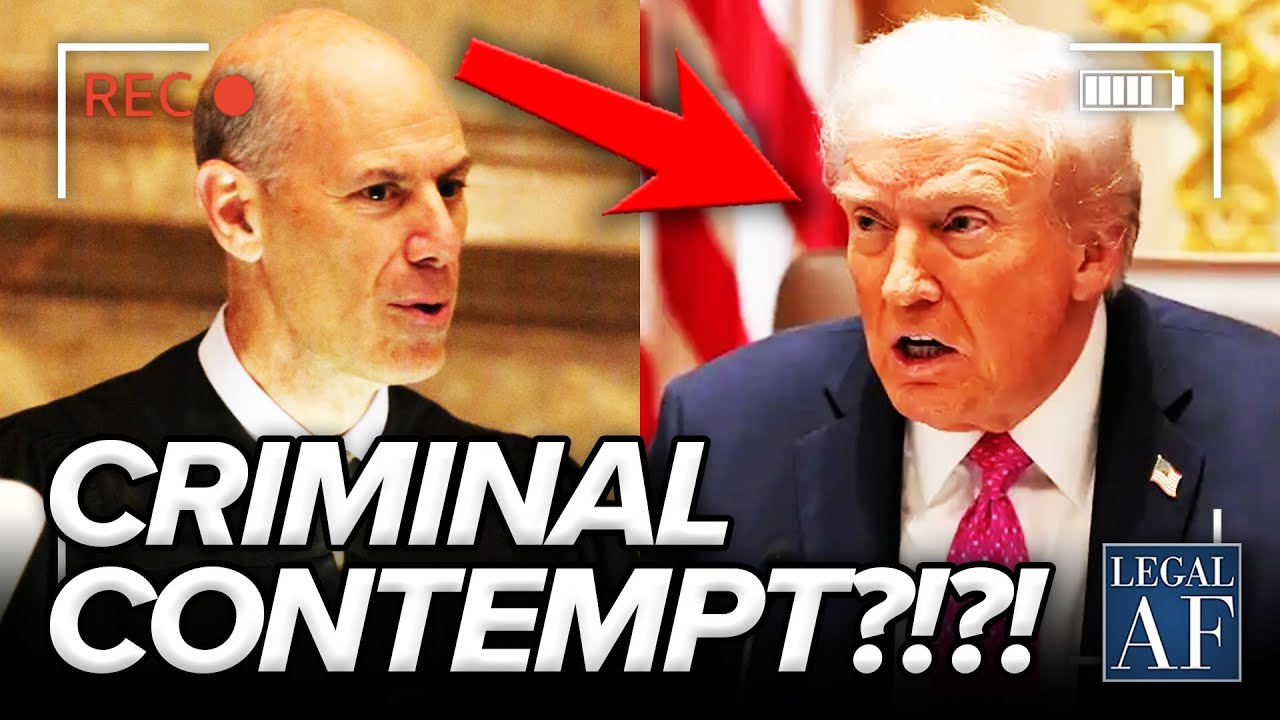
For Trump’s supporters, the judicial pushback is further evidence of what they describe as entrenched hostility within the federal bench. Several Republican lawmakers have accused Judge Boasberg and others of “overreach,” arguing that the courts are straying into political disputes best left to the elected branches. But Democrats, along with several former Justice Department officials from both parties, say the judiciary is fulfilling its constitutional role as a check on executive power.
As the contempt inquiry proceeds, the stakes are both legal and institutional. A contempt finding against the Justice Department would be an extraordinary rebuke, one that could deepen existing tensions between the courts and the administration. Yet even without such a ruling, the cumulative effect of the recent judicial actions has already reshaped the political landscape — calling into question the department’s transparency and reviving debates about the independence of federal law enforcement.
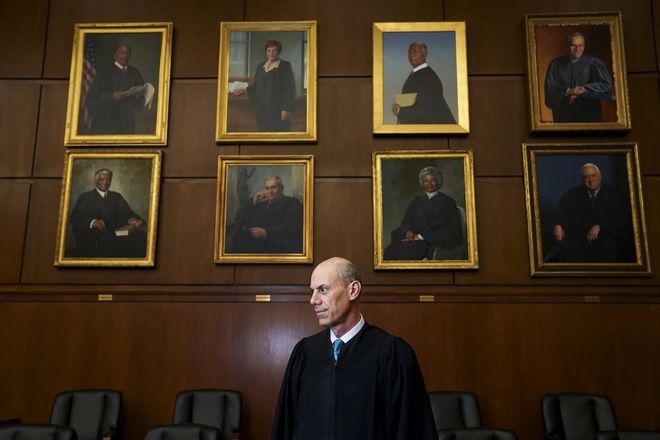
For now, Judge Boasberg has ordered additional testimony and set deadlines for the production of internal documents related to the flight. The department has signaled that it will comply, though officials privately worry about the precedent such scrutiny may establish.
What remains clear is that the confrontation is far from over. In a capital already defined by conflict, the unfolding struggle between the judiciary and the Trump Justice Department has become a test not just of legal authority, but of institutional trust — a test whose outcome may reverberate long after the immediate dispute is resolved.