A Leadership Under Strain as Trump’s Political Standing Falters.
WASHINGTON — What began as a brief, seemingly routine exchange between Speaker Mike Johnson and members of the press this week has now widened into a fuller portrait of a Republican leadership team increasingly unsettled by the political gravity surrounding former President Donald J. Trump. Support for Mr. Trump — still the defining center of gravity within the GOP — has shown signs of erosion in recent public polling, and the party’s response has exposed once again the quiet fractures that many lawmakers had hoped would remain out of view.
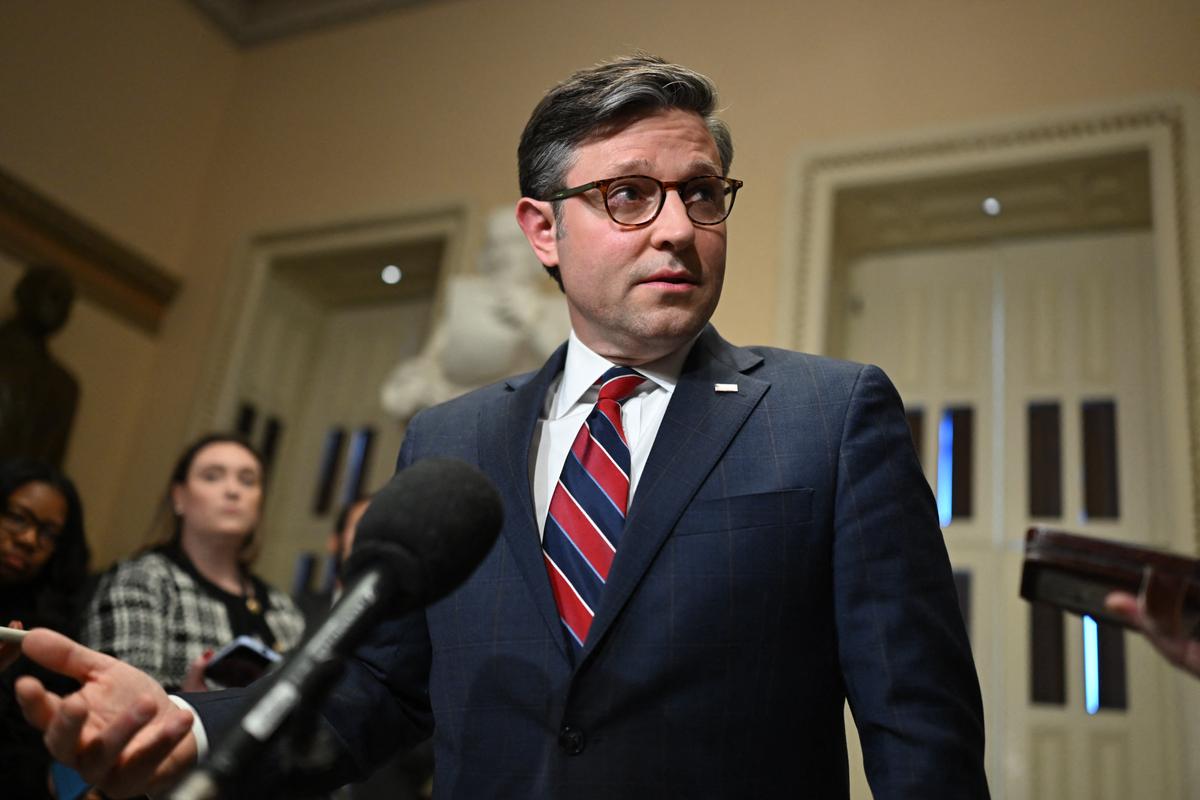
The moment that circulated online involved Mr. Johnson appearing uncharacteristically tense as he addressed questions about the former president’s slipping numbers. His mannerisms, replayed repeatedly across social platforms, reflected a leader attempting to steady a political coalition while confronting forces beyond his control. Social media amplified the exchange into a broader political spectacle, but the underlying issue — a complicated recalibration within the Republican Party — has been building for weeks.
Interviews with several congressional staffers and Republican strategists reveal an environment defined by rising apprehension. “There’s a sense that something is shifting,” one senior GOP aide said, requesting anonymity to discuss internal sentiment. “No one is certain where it leads, but everyone feels it.” Publicly, Republican leaders have insisted the polls are fleeting snapshots. Privately, some acknowledge a growing anxiety that the party may be entering a more volatile phase than anticipated.
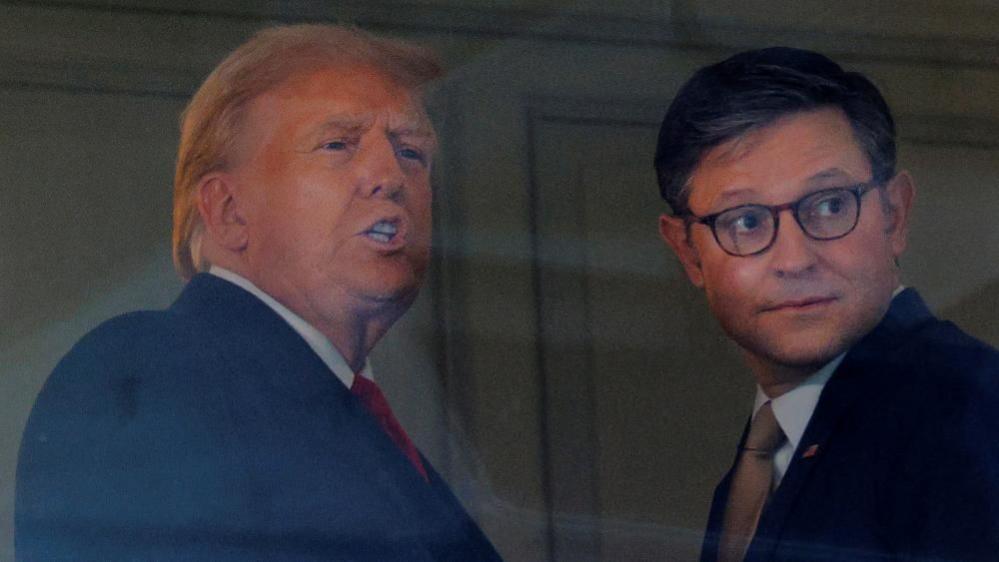
Mr. Johnson, a loyal Trump ally who has built his speakership around maintaining unity among the party’s disparate factions, now finds himself navigating a more treacherous landscape. His role requires balancing the expectations of the party’s pro-Trump base with the practical realities of legislative governance — a task complicated by the former president’s continued insistence on shaping congressional priorities. As Mr. Trump’s support wavers, so too does the sense of stability Mr. Johnson has tried to project.
In the days following the viral moment, efforts by Johnson’s office to frame the exchange as overblown offered limited reprieve. Advisers emphasized that the speaker remained fully confident in the former president’s political strength, arguing that the online reaction misinterpreted a rushed, off-the-cuff interaction as something more consequential. Yet Republican colleagues, while not openly contradicting the speaker, acknowledged that the episode tapped into existing unease.
“The party is always a reflection of its leader,” said one GOP strategist aligned with Mr. Johnson. “When Trump looks ascendant, Republicans feel united. When he looks vulnerable, everything feels exposed.”
Compounding Johnson’s challenge is a growing stream of internal disagreements that have begun to surface more plainly. Disputes over immigration policy, foreign intervention, and the future of federal health programs have created a steady drumbeat of intraparty conflict — tensions that had been largely contained when Mr. Trump’s political dominance appeared unquestioned. With that dominance now less certain, fault lines long present within the conference have widened.
Behind the scenes, aides describe hurried strategy meetings and an increased focus on messaging discipline. One senior Republican official familiar with those discussions said party leaders have been urging members to avoid public displays of dissent. “The priority right now is projecting coherence,” the official said. “There’s a recognition that internal division is the last thing the party can afford.”
Democrats, meanwhile, have seized on the moment as evidence of instability within the GOP. Several Democratic lawmakers noted the contrast between Mr. Johnson’s measured public persona and the discomfort that appeared to break through in the viral clip. They argue the speaker’s response reflects deeper concerns about aligning too closely with a figure whose political trajectory is no longer guaranteed.
For Republicans, the broader question looming over the episode extends beyond the fleeting intensity of online commentary. It touches instead on a more fundamental uncertainty: how the party plans to adapt should Mr. Trump’s support continue to show vulnerability. While most GOP lawmakers remain publicly steadfast, advisers say the coming months will test whether loyalty to the former president can still serve as the binding force it once was.
For now, the speaker faces the complicated task of absorbing public scrutiny while managing internal disquiet — a role made more difficult by a political environment that no longer guarantees predictability. The brief hallway encounter that ricocheted across social platforms may fade from the news cycle, but the underlying tension it revealed appears likely to persist.
As one Republican lawmaker put it, “We’ve lived in Trump’s shadow for so long. If that shadow begins to shrink, everything changes.”
Whether the moment marks the start of a more profound shift or merely a temporary wobble in a turbulent election cycle remains unclear. But within the halls of Congress, the unease surrounding Mr. Trump’s standing — and the speaker’s response to it — has become impossible to ignore.