Trump’s FBI Spirals Into Turmoil as Secret 115-Page Dossier Paints a Portrait of Chaos
In Washington, even the most turbulent political weeks tend to follow a familiar rhythm: a leak, a denial, a counter-leak. But few expected the nation’s federal police force to find itself at the center of one of the most blistering internal assessments in recent memory. Yet that is precisely what unfolded this week, after a 115-page confidential dossier compiled by current and former FBI personnel surfaced—an extraordinary document that delivers a pointed and deeply unsettling verdict on President Donald Trump’s handpicked FBI director, Cash Patel.

The report, leaked to conservative columnist Miranda Devine, reads less like a bureaucratic performance review and more like a crisis memo—one that accuses Patel of fostering an “all-effed-up,” rudderless agency over his first six months in power. According to the document’s authors, who drew from 24 sources nationwide, the bureau’s leadership has become consumed by image-building, political loyalty tests, and personal theatrics at a moment when its operational demands have never been more acute.
Several agents reportedly described Patel as “insecure,” “in over his head,” and overly fixated on his public persona. One account even alleges that Patel refused to exit an FBI jet during a high-profile operation in Utah unless agents produced a medium-sized raid jacket for him—going so far as to instruct them to remove SWAT patches to decorate the borrowed garment. “It didn’t make a positive impression,” one source said dryly.
Such anecdotes, on their own, might be dismissed as internal sniping or institutional resistance to a disruptive new chief. But the dossier goes far deeper, alleging behavior that critics say borders on misconduct. Patel is accused of ordering polygraph tests to identify agents who criticized him, sharing sensitive investigation details prematurely, and pushing aside career personnel whose work touched Trump-related cases. One former acting FBI director, Brian Driscoll, alleges in a recent lawsuit that Patel privately stated his job depended on removing agents associated with investigations linked to the president.

If accurate, these claims suggest a profound erosion of the bureau’s norms—an institution that prides itself on political independence yet frequently finds itself navigating the gravitational pull of whichever administration occupies the White House. Under Trump, that tension has intensified, particularly after the president pardoned roughly 1,500 individuals charged in the January 6 Capitol attack. According to the dossier, many FBI personnel expressed deep resentment over the pardons and growing unease about being assigned to immigration raids with what they described as “incomplete and chaotic” operational briefings.
Patel’s deputy director, former right-wing media personality Dan Bonino, receives similarly scathing reviews. Agents reportedly view him as “a clown,” a man more interested in boosting his public profile than confronting high-risk national security threats. Several sources say both leaders spend an inordinate amount of time on social media—far more than any prior command team.
The White House has remained largely silent. Trump himself, asked about circulating rumors that he was preparing to fire Patel, dismissed the reports as “nonsense.” But the president’s political allies have begun floating replacement names behind the scenes—a sign, perhaps, of waning confidence.
Patel, for his part, has not issued a public rebuttal. Bonino, however, did indirectly acknowledge the dossier in a post on X, writing that “people upset at the reforms” are “leaking gossipy nonsense” to undermine the new leadership. His statement attempts to frame the report as a reactionary pushback to institutional change—a familiar narrative in an era when distrust of government agencies has become a rallying cry among Trump loyalists.
Yet the dossier’s authors insist their work was never intended as a “hit piece.” They say the sheer volume of negative accounts—roughly 80 percent of all interviews—reflects a broader crisis within the organization. Their findings will be formally presented this week to the ranking members of the House and Senate Judiciary Committees, guaranteeing that this controversy will not quietly fade.
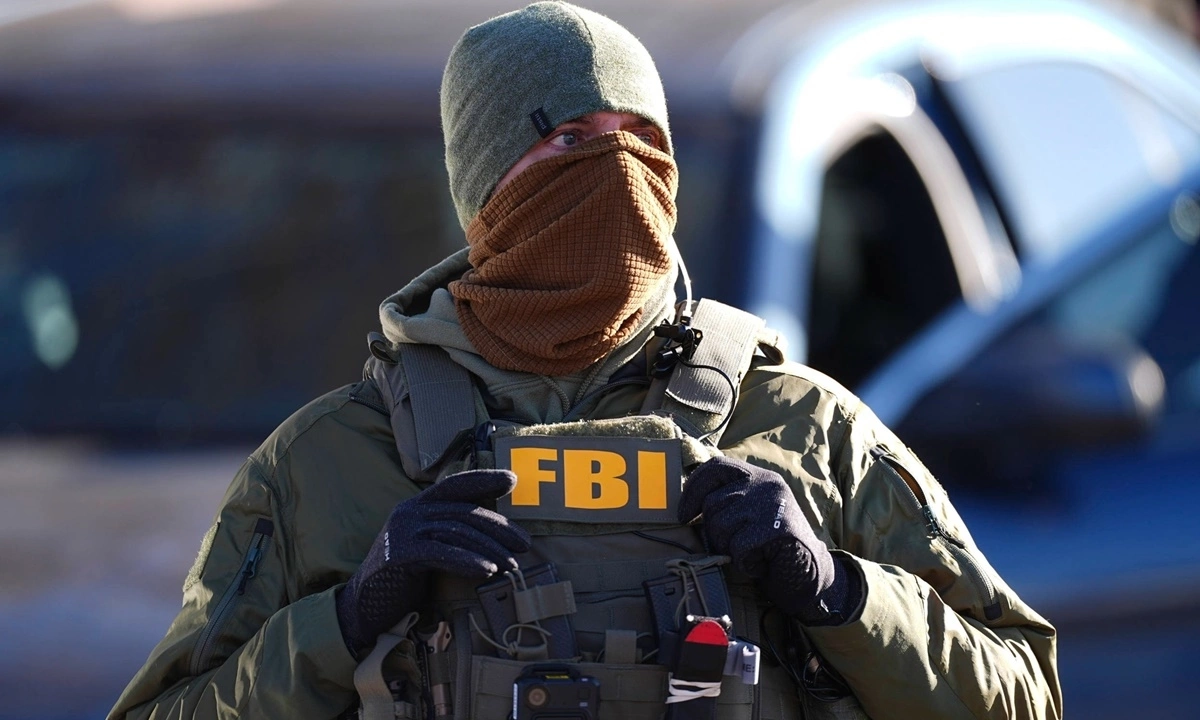
The implications are significant. The FBI, strained by political volatility, high-profile threats, domestic extremism cases, and morale issues, now faces a leadership credibility crisis at its highest tiers. Whether the dossier proves to be an indictment of Patel’s management or a reflection of deeper institutional fractures, the resulting political storm is likely to reverberate far beyond Washington.
For an agency already stretched thin, the timing could hardly be worse. And as more details leak—and they almost certainly will—the national security establishment may find itself grappling not simply with errors of judgment, but with something far more destabilizing: the loss of confidence in the very people entrusted to guard the country.
If the dossier is any indication, this story is nowhere close to over.