Politics
Rifts Inside the GOP Deepen as Trump and Marjorie Taylor Greene Clash Over the Future of the MAGA Movement
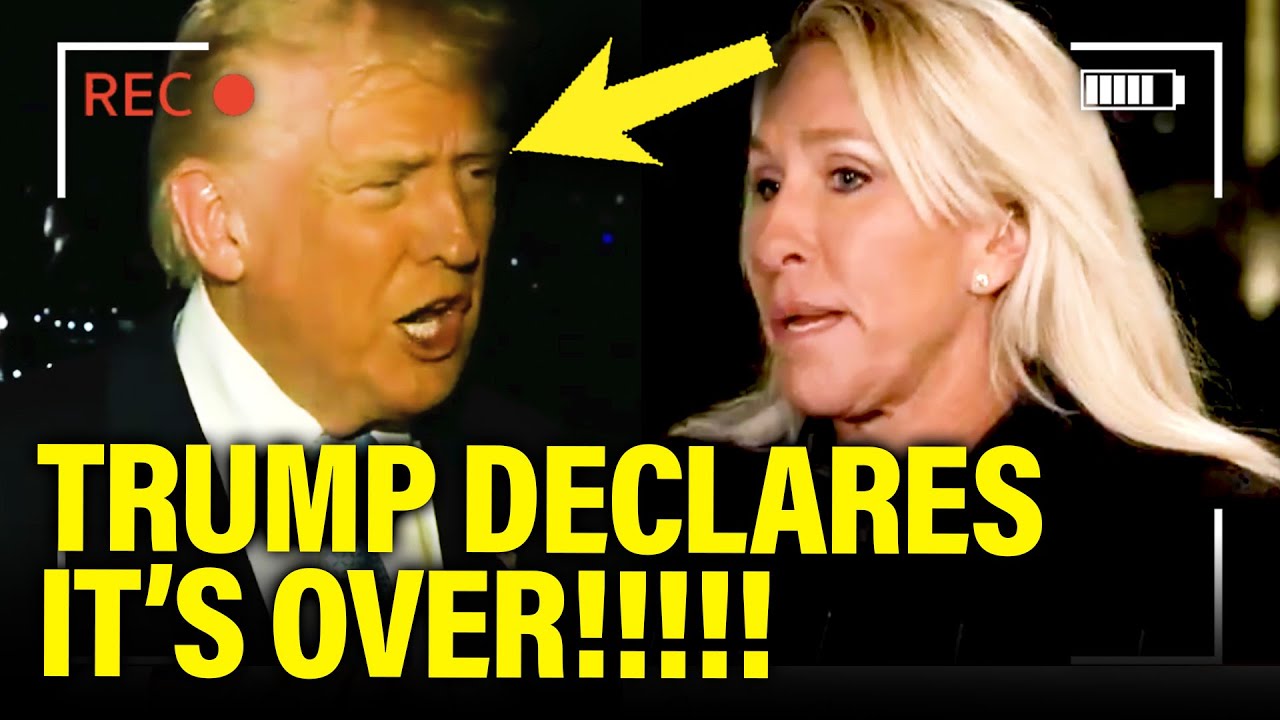
In a turbulent week for the Republican Party, former President Donald J. Trump and Representative Marjorie Taylor Greene of Georgia became the center of an unusually public and deeply consequential intra-party dispute—one that has exposed widening fractures among conservatives and intensified questions about the direction of the GOP heading into the next election cycle.
The conflict, which erupted across social platforms and conservative media, began when Trump, in a late-night post, appeared to distance himself from the “MAGA” label, declaring the movement “compromised” and “no longer reflective of what America needs now.” The remark, though vague, was widely interpreted by allies and opponents alike as a direct break from the very brand he popularized and maintained as the core of his political identity.
Within hours, Greene—long regarded as one of Trump’s closest ideological allies—responded with a blistering public statement accusing the former president of “abandoning the grassroots” and “surrendering the movement to consultants and donors who never believed in it.” Her comments ignited a wave of reaction inside Republican circles and emboldened factions that have been quietly challenging Trump’s dominance for months.
A Sudden Escalation That Caught GOP Leaders Off Guard
Republican strategists, many of whom spoke anonymously to avoid inflaming tensions, described the episode as one of the most significant internal clashes since the party’s split during the 2016 primary season. One longtime GOP adviser said that “the level of open revolt is unprecedented” and that Greene’s remarks “were interpreted by some in the base as permission to question Trump publicly for the first time in years.”
The dispute escalated further when Greene suggested that Trump had “lost touch with the movement he built,” adding that “the voters chose America First, not a personality cult.” While Greene did not explicitly call for a leadership change, her tone signaled what one Republican operative described as “a direct challenge, or very close to one.”
Trump’s advisers quickly moved to contain the fallout, insisting that the former president’s comments were taken out of context and that he remains committed to the movement. But those assurances did little to quiet a surge of speculation among conservative commentators, some of whom argued that Trump’s comments reflected internal polling that shows erosion within parts of the base.
A Party Already Under Strain

The exchange comes at a moment when the Republican Party is struggling to unify its diverse factions. Establishment conservatives, Trump-aligned populists, libertarians, Christian nationalists, and anti-Trump moderates each represent significant constituencies, but they often collide over strategy, tone, and the future of the party’s policy agenda.
Greene has emerged as a powerful figure within one of the most vocal segments of that coalition, and her open break with Trump carries symbolic weight. Though her influence in Congress has fluctuated, her ability to mobilize grassroots supporters remains substantial.
Several Republican lawmakers have privately expressed frustration with both Greene and Trump, saying that the feud threatens to overshadow the party’s messaging at a critical moment. But others argue that the dispute reflects real anxieties within the base about the party’s long-term direction—and that ignoring those concerns could prove politically costly.
Conservative Media Reacts With Divided Fury
Right-leaning media outlets reacted in starkly divergent ways. Some amplified Greene’s criticism, portraying her as a truth-teller willing to confront Trump on issues ranging from foreign policy to government spending. Others dismissed her comments as “performance politics” and praised Trump for attempting to “modernize” the movement.
Meanwhile, prominent conservative influencers on social platforms appeared deeply divided. Hashtags aligned with both sides surged overnight, reflecting a grassroots audience increasingly willing to engage in open ideological conflict rather than unified messaging.
“This is a genuine realignment moment,” said Lara Donnelly, a political sociologist at the University of Michigan who studies conservative movements. “The rhetoric may be dramatic, but it reflects an authentic struggle over control, identity, and who gets to speak for the party’s future.”
Democrats Watch From a Distance—And Prepare to Capitalize
Democratic leaders, while careful not to overstate the significance of the dispute, privately view the clash as a political gift. Some strategists argue that a public Republican split—especially one involving two of the most recognizable figures on the right—could depress enthusiasm among conservative voters and complicate GOP fundraising operations.
But others caution that internal Republican conflict has often energized the party’s base rather than weakened it. “Infighting doesn’t necessarily mean electoral decline,” said Adrian Klein, a Democratic strategist involved in midterm planning. “Republicans have fought internally before and still mobilized turnout.”
Still, Democrats appear eager to use the moment to reinforce their message that Trump’s grip on the party is weakening, and that the GOP lacks a coherent governing vision.
The Future of MAGA Remains Uncertain
Despite the dramatic rhetoric, it remains unclear whether this episode will prove a lasting political rupture or a temporary flare-up. Trump retains broad support among Republican voters, and Greene, while influential within certain factions, does not command majority influence within the party.
Yet analysts say the moment should not be dismissed. The dispute reflects deeper questions about the future of conservative politics—including whether the party will continue to center itself on Trump personally or transition toward a more diffuse coalition of populist and nationalist figures.
For now, Republicans remain unsettled, unsure whether the conflict represents a fleeting disagreement or the opening salvo of a broader realignment. What is clear is that the party is no longer marching in lockstep—and that its next steps could reshape the landscape of American conservatism for years to come.