Media & Politics
SNL Sketch Targeting Leavitt and Trump Sparks Political Outcry and Raises Questions About Partisan Pressures on Network Television

A satirical Saturday Night Live segment referencing Karoline Leavitt, the Republican congressional candidate and former Trump campaign spokesperson, ignited a political storm over the weekend, after the sketch triggered a flurry of public criticism, counter-criticism, and calls for boycotts that rapidly spread across conservative media and social platforms.
The sketch — delivered during the show’s signature “Weekend Update” with co-anchors Colin Jost and Michael Che — mocked both Leavitt and former President Donald J. Trump over their recent political messaging and campaign rhetoric. While the jokes were consistent with the program’s longstanding approach to political satire, the reaction from Leavitt and her supporters was unusually swift, forceful, and organized, transforming an otherwise routine late-night segment into a wider debate about media bias, public trust, and the role of political humor in a polarized era.
A Familiar Roast, an Unfamiliar Backlash
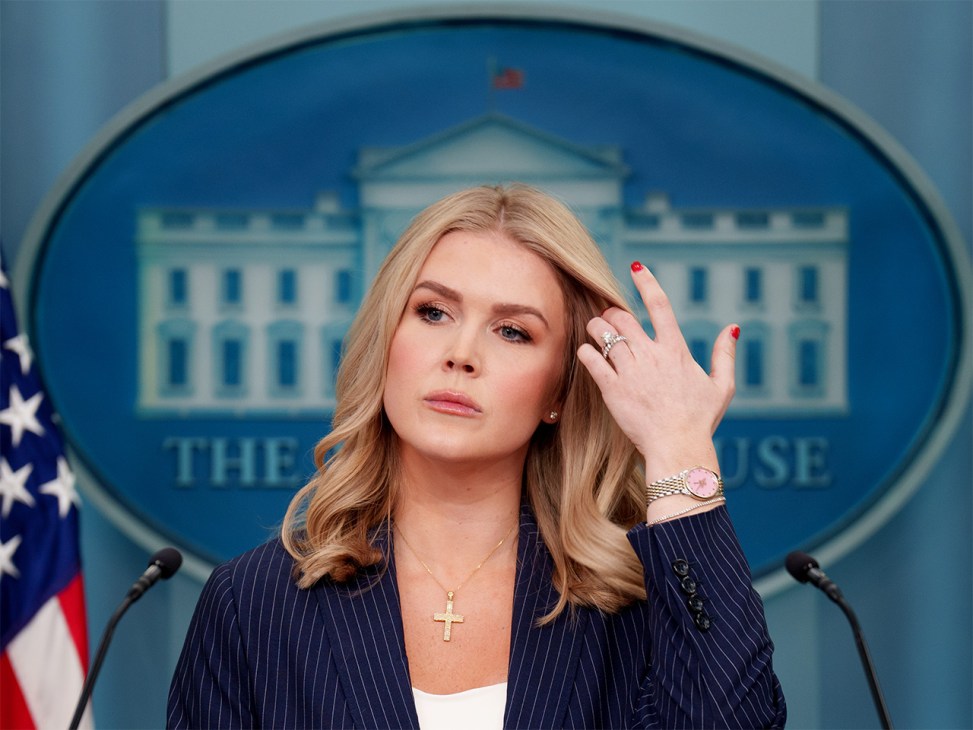
According to NBC staff members familiar with the production, the sketch did not differ significantly from others that have targeted prominent political figures. Jost and Che referenced Leavitt’s public statements defending Mr. Trump, punctuating the segment with a montage of her recent television interviews, which the anchors jokingly described as “press releases delivered at 1.5x speed.”
The jokes drew scattered applause and laughter from the live audience. But within minutes of the broadcast, a clip edited by conservative activists began circulating online, framing the segment as a coordinated attack on Leavitt personally rather than broader political commentary.
Leavitt responded on social media shortly after midnight, accusing the show of “attacking working-class conservatives” and questioning NBC’s “political motives.” Her statement was quickly amplified by several high-profile figures within the Trump wing of the Republican Party, escalating the moment from entertainment controversy to intra-party rallying point.
Inside NBC, a Routine Night Becomes a Larger Issue

Network officials, speaking anonymously because they were not authorized to discuss internal matters, said that staff had not anticipated a significant backlash. But by Sunday morning, the volume of coordinated complaints — including organized calls for advertisers to withdraw from the show — prompted internal discussions about security protocols, digital harassment safeguards, and standard risk-assessment procedures for public-facing talent.
Several people familiar with the network’s response said executives did not view the situation as a crisis but acknowledged that it reflects the broader pattern of political figures framing satirical commentary as direct attacks. “SNL has been targeted many times by both sides of the aisle,” one executive said. “The difference now is the speed with which a single sketch can be turned into a political litmus test.”
The show’s cast members, for their part, appeared unfazed. Che responded with a characteristically dry comment during an unrelated comedy event, saying: “If you’re getting mad at jokes, you’re probably watching the wrong part of TV.”
Conservative Organizing and Strategic Messaging
Conservative media channels seized on Leavitt’s criticism, presenting the sketch as an example of “coastal elitism” and “liberal media targeting conservative women.” The rhetoric closely mirrored messaging used during previous controversies involving Republican candidates and late-night comedy, suggesting a coordinated strategy to convert pop-culture conflict into political mobilization.
Analysts say these dynamics reflect a broader shift in how political figures manage media narratives. “The outrage cycle surrounding late-night TV is now a familiar and often effective tool,” said Dr. Hannah Kline, a political communication scholar at Northeastern University. “The goal isn’t to debate the joke — it’s to highlight cultural grievance and deepen partisan identity.”
Leavitt’s campaign later clarified that she was “not attempting to silence anyone,” but insisted that the program demonstrated “bias harmful to public discourse.”
A Mirror to a Fragmented Media Ecosystem
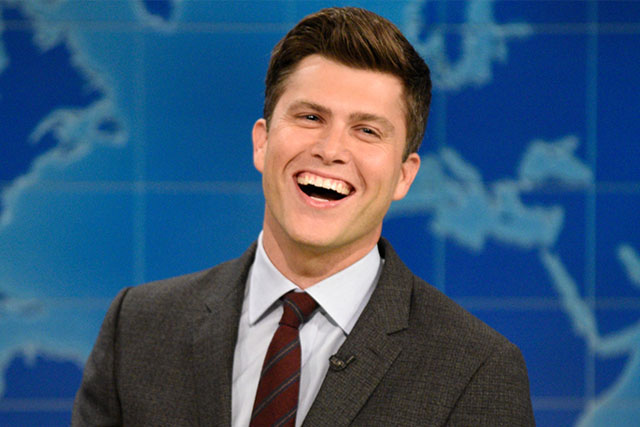
Democrats argued that the backlash was disproportionate, noting that SNL routinely satirizes candidates from both parties and has done so for decades. Several former writers emphasized that the show’s comedic targets shift with political relevance, not ideology.
The dispute quickly spread beyond partisan circles as media watchdog organizations urged caution. The Committee to Protect Journalists released a statement reminding public officials that “satire is a protected form of political expression,” while a coalition of comedy professionals warned against efforts to frame humor as disinformation.
Political observers noted that the episode reignited debate over the shrinking cultural space where bipartisan audiences encounter shared content. “There was a time when a joke on SNL was just a joke,” said Julian Mercer, a media historian at Princeton. “Now every punchline becomes a battlefield.”
Where the Debate Goes Next
NBC’s advertisers have made no public moves in response to boycott calls, and the network is not expected to alter its editorial approach. Still, the incident highlights how even lighthearted satire can escalate into a broader political confrontation in today’s information environment.
Whether the controversy fades or becomes a recurring campaign talking point may depend on how both Leavitt and the Trump political orbit choose to engage in the coming weeks. For now, the episode stands as another reminder of the increasingly tenuous boundary between political identity, entertainment culture, and public discourse in an election season shaped by digital amplification.