Jimmy Kimmel and Wanda Sykes Deliver a Sharp, Unscripted Takedown of Trump on Live Television
In an era when late-night television increasingly doubles as a political stage, a surprising moment arrived this week when comedians Jimmy Kimmel and Wanda Sykes teamed up for a pointed, rapid-fire critique of former President Donald Trump. What began as a routine monologue on ABC’s “Jimmy Kimmel Live!” quickly shifted into something more layered: part satire, part political commentary, and part cultural barometer for a country still wrestling with the Trump era.
The segment opened with Kimmel addressing Trump’s latest string of public remarks, many of which have centered on familiar themes — grievances, accusations, and declarations that he remains the dominant force in American politics. Kimmel, who has become one of Trump’s most persistent late-night critics, treated the statements with a mixture of disbelief and exhaustion. But it was the unexpected arrival of Wanda Sykes that transformed the tone of the broadcast.
:max_bytes(150000):strip_icc()/Wanda-Sykes-Kimmel-ae801fa9eb094cb196435d342e1b5133.jpg)
Sykes, known for her precise comedic timing and long history of political commentary, walked onto the stage in what appeared to be an improvised entrance. The audience reacted immediately, cheering as she joined Kimmel at his desk. Without missing a beat, she launched into a parody of Trump’s rhetorical style — the cadence, the looping digressions, the mixture of bravado and victimhood that has become synonymous with his public appearances.
The effect was less slapstick than surgical. Sykes and Kimmel shifted in and out of conversation and parody, building a kind of comedic duet that highlighted the contradictions and tensions in Trump’s rhetoric. At one point, Sykes joked that Trump “doesn’t predict the future so much as rewrite the past,” a line that drew extended applause from the studio audience. Kimmel responded by noting that Trump “continues to find new ways to surprise even the people who believe they can no longer be surprised,” a remark that blended humor with a recognizable truth for many viewers.
By the time the segment reached its midpoint, it had evolved into a broader conversation about political culture, the nature of media spectacle, and the strange reality that comedy often functions as a primary forum for civic debate. Sykes, reflecting on the role of satire in contemporary politics, remarked that comedians have increasingly become translators for a public overwhelmed by the pace and volume of political news.
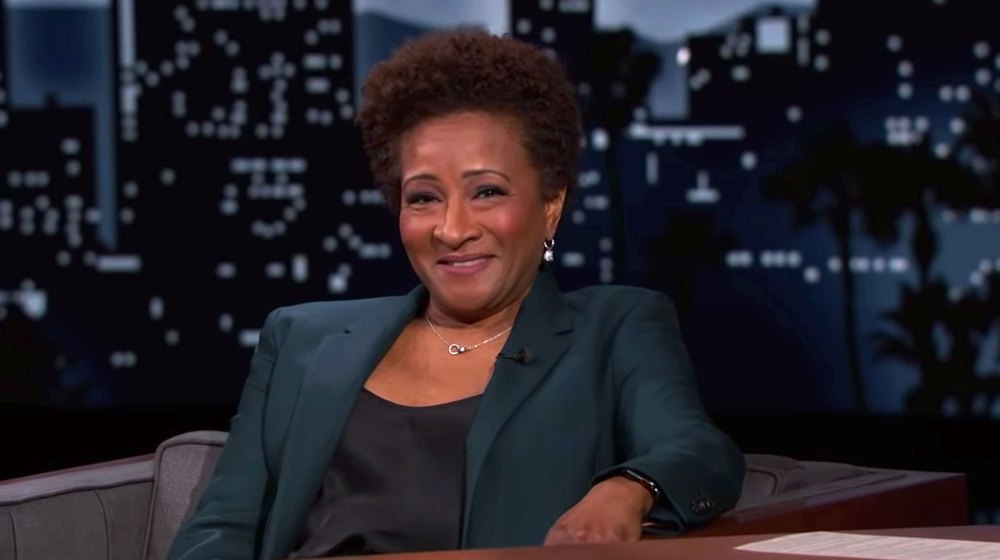
What made the moment notable, however, was not simply its comedic value but its live-broadcast unpredictability. According to production staff, Sykes had not been scheduled to appear in that segment. Her entrance — and the improvised rhythm that followed — lent the show an unusual spontaneity that resonated across social media almost immediately. Within minutes of the episode airing, clips were circulating widely on X, TikTok, and YouTube, with commenters praising the duo’s chemistry and their unvarnished critique.
Reaction from Trump’s camp came quickly as well. According to two individuals familiar with the former president’s immediate response, Trump was watching the broadcast from Florida and reacted with visible frustration. One adviser described the former president as “agitated,” while another said he made a series of phone calls afterward to complain about what he considered unfair treatment by the media. The Trump campaign did not issue an official statement, but an aide, speaking anonymously, dismissed the segment as “predictable Hollywood grandstanding.”
Political analysts were more nuanced. Some noted that the exchange reflects a long-standing dynamic in which late-night television functions as an informal opposition voice during Republican administrations or campaigns. Others pointed out that Trump, perhaps more than any previous political figure, occupies a uniquely intertwined position in the entertainment and political spheres, making the boundary between critique and performance increasingly fluid.
What distinguishes the Kimmel-Sykes appearance from previous late-night critiques is its tone — neither overtly angry nor purely mocking. Instead, the two comedians approached the subject with a mixture of fatigue, disbelief, and satirical precision that mirrored the sentiments of a public still processing the reverberations of Trump’s political presence. Rather than focusing on a single controversy, they highlighted a pattern: the cyclical nature of Trump’s statements, the constant reframing of events, and the persistent claim that he alone remains the central figure in American civic life.

Whether the moment has lasting political significance is less clear. Late-night TV rarely shapes elections directly, but it does influence cultural perceptions, particularly among politically engaged viewers. At minimum, the segment underscored the degree to which Trump remains a defining figure in the national conversation — and how deeply that presence continues to animate comedians, commentators, and audiences alike.
What is certain is that the Kimmel-Sykes collaboration has already become one of the most discussed late-night moments of the year. Part satire, part social commentary, and entirely unrehearsed, it offered a glimpse into the ways American political life continues to collide with entertainment, often in unexpected and revealing ways.