Jimmy Kimmel Drops the Comedy, Delivers a Devastating Fact-Check of Trump’s Threats Against Senator Mark Kelly

LOS ANGELES — For nearly a decade, Jimmy Kimmel has used his late-night platform to needle Donald J. Trump with the precision of a stand-up comic who moonlights as a civic watchdog. On Wednesday night, however, the jokes stopped entirely.
In a nine-minute segment that has already surpassed 41 million views across YouTube, TikTok and X, Mr. Kimmel abandoned his usual monologue format to confront what he described as “the most dangerous thing a president has said about sitting members of Congress since the Civil War.” The target was a series of Truth Social posts in which President Trump accused Senator Mark Kelly, Democrat of Arizona, of “treason” and “sedition” for insisting that the administration follow a federal judge’s ruling on Pentagon funding, and suggested, without equivocation, that Mr. Kelly and others “should face the ultimate penalty.”
Mr. Kimmel began by reading the posts verbatim. Then, in a tone more prosecutor than comedian, he laid out the timeline in stark, unadorned fashion.
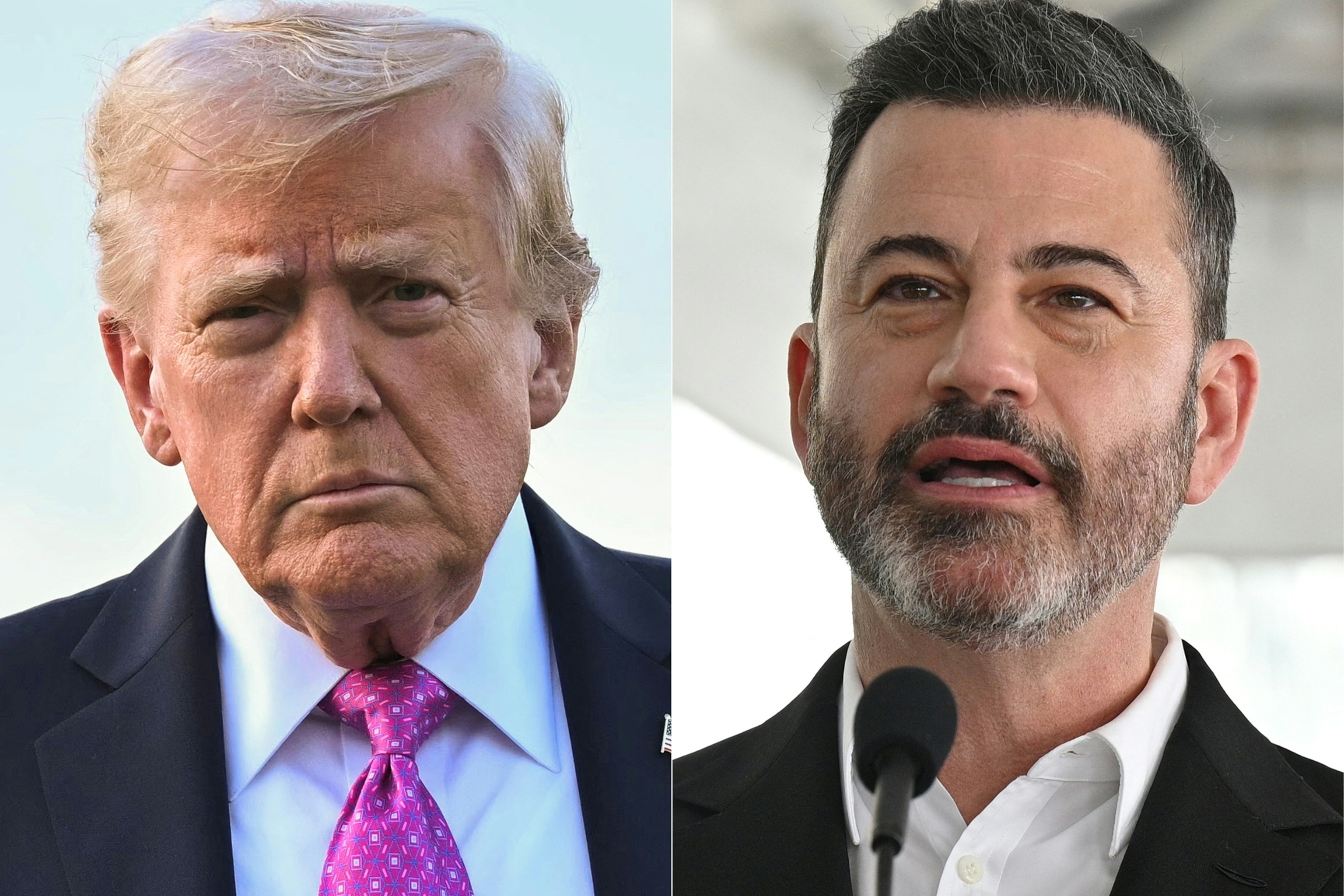
“Five days ago,” he said, turning to a large screen behind him, “the president of the United States woke up, opened his phone, and told 108 million followers that a decorated combat pilot and former astronaut who has flown 39 missions over Iraq should be executed for reminding the White House that the Constitution still applies to it.”
The studio audience, accustomed to punch lines, sat in near silence as Mr. Kimmel projected side-by-side images: Mr. Trump at a Mar-a-Lago gala raising a champagne flute on one screen; on the other, a 1991 photograph of then-Lieutenant Commander Mark Kelly in flight gear beside an A-6 Intruder after a close call with an Iraqi surface-to-air missile.
Later in the broadcast, Mr. Kelly himself appeared as a guest. The exchange was notably devoid of the usual late-night banter. When Mr. Kimmel asked the senator what went through his mind upon seeing the presidential death threats, Mr. Kelly replied simply: “I’ve had missiles explode next to my airplane. I’ve ridden millions of pounds of rocket fuel into orbit. Nothing prepared me for waking up and discovering the commander in chief wants me hanged for telling him to obey a court order.”
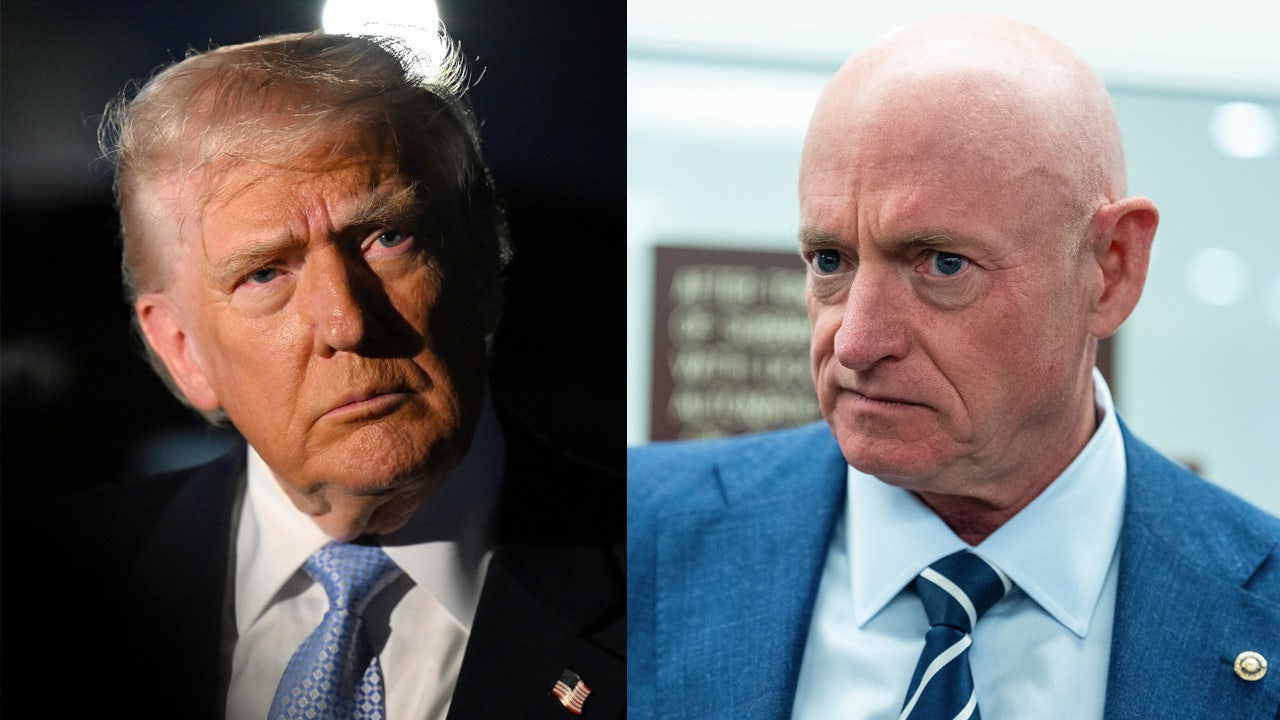
The segment’s most chilling moment came when Mr. Kimmel displayed a graphic of previous Trump statements calling for the investigation, prosecution, or extrajudicial punishment of journalists, late-night hosts, federal judges, and now elected lawmakers — a list that has grown steadily since his return to office in January 2025.
“This is no longer about hurt feelings or thin skin,” Mr. Kimmel said, his voice measured. “This is a president of the United States using the largest megaphone on earth to mark American citizens for death because they did their jobs. And the silence from most Republican leaders has been deafening.”
By Thursday morning, the clip had become the most-watched late-night television segment since the 2016 election. Hashtags #KimmelKelly and #TreasonThreat trended for 14 consecutive hours. Even some conservative commentators who have long dismissed late-night television as coastal elitism struggled to defend the president’s language. On Fox News, Sean Hannity described the posts as “classic Trump hyperbole,” but notably declined to repeat the words “hang” or “execute” on air.
White House officials offered no on-the-record rebuttal to the substance of Mr. Kimmel’s presentation. Press secretary Karoline Leavitt told reporters traveling with the president in Palm Beach that Mr. Trump “speaks for the forgotten men and women who are tired of unelected judges and disloyal politicians blocking the people’s will.” When asked directly whether the president was calling for Senator Kelly’s execution, Ms. Leavitt ended the briefing.
Political scientists were less equivocal. “We have crossed a line that, once crossed, is extraordinarily difficult to walk back,” said Norman Ornstein, emeritus scholar at the American Enterprise Institute. “Presidential rhetoric has consequences. When you pair eliminationist language with a follower base that has already demonstrated willingness to act on it, you are playing with fire in a country that still remembers January 6.”

For Mr. Kimmel, the episode marked a rare departure from the protective armor of comedy. In a brief telephone interview Thursday, he said the decision to forgo jokes was not theatrical. “I looked at those posts Sunday morning,” he said. “My kids were in the next room. I kept thinking: What do I tell them if something happens to a senator because the president told someone it was open season? At some point the job isn’t to be funny. The job is to be useful.”
Whether the segment will force a broader reckoning inside the Republican conference remains uncertain. Several GOP senators issued carefully worded statements condemning “violence in all forms” without mentioning the president by name. Senator Mitch McConnell, the former majority leader, has not commented publicly.
As of Thursday evening, Mr. Trump had not deleted the posts, nor had he walked them back. Instead, he published a new photograph of himself golfing at Bedminster with the caption: “Beautiful day — winning BIG!”
For millions of Americans who watched Mr. Kimmel’s broadcast, however, the image that lingered was not of a triumphant president on a manicured fairway, but of a late-night host standing virtually alone on a television stage, reading death threats from the White House aloud, one carefully documented word at a time.