Politics
Impeachment Push Gains Momentum After Trump Criticizes Constitutional Limits, Prompting Alarm Across Washington
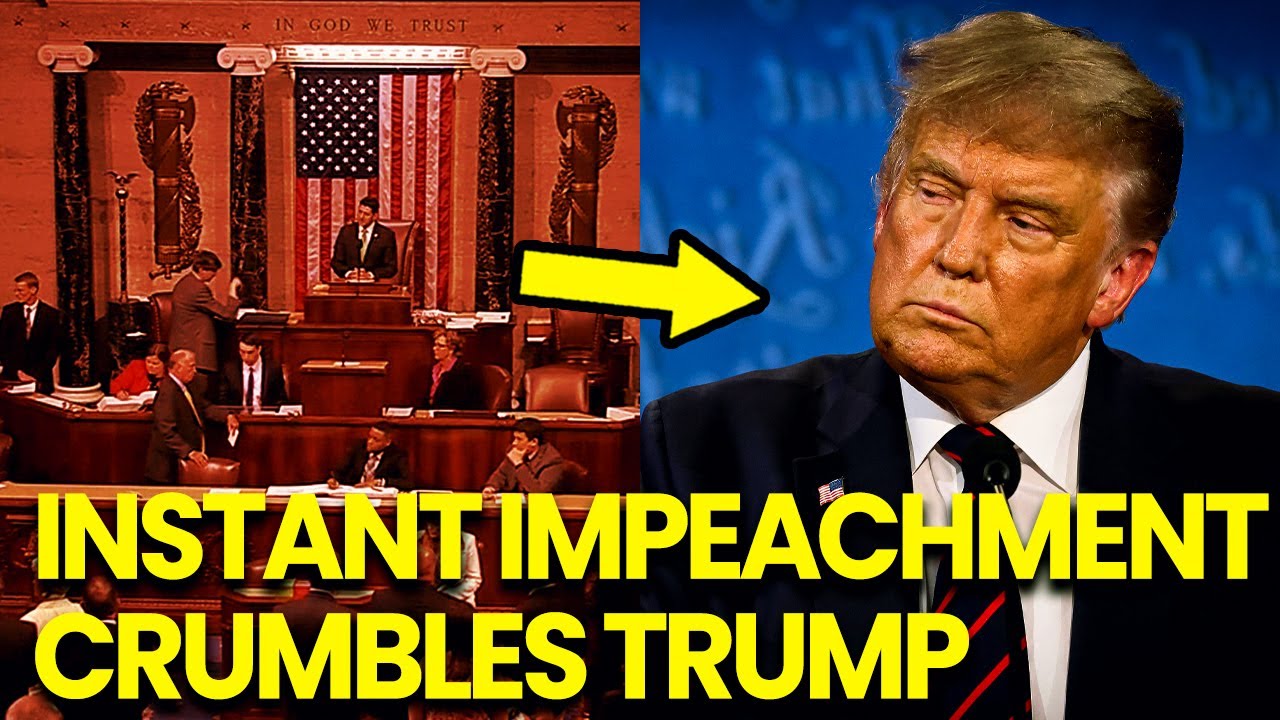
WASHINGTON — A new wave of political turbulence swept across the capital on Monday as several House Democrats signaled they were preparing draft articles of impeachment following former President Donald J. Trump’s latest remarks about the U.S. Constitution, comments that critics argued crossed a long-standing institutional boundary.
The escalation, though far from a guaranteed congressional process, marked one of the most forceful reactions to Trump’s rhetoric in years. The response included public statements from constitutional law experts, quiet expressions of concern from Republican staffers, and scattered protests that began forming outside the Capitol by early evening.
The controversy centers on remarks Trump made over the weekend during a rally in Arizona, when he suggested that certain constitutional constraints were “obsolete” in moments of “national emergency,” a phrase he did not define. While Trump has frequently criticized the structure of federal checks on executive power, the latest comments were framed in unusually direct language, sparking immediate backlash.
Within hours, Representative Jamie Raskin of Maryland, the former lead impeachment manager, said the comments represented “a profound violation of the spirit of constitutional governance.” Several Democratic aides confirmed that discussions about potential impeachment articles began circulating almost immediately, though no formal action has yet been taken.
Rapid Political Reaction Across the Aisle
Republican leaders largely defended Trump, arguing that his remarks were rhetorical rather than literal, and did not represent an actionable threat. But several GOP congressional staff members, speaking on the condition of anonymity to discuss internal concerns, acknowledged that the comments had created unease.
“It was unhelpful,” said one Republican aide. “Privately, a number of us are worried about what it signals going forward. Even if you support the former president, you don’t want him giving opponents an opening like this.”
The remarks also prompted immediate reaction from legal scholars. Professor Alicia Goodman of Harvard Law School called Trump’s comments “extraordinary,” noting that American presidents and candidates typically exercise “extreme caution” when referring to constitutional limits, even in broad terms.
“You almost never see a major political figure openly suggest that constitutional provisions might be discarded,” Goodman said. “The principle of fixed constraints on executive authority is foundational.”
Protesters and Public Demonstrations Add Pressure
:max_bytes(150000):strip_icc():focal(749x0:751x2)/donald-trump-nancy-pelosi-tout-110524-2ee23b0dda194508b6f87c1e7601403a.jpg)
By late afternoon, several hundred protesters had gathered outside the Capitol, holding signs referencing Trump’s comments and calling for congressional action. The demonstrations were peaceful, though they added a visual intensity to the day’s events, with chants audible from inside Senate office buildings, staff members said.
The protest groups included a mix of long-standing activist organizations, newer civic movements and small clusters of independent demonstrators. A spokesperson for Capitol Police said the protests remained “orderly and manageable.”
Online, the incident quickly dominated political discourse. Clips of Trump’s remarks circulated across platforms, drawing millions of views and igniting debates about the meaning and legal implications of his statements. Supporters of the former president argued that his words were being taken out of context, while critics claimed they reflected a longstanding disregard for constitutional boundaries.
Democrats Debate Whether to Move Forward
Even as calls for impeachment gained visibility, several senior Democrats urged caution, emphasizing the political risks of initiating another impeachment process without bipartisan support.
“Impeachment is an extraordinary tool,” said Representative Abigail Spanberger of Virginia. “It must not be used impulsively or as a messaging device, no matter how inflammatory the rhetoric in question.”
Speaker Hakeem Jeffries released a statement late Monday calling Trump’s remarks “deeply troubling” but stopped short of endorsing impeachment. Instead, Jeffries urged Congress to “evaluate all appropriate responses in a manner consistent with constitutional responsibility.”
Privately, however, Democratic strategists expressed concern that failing to respond firmly could be politically damaging. One strategist noted that several Democrats in competitive districts faced immediate pressure from constituents demanding action.
“The base is activated,” the strategist said. “Ignoring that energy carries its own risks.”
GOP Insiders Express Concern About Broader Implications
While Republican leaders publicly dismissed the impeachment talk, some GOP insiders indicated that the controversy had struck a nerve.
A former senior adviser to Trump said the campaign was “scrambling to control the narrative” and insisted that the remarks were intended as “theoretical commentary about emergency powers,” not as a literal proposal to ignore constitutional limits.
Still, another Republican aide conceded that the remarks placed some GOP candidates in an uncomfortable position.
“Constitutional fidelity is a core conservative value,” the aide said. “This puts us in a situation where defending Trump risks contradicting decades of Republican messaging.”
A Moment of Political Volatility

By Monday night, it remained unclear whether impeachment efforts would materialize into formal action. Many analysts predicted that the moment could fade, much as previous controversies have, depending on Trump’s next statements and the trajectory of public attention.
Even so, the day underscored the volatility that continues to surround Trump’s political presence, three years after he left office. His remarks—delivered at a routine rally stop—set off not only partisan confrontation but broader concerns about the norms governing presidential behavior.
“This episode shows how fragile the political environment is,” said Dr. Harold Kingston, a constitutional historian at Yale University. “One comment can trigger legislative debate, public protest, intra-party tension and questions about fundamental principles of governance.”
Whether the movement toward impeachment gains traction or subsides in the coming days, the reaction to Trump’s remarks revealed a Washington ready to erupt at any hint of constitutional disruption—an atmosphere that shows no sign of cooling as the political calendar intensifies.