Media & Politics
Kimmel–Schumer Exchange About Trump Sparks Fiery Live-TV Moment and a National Debate Over Transparency and Political Rhetoric

A late-night interview between Senate Majority Leader Chuck Schumer and television host Jimmy Kimmel ignited widespread attention on Tuesday after the conversation veered unexpectedly into a pointed discussion of former President Donald J. Trump. The segment, which escalated quickly and drew audible reactions from the studio audience, circulated across streaming platforms within minutes and triggered a broader national conversation about political accountability, media polarization and the blurred boundaries of entertainment-driven political commentary.
Kimmel, who has spent years weaving political satire into his monologues, introduced Schumer to discuss government funding negotiations and congressional gridlock. But midway through the interview, the host pivoted abruptly to Trump, referencing reports—amplified heavily online—alleging undisclosed actions taken near the end of Trump’s presidency. Schumer, appearing momentarily caught off guard, responded with a sharp critique that the audience reacted to with a mix of gasps and applause.
The remarks themselves did not contain new factual disclosures; rather, they drew upon existing public reporting and Schumer’s long-standing critiques of Trump’s conduct in office. But the spontaneity of the moment, combined with the high-profile platform, lent the exchange an unexpected intensity.
A Live Moment That Spread Quickly Online
Producers said afterward that the exchange was not planned. Kimmel’s shift in tone came after he referenced what he called “public inconsistencies” in Trump’s past statements, prompting Schumer to elaborate on what he viewed as the former president’s pattern of “concealment and deflection.”
“What concerns me most,” Schumer said during the interview, “is not any one allegation but the persistent habit of obscuring the truth from the American people.”
The studio audience reacted instantly, with some cheering and others appearing visibly stunned. Kimmel, sensing the intensity, pressed further, asking whether the public deserved more transparency about Trump’s final year in office. Schumer replied that “Congress is obligated to pursue answers wherever they lead,” though he did not specify any new investigative steps.
By early Wednesday morning, clips of the exchange were trending across multiple platforms, rapidly accumulating millions of views. Supporters of Schumer hailed the moment as overdue candor; critics accused the Senate leader and Kimmel of orchestrating a “political ambush,” a claim the network firmly denied.
Trump Allies Push Back Hard

Trump’s political team responded within the hour. A campaign spokesperson issued a statement calling the remarks “baseless political theater,” accusing Schumer and Kimmel of “colluding to mislead viewers for ratings.” The statement did not address the substance of the criticisms but argued that “the American people are tired of politically motivated media setups disguised as entertainment.”
Several conservative commentators echoed that sentiment across cable networks, framing the episode as another example of “Hollywood interference” in political discourse. Others, however, acknowledged that Trump’s recent public commentary—particularly on social media—had made him more vulnerable to pointed questioning.
“There’s an atmosphere right now where anything he says becomes combustible,” said William Caster, a Republican strategist. “That makes any televised critique circulate faster—and hit harder—than it might have years ago.”
Political Analysts See Broader Implications
Scholars and analysts said the incident highlighted the evolving role of late-night television as a venue for political engagement. While hosts such as Kimmel, Stephen Colbert and Seth Meyers have long blended comedy with civic commentary, the increasingly confrontational tone of recent years has made such programs a central stage for political messaging.
“This is no longer late-night entertainment in the traditional sense,” said Dr. Miriam Lowell, who studies political communication at Columbia University. “It functions as a hybrid platform—part satire, part civic forum, part national pressure valve.”
Lowell added that the presence of a sitting congressional leader only heightened the stakes. “When figures like Schumer participate in these moments, they bring legitimacy—and risk—into formats that are inherently unpredictable.”
Inside the Studio: A Moment That Shifted the Temperature
Audience members who attended the taping described the atmosphere as “electric” and “unexpectedly charged.” One attendee said that after Schumer’s remarks, “you could feel people whispering, like they knew they were watching something that would break out of the room and into the country.”
The host attempted to return to lighter topics, but the momentum of the moment made the shift awkward. Producers later confirmed that the remainder of the interview was shortened to accommodate the unexpected exchange.
The network declined to comment on whether future appearances by political leaders would include updated guidelines for managing live controversies.
A Flashpoint Reflecting a Larger National Mood
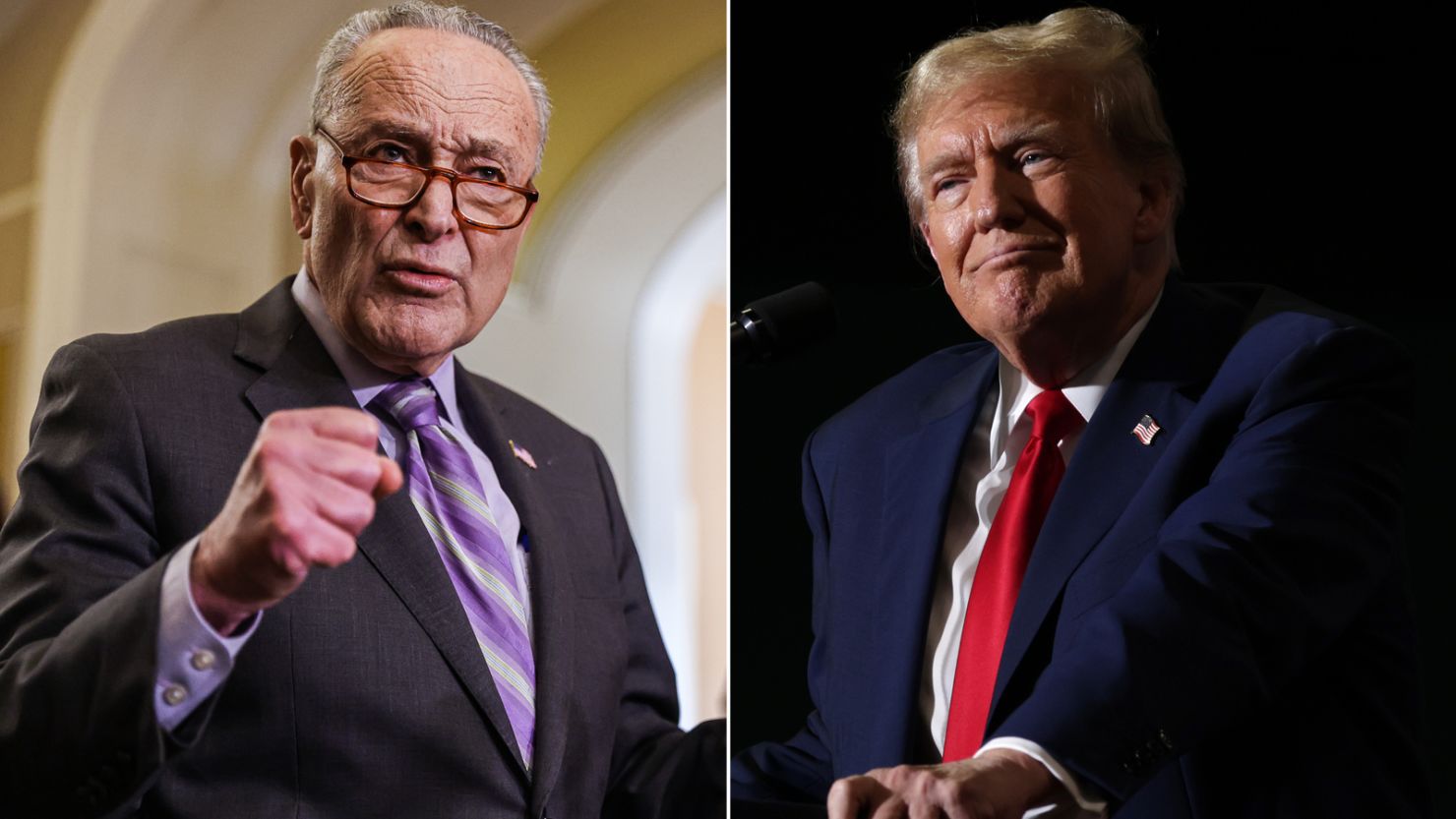
Political analysts say the fast spread of the clip reflects both the power of late-night television and the volatility of the current political climate.
“This wasn’t about a new revelation,” Lowell said. “It was about the collision of political tension, media spontaneity and public appetite for direct confrontation.”
As of late Wednesday, Trump had not made a personal statement about the segment on his social-media accounts, though aides indicated that he was “frustrated” with the coverage. Schumer also declined to elaborate, telling reporters only that he “spoke honestly” and had “nothing to add.”
The moment nevertheless continued to circulate widely—a reminder of how quickly an unscripted exchange between a Senate leader and a late-night comedian can shape a national narrative, at least for a news cycle, in an era where politics and entertainment remain inseparable.