National Security & Politics
Senior Military Officials Quietly Push Back on Trump’s Defense Demands as Public Confrontation Fuels Debate Over Civil–Military Boundaries
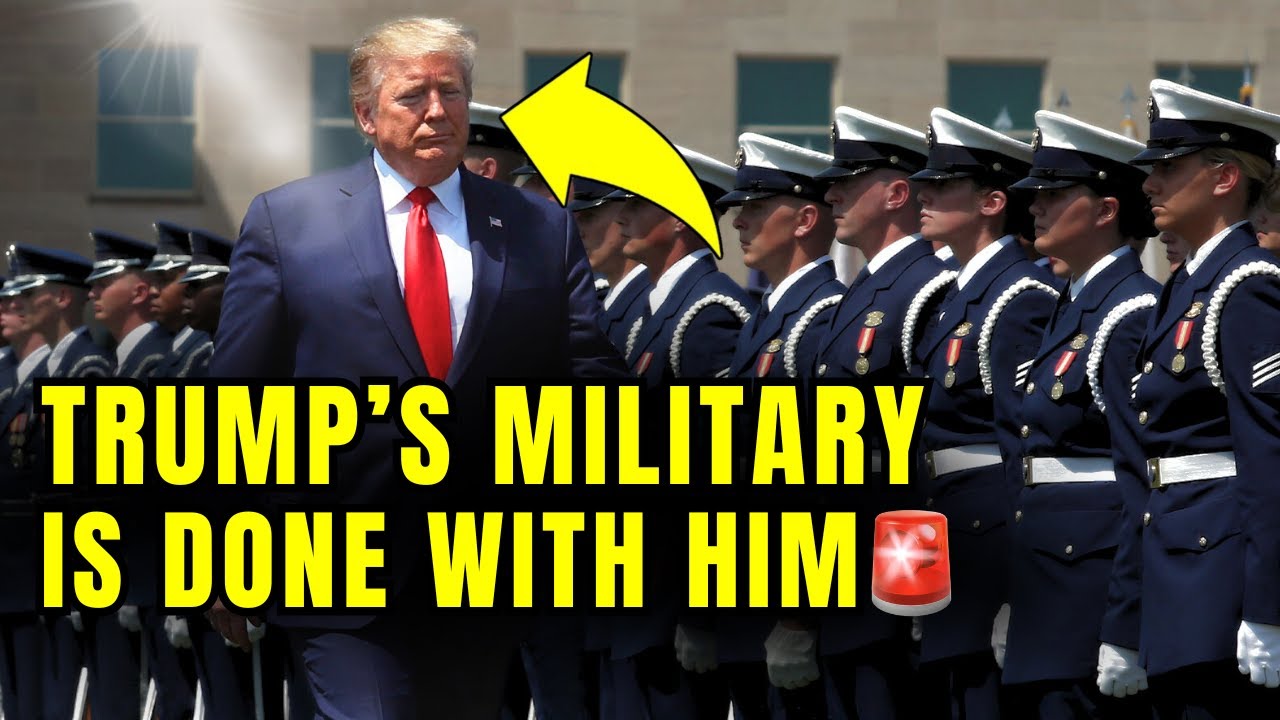
A tense and highly scrutinized moment between former President Donald J. Trump and senior military leaders this week has triggered renewed debate in Washington about the boundaries of civilian authority over the armed forces, after top commanders appeared to resist a set of defense directives that Trump had publicly championed.
Although the dispute did not constitute a formal break in military chain of command, several defense officials said privately that the episode reflected “growing discomfort” among senior officers who have struggled to navigate Trump’s return to aggressive public commentary on defense policy. The moment gained national attention after a televised interview in which Trump criticized unnamed Pentagon leaders and hinted he expected “stronger loyalty” on key foreign-policy matters.
A Rare Public Moment of Tension
The controversy escalated when a live news broadcast showed a senior U.S. commander responding to a question about Trump’s remarks. The commander, asked whether the military would comply with hypothetical orders floating in Trump-aligned media circles, replied that the armed forces would “follow the law and the Constitution,” adding that “no military decision is made on political motivation.”
The answer—measured and consistent with longstanding military doctrine—nonetheless drew swift reaction from Trump supporters, who viewed it as a rebuke. Analysts said the moment underscored the fragility of civil–military trust in a polarized environment.
“It is extremely unusual for commanders to be asked these questions on live television,” said Dr. Benjamin Hallworth, a professor of military ethics at Georgetown University. “But the fact that such questions are now being asked tells us how much the political atmosphere has shifted.”
Inside the Pentagon: Anxiety and Discipline

Five defense officials who described the internal mood on the condition of anonymity said the televised exchange came after weeks of growing unease within the military about increasingly bold political commentary from civilians aligned with Trump. Officials said military leaders had heard proposals they viewed as outside normal policy channels, including talk from conservative commentators urging the Pentagon to act more aggressively on border operations and foreign surveillance.
None of these proposals came through formal channels, the officials said, but they contributed to “a sense of drift” as political rhetoric escalated.
“There is an atmosphere of uncertainty,” one senior officer said. “Everyone understands civilian control of the military. But the challenge now is the volume of voices claiming to speak for a former president.”
Trump World Responds Forcefully
In a series of statements posted online and shared by close allies, Trump accused “rogue generals” of attempting to undermine him politically, though he did not specify which officials he meant or cite any evidence. Advisers later attempted to soften the language, arguing that Trump sought “more decisive leadership” on national security issues, not a confrontation with the military.
A spokesperson for Trump’s political committee said the former president “respects the armed forces deeply” and was criticizing “Pentagon bureaucrats, not the troops or America’s top warriors.”
But the damage had already been done. The phrase “lost control of his own military”—a description the Trump team rejects—became a common refrain among commentators discussing the unusual dynamic.
Congress Demands Clarity
The public confrontation drew swift bipartisan reaction on Capitol Hill, where lawmakers expressed concern about escalating tensions between political leaders and senior officers. Senator Jack Reed, Democrat of Rhode Island and chair of the Armed Services Committee, urged “strong reaffirmation of established civilian–military norms.”
Across the aisle, Senator Thom Tillis, Republican of North Carolina, said military leaders must “remain above political disputes,” but also warned that “former presidents should choose their words carefully.”
Several lawmakers have requested closed-door briefings to understand whether the tensions reflected a structural problem or a one-off public disagreement.
Civil–Military Scholars Warn of Long-Term Risk

Experts said the episode should be viewed as part of a broader shift in civil–military relations. Over the last decade, military leaders have found themselves drawn more frequently into political debates—sometimes inadvertently, sometimes directly.
“What we’re seeing is not a collapse of authority,” said Dr. Amelia Rhodes, a historian of military governance. “But we are witnessing a slow erosion of shared expectations. The norms that kept politics and the military separate are under sustained pressure.”
Rhodes added that televised moments like this have outsized impact because they circulate rapidly online, stripped of context and used by interest groups to support competing narratives.
International Allies Watching Closely
Diplomats from several allied countries privately expressed unease about the incident, according to two U.S. officials familiar with the conversations. Foreign partners, they said, prefer predictability in U.S. defense posture and worry when public disagreements appear to signal internal instability.
“It’s not about one remark,” said a European defense attaché. “It’s about whether American institutions are operating on consistent principles.”
A Flashpoint With Uncertain Consequences
For now, defense officials say military operations continue as normal. But the episode has opened a broader conversation in Washington about how to manage civil–military relations in an era where former presidents remain politically active long after leaving office.
“This isn’t a crisis,” said one Pentagon official. “But it is a warning that everyone should take seriously.”