In a development that has rippled through Capitol Hill, Senator Tammy Duckworth’s recent maneuvering has prompted several Republican lawmakers to break ranks and support upcoming hearings on the deployment of U.S. military forces into American cities during the Trump administration. The shift, while subtle on the surface, represents one of the clearest indications yet of a growing fracture within the Republican Party over the legacy of Donald J. Trump and the long-term implications of militarized federal action on domestic soil.
Duckworth, a Democrat from Illinois and a former member of the National Guard, has been one of the most vocal critics of what she argues was the politicization of military forces. Her concerns focus particularly on blurred lines between legitimate civil support operations and what she describes as “intimidation missions” carried out under the guise of public safety. Her stance has resonated beyond party lines, especially as new reports and citizen-recorded videos raise further questions about the conduct and authority of federal agents during periods of unrest.
A Senator’s Leverage Shifts the Debate
What ultimately changed the trajectory of the Senate debate was Duckworth’s decision to place a procedural hold on the defense budget, a rare move in her nine years in Congress. Her willingness to challenge the timeline of a significant bipartisan bill signaled to colleagues that the issue had reached a critical threshold. According to aides familiar with the negotiations, several Republican senators acknowledged privately that the questions surrounding military deployments deserved formal scrutiny, but few were willing to take the political risk of initiating such proceedings on their own.
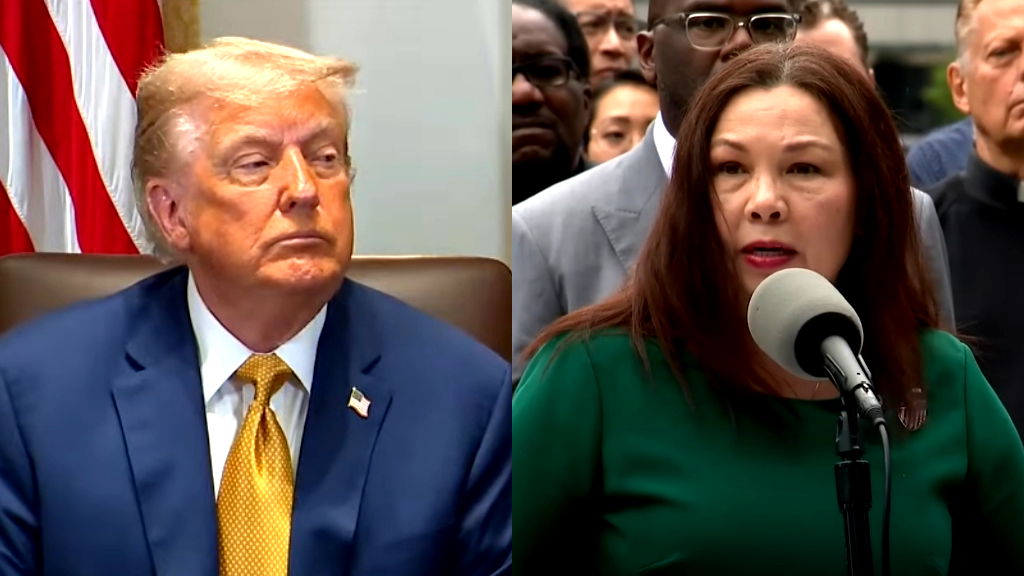
Duckworth’s strategic hold provided the necessary cover. With the defense budget temporarily stalled, Republicans on the Armed Services Committee began engaging directly on the merits of a hearing. Their concerns ranged widely—from operational readiness and troop morale to the legality of certain federal actions that, according to some judicial rulings, were misleadingly presented by agencies such as ICE.
The National Guard vs. ICE: A Line Blurred
A central theme in Duckworth’s argument is the stark contrast between the ethos of the National Guard and the increasingly controversial methods attributed to ICE. Guard members, she notes, are citizen soldiers who train to support communities during crises like floods, tornadoes, and large-scale emergencies. Their integration within local neighborhoods has historically cultivated deep trust.

ICE, however, has faced scrutiny over aggressive tactics, personnel shortages, and recruitment practices that, critics argue, prioritize force over professionalism. Duckworth’s concern, shared by others across the aisle, is that the Trump administration blurred these institutional lines by deploying ICE officers in quasi-military uniforms and sometimes positioning them alongside National Guard troops. The resulting confusion, some lawmakers fear, could erode public trust not only in the Guard but also in the broader military establishment.
Readiness, Morale, and the Cost to Military Families
Beyond political implications, the hearings aim to examine the real-world impact on readiness and morale. Many Guard members deployed to Washington, D.C., for example, were kept away from training cycles essential for maintaining operational capability. Some were assigned tasks—such as trash collection—that had little connection to their mission or expertise. These extended deployments also meant prolonged separations from families during major holidays, raising concerns among commanders about burnout and long-term retention.
Experts warn that the U.S. military cannot sustain prolonged overseas readiness without the support of Guard and Reserve components. Any disruption to training cycles, they argue, could carry consequences that extend far beyond domestic politics.
Accountability on the Horizon
Increasingly, lawmakers are also turning their attention to federal agencies whose actions were recorded by civilians and widely shared online. In several documented cases, judges have reprimanded ICE officers for providing misleading testimony, particularly when video evidence contradicted official claims. The hearings, Duckworth insists, are an opportunity to reinforce constitutional boundaries and restore public trust.

Republicans who have agreed to participate in the process emphasize that oversight should not be interpreted as opposition to federal law enforcement or the previous administration. Instead, they frame the hearings as part of Congress’s responsibility to ensure transparency, legality, and proper use of public resources.
A Party Under Pressure
While the hearings have not yet begun, political observers note that this moment could prove pivotal for Republicans navigating the post-Trump era. Insiders describe increasing tension between factions seeking distance from Trump’s most controversial policies and those determined to defend his legacy. The military deployment inquiry has become one of several fault lines exposing the party’s ideological divergence.
As Washington prepares for what could be a contentious set of hearings, one thing is certain: the debate surrounding military authority, domestic deployment, and federal accountability is far from over. And with new evidence continuing to emerge, the political landscape is poised for further upheaval in the months ahead.