Media & Politics — Cultural Analysis
Trump Escalates Feud With Jimmy Kimmel After Renewed Call for Host’s Removal Sparks Public Clash
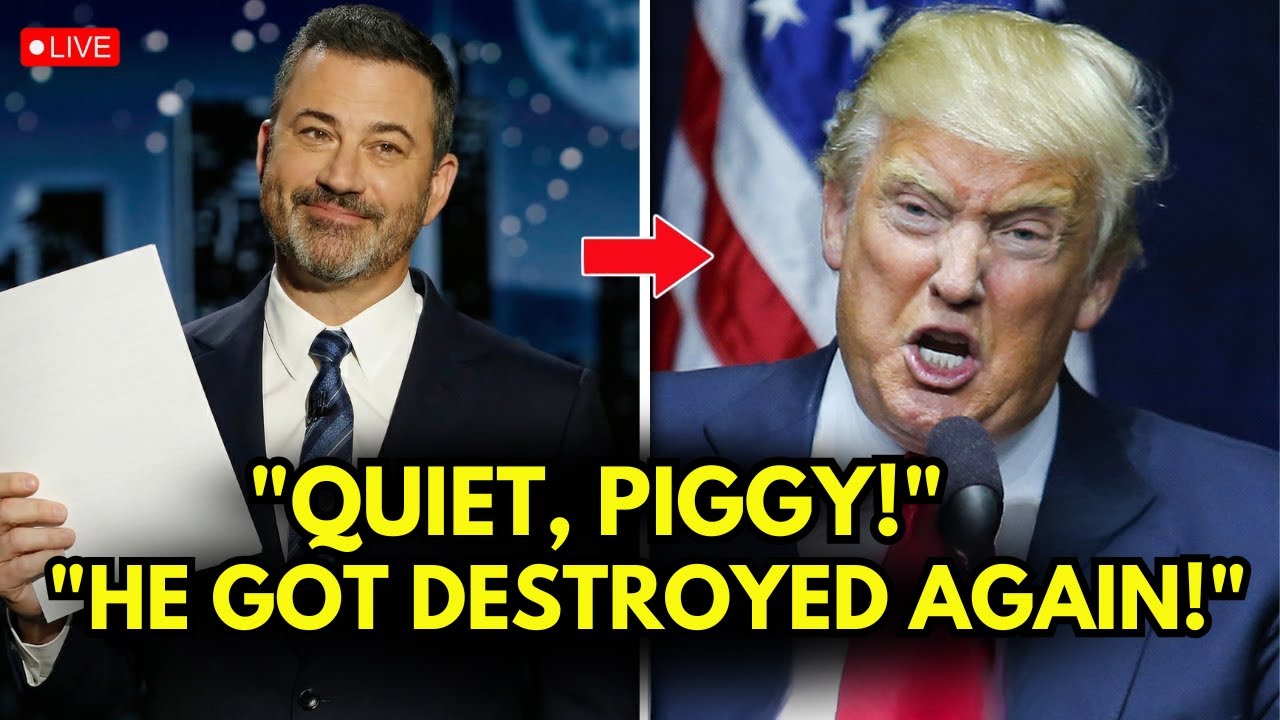
Former President Donald J. Trump intensified his long-running tensions with late-night television this week, privately urging allies to pressure ABC to dismiss comedian Jimmy Kimmel, according to three people familiar with the matter. The renewed demand, which echoes a similar push made earlier in the year, set off a fresh wave of media scrutiny and culminated in an unusually sharp on-air response from Kimmel, who addressed the reports during Monday night’s broadcast.
The incident began after Trump’s team circulated clips of a recent monologue in which Kimmel poked fun at Trump’s comments about loyalty, intelligence, and the internal turbulence surrounding his political operation. Advisers described the segment as “disrespectful,” while one longtime aide said the former president felt the network was “actively trying to humiliate him.” According to two individuals briefed on the discussion, Trump told associates that Kimmel should be “removed” and that conservative media should “turn up the pressure” on ABC executives.
ABC declined to comment on the internal conversations reportedly occurring in Republican circles, but network officials privately emphasized that late-night programming is given broad editorial independence. Kimmel, for his part, responded with his characteristic mixture of humor and restraint. Midway through the show, he paused after a comedic bit and addressed the camera directly, telling viewers that he had heard Trump was “very upset” and wanted him fired once again. Then came the line that quickly spread across social media: “It’s flattering,” Kimmel said, “to know the man who calls everyone else weak still can’t handle a quiet piggy joke.”
The remark—playful but pointed—triggered widespread reaction across political and media communities. Clips circulated rapidly on multiple platforms, with the phrase “quiet piggy” trending overnight. Kimmel’s delivery, understated and almost casual, contrasted sharply with the dramatic tone circulating in political commentary surrounding Trump’s reported request.
Political analysts noted that the exchange underscored a broader debate about the place of late-night comedy in the country’s political ecosystem. “We’re seeing once again that the boundary between political messaging and entertainment has almost disappeared,” said Dr. Alisha Benton, a professor of media and democracy at Stanford University. “Late-night hosts are functioning as a kind of cultural editorial board, and political figures—Trump especially—respond to them as if they were major institutional actors.”
The Trump campaign did not issue an official statement about Kimmel’s comments, but two people close to the former president said he was “angered” and believed the segment reinforced what he views as the entertainment industry’s bias against him. Several conservative commentators echoed that sentiment, arguing that Kimmel’s monologue crossed the line from comedy into political activism. Others, however, urged fellow Republicans not to elevate the moment, warning that amplifying the feud only increases Kimmel’s reach.
On the left, Kimmel’s response was broadly celebrated. Prominent Democratic lawmakers reposted the clip with praise, and progressive activists noted that the exchange reinforced long-standing tensions between Trump and mainstream entertainment outlets. Several late-night hosts also referenced the dust-up, with Stephen Colbert delivering a brief remark suggesting that Trump’s attention “might be better focused on legal matters than late-night television.”
:max_bytes(150000):strip_icc()/donald-trump-jimmy-kimmel-031824-344c3ea21e474793bf807b0254e39e4a.jpg)
The clash unfolded amid a period of heightened attention on Trump’s media strategy. Advisers have been attempting to project discipline following a string of legal and political setbacks, but the former president’s ongoing disputes with entertainers—ranging from late-night hosts to comedy sketch programs—have complicated those efforts. One campaign strategist, speaking anonymously to describe internal frustrations, said the focus on Kimmel “distracts from core messaging” and risks reinforcing perceptions of volatility.
Industry observers noted that calls for networks to remove late-night hosts are not new, but direct demands from political figures—particularly former presidents—are rare. “The ecosystem has changed,” said Emily McRae, a senior fellow at the Columbia Journalism School. “Late-night television is one of the few remaining mass-audience spaces where political satire routinely intersects with national debate. Any attempt to influence that content carries symbolic weight.”
Despite the political reaction, ABC executives appear unlikely to intervene. Ratings for Kimmel’s show have remained stable, and executives have historically defended their comedians’ editorial latitude. A person familiar with the network’s internal posture said the company views Trump’s renewed frustration as “another moment in an ongoing cultural dispute” rather than a substantive challenge to programming autonomy.
By Tuesday morning, Kimmel’s “quiet piggy” remark had been replayed millions of times online, spawning commentary from across the political spectrum. Conservative outlets debated whether Kimmel’s joke was appropriate; liberal publications framed it as a lighthearted but telling illustration of Trump’s sensitivity to criticism.

Whether the feud will escalate remains unclear, but Monday’s confrontation contributes to a longer-term pattern: Trump and late-night comedy remain locked in a mutually reinforcing cycle of criticism, satire, and reaction. For now, the moment has become one more flashpoint in an increasingly polarized media environment—one in which even a single late-night punchline can spark national debate.