Starmer’s Tax Dodge: Labour’s Manifesto Under Siege as Budget Fears Grip Workers
London – October 29, 2025. In the hallowed chamber of the House of Commons, where promises are forged and fortunes falter, Prime Minister Keir Starmer faced a moment that could redefine his fledgling government. During Prime Minister’s Questions, Conservative leader Kemi Badenoch cornered him with a deceptively simple query: Does the Prime Minister still stand by Labour’s manifesto pledge not to raise income tax, National Insurance, or VAT? Four months ago, Starmer’s answer was a crisp “Yes.” Today? A masterclass in evasion. “The Budget is on the 26 November and we will lay out our plans,” he replied, his voice steady but his eyes evading the dispatch box. No reaffirmation. No ironclad vow. Just a sidestep that has ignited a firestorm, fueling widespread fears of a colossal Budget raid on Britain’s beleaguered workers.
The manifesto in question, unveiled with fanfare during the July 2024 election campaign, was Labour’s fiscal North Star. “We will not increase taxes on working people,” it thundered, explicitly ruling out hikes to the basic, higher, or additional rates of income tax, VAT, or employee National Insurance contributions. It was a pledge designed to court the aspirational middle classes—the van drivers, nurses, and office clerks whom Starmer wooed with visions of “change” sans the sting of higher levies. Chancellor Rachel Reeves hammered it home in her first Budget last November, raising £40 billion through employer NI hikes and capital gains tweaks while insisting the “big three” taxes were off-limits. “This is not a tax on workers,” she declared, framing the employer levy as a corporate burden that wouldn’t trickle down to pay packets.
But reality has a way of shredding rhetoric. Since Labour’s landslide victory, the economic inheritance has proven a poisoned chalice. The Office for Budget Responsibility (OBR) now forecasts a £51 billion “black hole” in public finances, exacerbated by stagnant productivity, soaring welfare costs, and the lingering scars of Brexit and the pandemic. The National Institute of Economic and Social Research (NIESR) warns of “major tax rises all but inevitable” to plug the gap, with sluggish growth dragging GDP forecasts down by 0.7% this year alone. Freezing personal allowances—a stealth mechanism inherited from the Tories—continues to drag 1.2 million more earners into the 40% tax bracket by 2028, effectively a £12 billion annual hit on middle-income households. Starmer’s dodge today only amplified the dread: is the freeze set to extend, or worse, evolve into outright rate hikes?
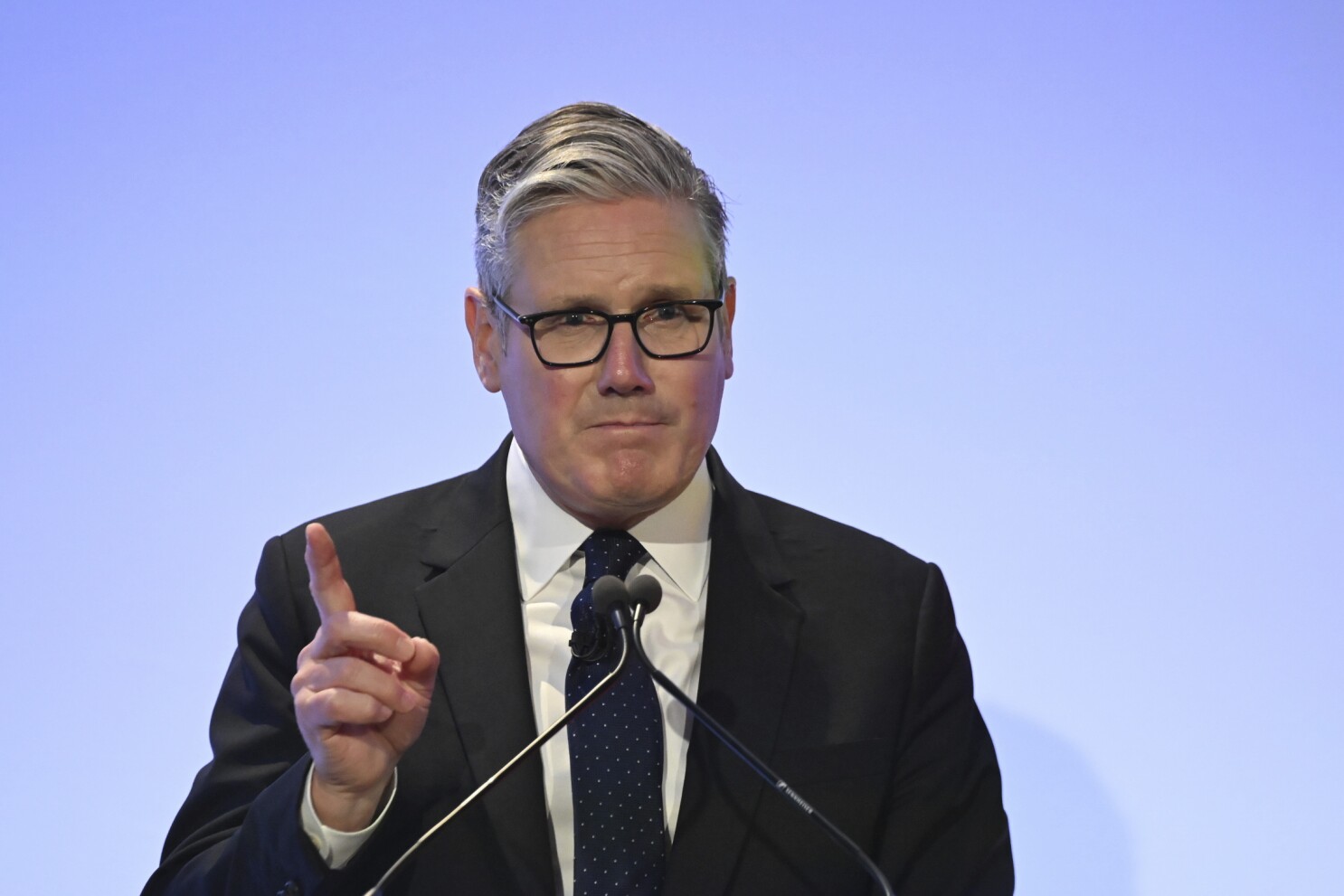
Badenoch pounced with the precision of a political predator. “What’s changed in the past four months?” she taunted, noting Starmer’s previous one-word affirmation. The Tory leader, fresh from her shadow cabinet reshuffle, painted Labour as “too weak” to curb public spending—pointing to unchecked welfare bills projected to hit £300 billion by 2027—and accused the PM of presiding over a “doom loop” of decline. Her barbs landed amid a chorus of Tory cheers, but the real sting was in the silence from Labour benches. Backbenchers like Andy McDonald, a vocal socialist, have urged “asking the wealthy to pay their fair share,” hinting at capital gains or inheritance tax overhauls. Yet whispers from senior figures suggest Reeves is eyeing income tax thresholds as the nuclear option: a 1p rise in the basic rate could net £6 billion, enough to fund Starmer’s green energy blitz without alienating core voters—provided it doesn’t spark a revolt.
The fallout has been swift and seismic. Number 10’s press secretary, when pressed post-PMQs, merely echoed Starmer’s non-committal line: “You have the Prime Minister’s words in the House.” No Number 10 sources rushed to reaffirm the pledge, a departure from August’s frantic clarifications after Starmer’s initial wobble. Business lobbies, already reeling from last year’s employer NI hike—which the CBI warns has stifled 100,000 job creations—braced for more. “Uncertainty is the enemy of investment,” thundered the British Chambers of Commerce, as FTSE 100 shares dipped 1.2% on the news. On X, #StarmerTaxRaid exploded with 1.5 million posts, blending memes of Reeves as a fiscal grim reaper with earnest pleas from pensioners: “We voted for change, not a pay cut.”
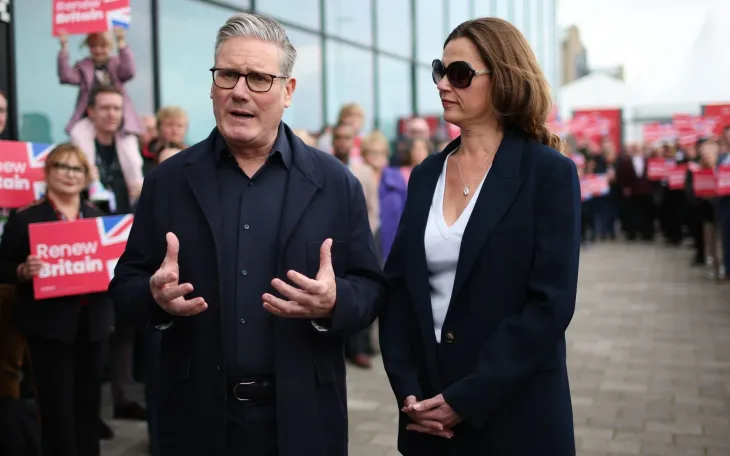
Critics on the left fret a betrayal could fracture Labour’s coalition. The party’s 2024 surge relied on reclaiming Red Wall seats from disillusioned workers; alienating them now risks a 2026 midterm mauling. Reeves, ever the Iron Chancellor, has telegraphed tough choices: her October mini-Budget hinted at “living standards” as the priority, code for redistributive pain. Yet Starmer’s defenders frame the ambiguity as prudence. “No PM pre-announces fiscal firebreaks,” one Downing Street aide confided. “The OBR’s productivity review is a Tory indictment, not our script.” Still, the optics are toxic: a government born on trust now sows doubt, with polls showing 58% of voters believing Labour will hike taxes within two years.
As November 26 looms, the capital simmers. Will Reeves raid the workers’ wallets to bankroll Starmer’s “mission-driven” agenda—NHS waiting lists slashed, net zero accelerated, child poverty halved? Or will she pivot to growth, slashing red tape and courting FDI as touted at last week’s investment summit? Starmer’s refusal to rule out the unthinkable isn’t just a Budget teaser; it’s a litmus test for his premiership. In a nation where take-home pay has flatlined since 2008, the specter of broken pledges could turn hope into hostility. For now, the PM’s silence speaks volumes: in the brutal arithmetic of austerity, manifesto vows are the first casualty. Britain holds its breath—and its wallets—waiting for the axe to fall.