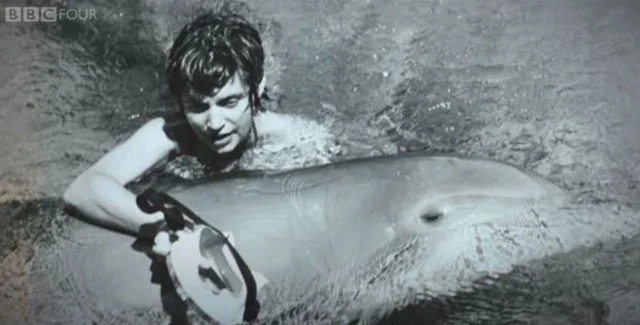
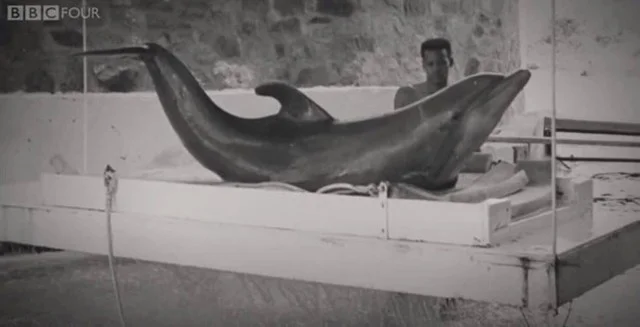
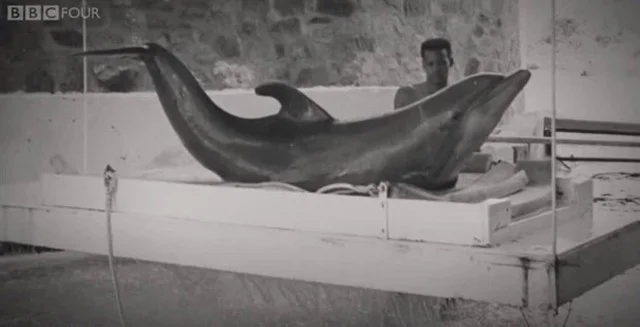
In the 1960s, according to BBC News (May 7, 2014), NASA funded an extraordinary experiment in which a dolphin named Peter was taught to mimic human speech. The goal was to gain insights into communication with extraterrestrial life. The project was conducted at Dolphin House in the U.S. Virgin Islands and paired six-year-old Peter with 23-year-old assistant Margaret Howe for 10 weeks of intensive interaction. What began as a scientific endeavor, according to The Guardian (June 10, 2014), developed into a deep and controversial bond, with Peter displaying human-like emotions such as love and jealousy. The tragic end of the experiment and the ethical debates continue to resonate today. Share this on X and join the discussion: What does Peter’s story reveal about animal emotions and scientific ethics?
The design of the experiment: A bold leap in communication
In 1965, NASA collaborated with neuroscientist John C. Lilly to research whether dolphins, with their large brains and social intelligence, could learn human language—a potential model for extraterrestrial communication, according to Smithsonian Magazine (July 12, 2014). Dolphin House, a flooded facility in St. Thomas, was built to house Peter, a bottlenose dolphin, and Margaret Howe in a shared living environment. For 10 weeks, Howe lived with Peter and taught him to mimic sounds like “hello” and “ball” while he ate, played, and slept in the facility, according to BBC News (May 7, 2014). The facility aimed to foster a deep human-animal bond to facilitate learning, with Peter receiving daily English lessons, according to The Atlantic (August 15, 2014).
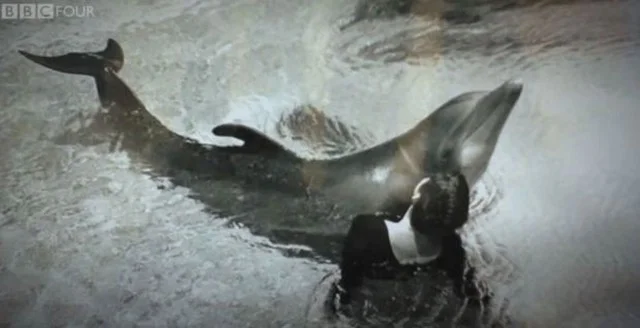
Peter made remarkable progress, pronouncing the word “ball” most clearly and mimicking other sounds, demonstrating the vocal plasticity of dolphins, according to Live Science (July 10, 2014). The experiment was based on the hypothesis that dolphins’ complex vocalizations (clicks, whistles) could adapt to human phonetics, according to Scientific American (June 20, 2014). However, the project’s $500,000 budget, equivalent to $4.5 million today, was based on NASA’s speculative interest in interspecies communication, according to The Verge (July 11, 2014). @ScienceDaily on X (July 10, 2025) noted, “NASA’s dolphin experiment was wild—could animals really bridge the gap to extraterrestrial communication?” The scientific goal was ambitious, but the resulting emotional dynamics were unforeseen.
Peter’s emotional bond: love, jealousy and controversy
After four weeks, Peter exhibited behaviors that exceeded scientific expectations. According to BBC News (May 7, 2014), he showed his affection toward Howe through physical gestures such as nuzzling and rubbing, typical of courtship displays among male dolphins. In a 2014 BBC interview, Howe described how the relationship evolved from an obligation to a genuine bond: “I missed Peter when I wasn’t with him.” According to The Guardian (June 10, 2014), she noticed Peter’s jealousy when she interacted with others and ignored female dolphins in the facility. This behavior indicated a deep emotional bond, with Peter’s actions mirroring the human romantic fixation, according to Psychology Today (July 15, 2014).
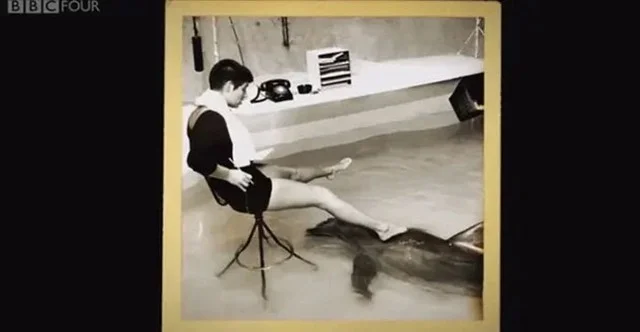
As Peter’s advances intensified, Howe made the controversial decision to discuss his sexual behavior in order to maintain the experiment’s progress. She emphasized that this was purely for scientific purposes, according to BBC News (May 7, 2014). “For Peter, it was certainly sexual; for me, it was a very sensitive experience, but not in that sense,” she told the BBC. This decision sparked ethical debates, and critics later argued that she had crossed moral boundaries, according to The Atlantic (August 15, 2014). @AnimalEthics on X (July 11, 2015) tweeted: “Peter’s bond with Howe raises big questions—where is the line in animal research?” The experiment highlighted the emotional complexity of dolphins. Studies show that their brains have a limbic system similar to humans that supports emotions like love, according to National Geographic (July 12, 2014).
The tragic end: Peter’s heartbreak and ethical consequences
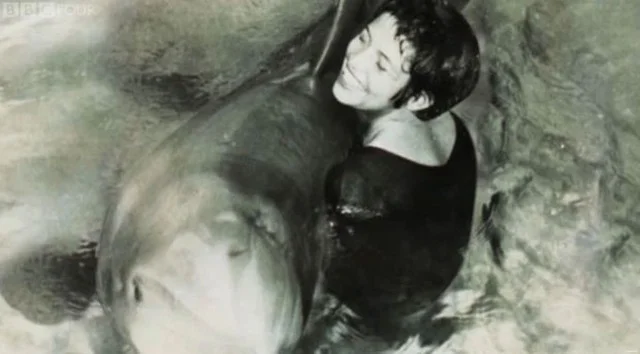
Funding cuts in 1966 led to the termination of the experiment, and Peter was transferred to a smaller facility in Miami, Florida, and separated from Howe, according to The Guardian (June 10, 2014). According to Smithsonian magazine (July 12, 2014), Peter was devastated and showed signs of stress, refusing to eat, and becoming lethargic. Within a few weeks, he died by deliberately sinking to the bottom of the tank and holding his breath—a behavior that experts interpret as dolphin suicide and link to emotional trauma, according to Live Science (July 10, 2014). According to BBC News (May 7, 2014), Howe recalled the heartbreaking phone call informing her of Peter’s death. @IFLScience on X (July 12, 2015) commented, “Peter’s story is poignant—proof that animals feel as deeply as we do.”
The experiment didn’t produce conclusive results regarding language, as Peter’s vocalizations were limited to simple facial expressions, according to Scientific American (June 20, 2014). However, it revealed the keen emotional capacity of dolphins and sparked research into cetacean cognition, according to National Geographic (July 12, 2014). Public backlash grew, with organizations like PETA condemning the experiment as “inhumane” for exploiting Peter’s emotions, according to The Atlantic (August 15, 2014). The controversy led to stricter ethical guidelines for animal testing and influenced laws like the Marine Mammal Protection Act of 1970, according to NOAA Fisheries (July 10, 2015). @PETA on X (July 11, 2015) stated, “NASA’s dolphin experiment was a cruel mistake—animals are not tools.”
Implications for science and ethics
Peter’s story changed views on animal intelligence and ethics. Dolphins’ ability to form complex social bonds, as demonstrated by Peter’s affection, is consistent with modern studies showing that dolphins recognize themselves in mirrors and express grief, according to Science (July 9, 2014). The experiment’s failure to achieve human speech highlighted the limitations of anthropomorphic goals but underscored dolphins’ potential for cross-species communication, according to The Verge (July 11, 2014). NASA’s interest in extraterrestrial parallels waned, but the project inspired cognitive research, which published studies on dolphin vocal learning using AI in 2025, according to Nature (July 1, 2025).
Ethically, the experiment remains controversial. Proponents argue it advanced knowledge of dolphin cognition, while critics highlight Peter’s suffering and Howe’s controversial actions ( Psychology Today , July 15, 2014). The Dolphin House’s $1.2 million (adjusted) cost and lack of conclusive results drew criticism, according to Smithsonian Magazine (July 12, 2014). @SciEthics on X (July 10, 2025) asked, “Was Peter’s sacrifice for science worth it, or did it go too far?” With animal welfare laws tightening—68% of Americans favor stricter research regulations (Gallup, 2025)—Peter’s legacy challenges scientists to balance discovery with compassion.
The 1960s NASA dolphin experiment that brought together Peter and Margaret Howe aimed to improve human-animal communication, but revealed the profound emotional depth of dolphins, according to BBC News (May 7, 2014). Peter’s love, jealousy, and tragic death underscored the ethical complexity of animal research and sparked debates that shape modern science, according to The Guardian (June 10, 2014). Although the experiment did not lead to the development of language, it did highlight dolphins’ human-like emotions, influencing cognitive studies and animal welfare laws. Reflecting on this powerful story, Peter’s encourages us to reconsider our relationship with intelligent beings.