The Tragic Life of Tilikum, SeaWorld’s Infamous Killer Orca
Tilikum, a male orca born around 1981 in the wild waters off the coast of Iceland, became one of the most well-known and controversial animals in modern history. His life, marked by captivity, tragedy, and public scrutiny, serves as a poignant symbol of the ethical dilemmas surrounding the captivity of marine mammals. Tilikum’s story is not just about an individual animal but also a reflection of humanity’s complex relationship with nature, the consequences of exploiting intelligent creatures for entertainment, and the broader implications for animal welfare. This essay explores Tilikum’s life, from his capture to his death, and the profound impact he had on the debate over orca captivity.
Tilikum’s early life began in the vast, open ocean, where orcas live in tight-knit family pods, communicating through intricate vocalizations and maintaining lifelong bonds. As a young calf, he was likely surrounded by his mother, siblings, and extended family, navigating the rich ecosystems of the North Atlantic. Orcas, often called killer whales, are apex predators with complex social structures, high intelligence, and emotional depth comparable to that of primates. In 1983, at approximately two years old, Tilikum’s life took a devastating turn when he was captured by a marine park expedition. Torn from his family, he was transported to Sealand of the Pacific, a small facility in British Columbia, Canada. The trauma of this separation would mark the beginning of a life defined by confinement and unnatural conditions.
At Sealand, Tilikum was confined to a small, barren tank, far removed from the expansive ocean he once knew. He shared this space with two other orcas, both females, in a pool that was inadequate for creatures of their size and social needs. Orcas in the wild swim hundreds of miles daily, dive to great depths, and engage in cooperative hunting. In contrast, Tilikum’s new environment offered little stimulation, leading to stress and abnormal behaviors. Former trainers at Sealand reported that Tilikum was often bullied by the other orcas, and the facility’s limited resources meant inadequate care and nutrition. The stress of captivity was compounded by the facility’s practice of locking the orcas in a small, dark module overnight, a practice that likely exacerbated their psychological distress.
The first major tragedy of Tilikum’s life occurred in 1991, when a young part-time trainer, Keltie Byrne, fell into the pool during a performance. Tilikum, along with the other orcas, dragged her underwater, leading to her drowning. This incident was a stark reminder of the inherent risks of keeping such powerful, intelligent animals in captivity. While the public was shocked, those familiar with orca behavior pointed to the unnatural conditions as a contributing factor. Orcas in the wild are not known to attack humans, but the stress, frustration, and lack of stimulation in captivity can lead to unpredictable behaviors. Following this incident, Sealand closed, and Tilikum was sold to SeaWorld Orlando in 1992, beginning the next chapter of his troubled life.
At SeaWorld, Tilikum became a star attraction due to his massive size—over 22 feet long and weighing more than 12,000 pounds—and his ability to sire calves, making him a valuable asset for the park’s breeding program. However, his life in Orlando was no less tragic. He was kept in a tank that, while larger than Sealand’s, was still a fraction of the space an orca requires. Tilikum often displayed signs of distress, such as lethargy, repetitive behaviors, and aggression toward other orcas. Former SeaWorld trainers later revealed that Tilikum was frequently isolated, a practice that is particularly harmful to orcas, who thrive on social interaction. His role as a breeding male further complicated his life, as he sired numerous calves, many of whom also faced lives of captivity.
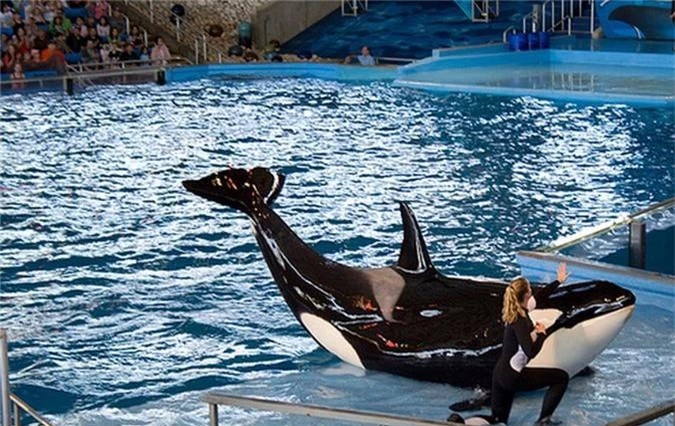
The second tragedy associated with Tilikum occurred in 1999, when a man named Daniel Dukes was found dead in Tilikum’s tank. Dukes had reportedly snuck into the park after hours and entered the water, leading to his death. While the details remain murky, this incident further cemented Tilikum’s reputation as a “dangerous” orca, though many argued that his environment, not his nature, was to blame. The final and most publicized tragedy came in 2010, when Tilikum killed his trainer, Dawn Brancheau, during a performance. Brancheau, an experienced and beloved trainer, was pulled into the water by Tilikum, who held her underwater, leading to her death. This incident shocked the world and sparked widespread outrage, leading to the 2013 documentary Blackfish, which brought Tilikum’s story to a global audience.
Blackfish exposed the harsh realities of orca captivity, detailing Tilikum’s life and the broader issues of keeping such intelligent, social animals in confined spaces for entertainment. The documentary highlighted the physical and psychological toll of captivity, including shortened lifespans—wild orcas can live up to 80 years or more, while captive orcas like Tilikum rarely survive past their 30s. It also criticized SeaWorld’s practices, such as separating calves from their mothers and prioritizing profit over animal welfare. The public backlash was immense, leading to declining attendance at SeaWorld, corporate partnerships dissolving, and legislative efforts to ban orca captivity in some regions.

Tilikum’s health deteriorated in his final years. He suffered from chronic infections, dental issues, and other ailments common among captive orcas. In January 2017, Tilikum died at SeaWorld Orlando at the age of approximately 36, far younger than his wild counterparts. His death was mourned by animal rights activists and trainers who had grown to care for him, but it also reignited calls for an end to orca captivity. SeaWorld announced in 2016 that it would end its orca breeding program, a decision widely attributed to the public pressure following Blackfish and Tilikum’s story.
Tilikum’s life was a tragedy not of his own making but of human decisions that prioritized profit and entertainment over the well-being of a sentient being. His story forced the world to confront uncomfortable questions about the ethics of captivity, the intelligence and emotional capacity of orcas, and the responsibility humans have toward the creatures they exploit. While Tilikum’s life was marked by suffering, his legacy lives on in the ongoing fight for animal rights and the push for better treatment of marine mammals. His story serves as a sobering reminder that the cost of entertainment can be far too high when it comes at the expense of another being’s freedom and happiness.