Carney Delivers Measured Rebuke to Trump Tariffs in Mumbai Speech, Signals Canada’s Push for Economic Independence
MUMBAI — Prime Minister Mark Carney of Canada used a high-profile appearance in India to deliver a carefully calibrated response to President Donald Trump’s escalating tariff campaign against Canadian goods, framing the U.S. measures as part of a broader global trend in which powerful nations weaponize trade. In a speech that avoided direct confrontation yet left no doubt about its target, Carney declared that when international rules no longer provide protection, nations must safeguard themselves — a line that drew quiet but unmistakable attention from Washington.
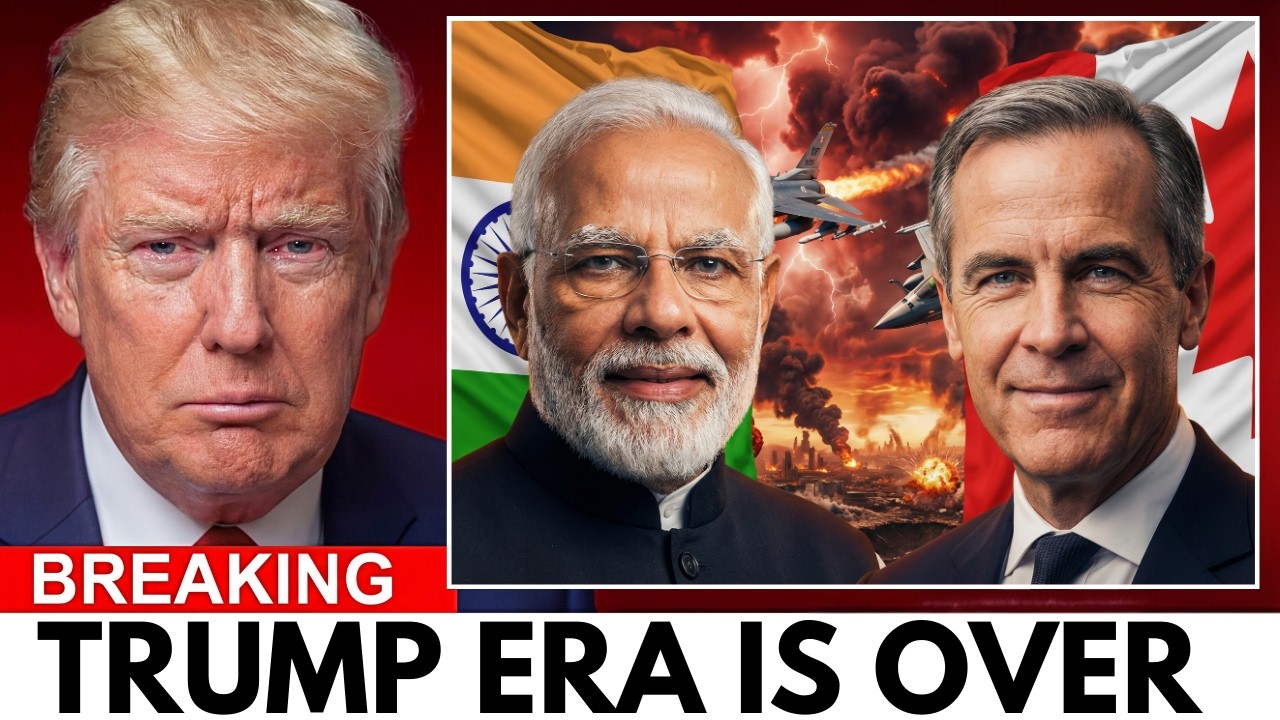
Speaking at a major economic forum, Carney described the past two decades as a period of repeated shocks: financial collapses, pandemics, energy crises, wars and rising geopolitical tensions. These events, he argued, exposed the fragility of over-reliance on any single partner. “When countries rely too much on each other, they can also get hurt easily,” he said. He then turned to the present reality: large powers increasingly treat trade as leverage, imposing tariffs to exert pressure, manipulating currency access and exploiting supply-chain dependencies.
Carney addressed the U.S. approach head-on without naming President Trump. When asked whether the world should prepare for a new normal in which 10 or 15 percent tariffs become the standard cost of access to the American market, he replied calmly: “The U.S. president has made it clear that getting access may come with a price. Tariffs may stick around for a while, but many of these steps are short-term. Trade rules and deals still matter a lot when you look at the bigger picture.”
The speech’s most resonant moment came in a single sentence: “When the rules can no longer keep you safe, you have to keep yourself safe.” Carney presented this not as defiance but as pragmatism. He argued that the global system — from the World Trade Organization to climate negotiations — is under strain, forcing countries to rethink dependence. A nation that cannot feed itself, fuel itself or defend itself, he said, has limited options.
Canada’s response, he explained, is not retaliation but self-strengthening. The government has introduced sweeping tax incentives: 100 percent write-offs for businesses investing in domestic manufacturing, accelerated capital cost allowances for artificial intelligence, research, clean energy, electric vehicles and critical minerals. Carney noted that Canada’s effective investment tax rate is now lower than the United States’ and below the G7 average. “That is not fear,” he said. “That is fighting back the smart way.”
Rather than engaging in daily tariff disputes, Canada is positioning itself as a more attractive long-term destination for capital. Carney highlighted plans to streamline approvals for major projects, reducing timelines to two years through closer federal-provincial coordination, increased defense spending and supply-chain resilience measures. The strategy aims to diversify markets and reduce vulnerability to any single partner.
The prime minister struck an optimistic note, pointing to shared thinking among many nations. Countries, he said, increasingly seek reliable partners that offer stability rather than sudden disruption. He cited India as an example of rapid growth and self-confidence, noting the depth of ongoing Canada-India discussions as evidence of durable, mutually beneficial cooperation.

The address comes amid intensified U.S.-Canada trade friction. Trump has imposed tariffs on Canadian softwood lumber, dairy and other goods, framing them as necessary to rebalance trade. Ottawa has responded with targeted countermeasures and accelerated efforts to expand trade elsewhere, including recent agreements that lowered Chinese tariffs on Canadian canola.
Carney’s speech avoided escalation while asserting a clear principle: sovereignty in economic policy is non-negotiable. By emphasizing domestic incentives and diversified partnerships over direct confrontation, he signaled that Canada intends to weather tariff pressure by becoming less dependent on any one market — including the United States.
The message resonated beyond the room. Analysts in Washington and Ottawa noted that the prime minister had reframed the tariff dispute as a symptom of larger shifts in global power dynamics. Rather than reacting to each new levy, Canada is investing in structural advantages: lower effective taxes, faster project approvals and stronger domestic capacity.
The approach has drawn both praise and caution. Supporters argue it turns external pressure into an opportunity for long-term resilience. Critics warn that over-diversification could strain relations with the United States, Canada’s largest trading partner, at a time when continental supply chains remain deeply intertwined.
As Carney returned from Mumbai, the speech’s impact continued to ripple. It offered no immediate concessions to U.S. demands but laid out a vision of a Canada prepared to stand on its own feet — economically secure, globally engaged and less exposed to unilateral shocks. Whether that vision proves sustainable will depend on execution in the months ahead, but the prime minister’s words in India have already shifted the terms of the conversation.