OTTAWA — Discussions between the United States and Canada over management of shared freshwater resources have taken on added complexity amid ongoing trade disputes and differing views on bilateral agreements. Recent reporting from outlets including The New York Times and The Globe and Mail has highlighted U.S. interest in revisiting arrangements such as the Great Lakes Water Quality Agreement and the Columbia River Treaty, set against a backdrop of tariffs and broader economic negotiations.
The Great Lakes system, containing approximately 20% of the world’s surface freshwater, supplies drinking water to roughly 40 million people across eight U.S. states and the Canadian province of Ontario. It supports a regional economy estimated at $7 trillion if treated as a standalone entity, powering industries, fisheries, recreation, and municipal systems. The International Joint Commission, established under the 1909 Boundary Waters Treaty, has long served as the binational body overseeing disputes and water-quality standards. The Great Lakes Water Quality Agreement, first signed in 1972 and updated in 2012, addresses pollution, invasive species, and climate impacts through joint monitoring and action plans.
The Columbia River Treaty, signed in 1961, governs hydroelectric power generation and flood control along a river originating in British Columbia and flowing through the U.S. Pacific Northwest. Negotiations to modernize the treaty reached an agreement-in-principle in late 2024 under the previous U.S. administration, but ratification has faced uncertainty. Recent executive actions and public statements have questioned aspects of these frameworks, with references to fairness in power-sharing and resource allocation.
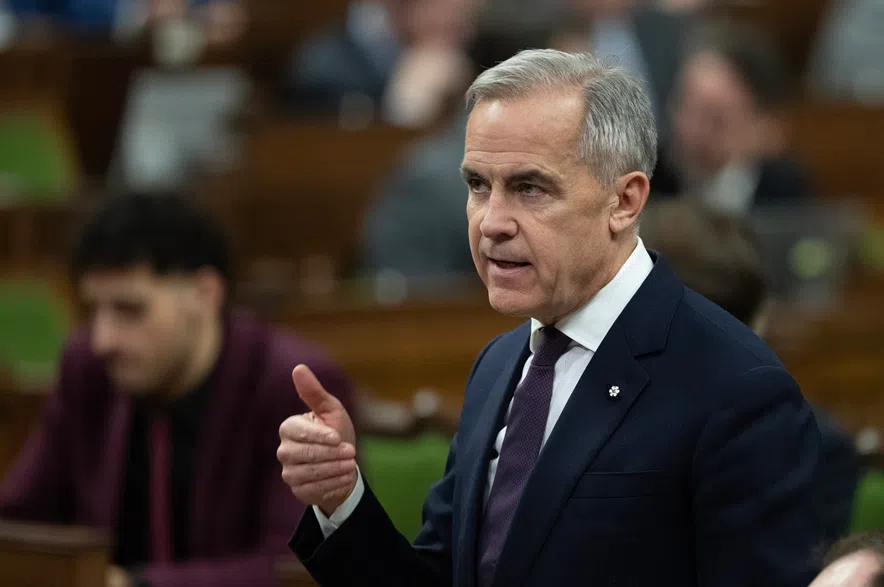
Canadian Prime Minister Mark Carney has characterized these developments as part of wider pressures on national sovereignty, particularly in the context of tariffs imposed in early 2025. Those measures included 25% duties on a range of Canadian imports, with energy products subject to a lower rate. Canada responded with retaliatory tariffs on U.S. goods, though temporary pauses were negotiated in some areas. Prime Minister Carney has stated that cooperation on shared resources requires mutual respect and has underscored Canada’s commitment to protecting freshwater security as a national priority.
Public opinion polling in Canada has consistently shown strong support for safeguarding freshwater resources, with broad consensus across political lines. This domestic alignment has bolstered Ottawa’s position in bilateral discussions, emphasizing that resource-management decisions remain sovereign prerogatives even within longstanding treaty structures.

The backdrop includes structural challenges affecting water availability. In the United States, prolonged drought in the Colorado River basin and depletion of aquifers such as the Ogallala have heightened concerns over long-term supply for agriculture, urban centers, and industry. Climate models indicate continued warming trends that affect precipitation patterns across North America. These pressures have periodically revived historical concepts of large-scale water diversion, though such proposals have historically been deemed ecologically and politically unfeasible.
Prime Minister Carney’s international engagements have reflected a strategy of diversification. At the World Economic Forum in January 2026, he described an evolving global order in which traditional leadership roles are shifting and advocated for strengthened ties among middle powers and like-minded economies. This includes outreach to partners in Europe and the Indo-Pacific to build alternative trade and resource frameworks. Discussions with China have focused on targeted tariff adjustments in specific sectors, though no comprehensive trade agreement has been pursued.
The scheduled review of the United States-Mexico-Canada Agreement (USMCA) adds further context. The agreement, which governs much of North American trade, faces examination in 2026. Canadian officials have indicated that negotiations will proceed only under conditions of mutual respect, while U.S. counterparts have pressed for adjustments to address perceived imbalances.
Regional stakeholders in the Great Lakes states — including Michigan, Ohio, Wisconsin, and Minnesota — maintain significant economic and environmental stakes in stable binational cooperation. Disruptions to joint management could affect water quality, fisheries, tourism, and industrial operations on both sides of the border.
Analysts note that the relationship between the United States and Canada remains one of the world’s most integrated, with daily cross-border trade exceeding $2 billion and deeply interconnected supply chains. Yet recent strains have prompted questions about the durability of assumptions that have guided cooperation since the mid-20th century. Joint institutions continue to function, with technical working groups addressing operational matters, but elevated political rhetoric has introduced uncertainty into long-term planning.
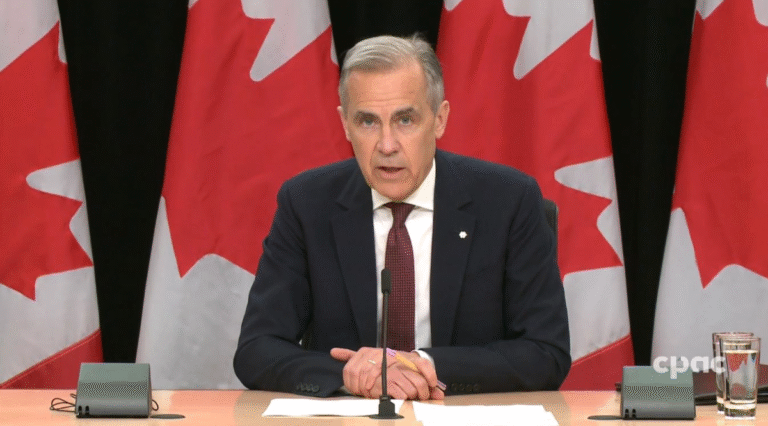
Both governments have signaled openness to dialogue on economic and security issues. A March 2025 phone call between the leaders was described by officials as constructive, though no immediate breakthroughs have been announced. The trajectory will likely depend on balancing domestic priorities with the practical realities of shared geography and resources.
As global demand for reliable freshwater and related infrastructure grows amid climate variability, the management of transboundary waters remains a test case for allied relations in an era of resource competition. The outcome will influence not only bilateral ties but also broader patterns of cooperation among resource-rich middle powers and established economies.