The Carney Gamble: Can a $500 Billion Pivot Buy Canada Strategic Autonomy?
MUMBAI/OTTAWA — Standing before a room of global titans in Mumbai this week, Prime Minister Mark Carney delivered a eulogy for the world order that defined the last fifty years. “The old relationship is over,” he declared, referring to the decades-long assumption that Canada’s prosperity was inextricably linked to the whims of Washington. “Not paused. Over.”
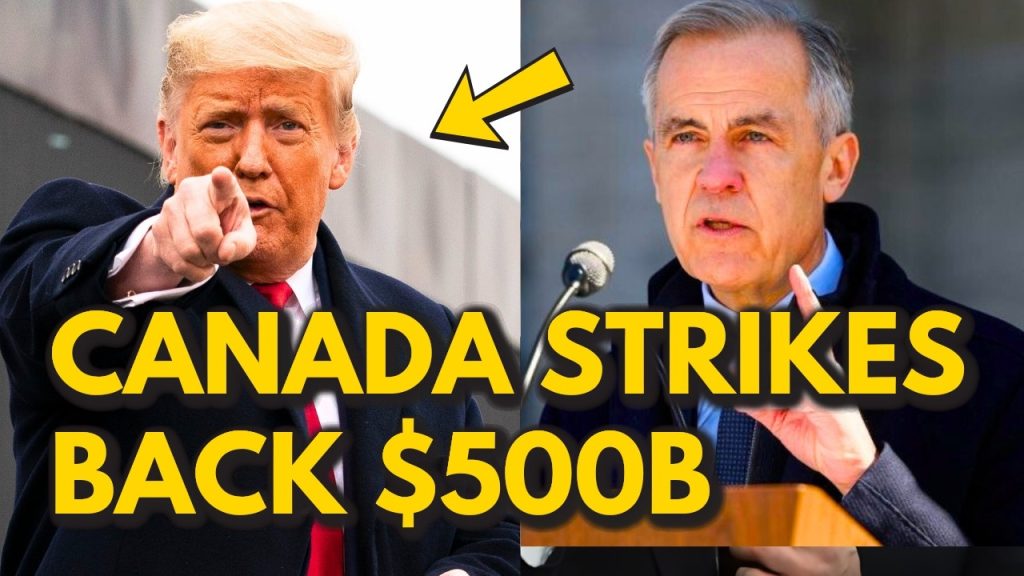
The statement was more than rhetoric; it was the opening salvo of a high-stakes $500 billion industrial strategy designed to insulate Canada from an increasingly volatile United States. As Donald Trump intensifies economic pressure—threatening 15% executive-order tariffs and halting trade negotiations—Carney is attempting a “decoupling” that many economists once thought impossible.
The 13% Weapon
The centerpiece of this “Carney Doctrine” is a brutalist approach to competitiveness. While Washington uses tariffs as a cudgel, Ottawa is using its tax code as a magnet. Canada has implemented a “super deduction”—a 100% tax write-off on manufacturing, R&D, and clean energy assets.
The result is a marginal effective tax rate for investment of just 13%. This is not just a nudge; it is an economic offensive. By dropping four and a half points below the U.S. rate and sitting at half the G7 average, Carney is openly competing for the very capital that would otherwise flow into American markets. The message to global fund managers is clear: if the rules in the U.S. are unstable, the returns in Canada are guaranteed.
The India Pivot
The strategy’s success hinges on a dramatic geographical shift. For two years, Canada-India relations were frozen in a diplomatic chill. Carney has moved aggressively to thaw that ice, recognizing that India is on track to become the world’s alternative manufacturing hub.
In Mumbai, Carney didn’t just pitch resources; he pitched alignment. With India finalizing a landmark trade deal with the EU—one that leaves the U.S. on the sidelines—Canada is positioning itself as the primary provider of the energy, timber, and agricultural surplus required to feed India’s exploding middle class. It is a bet that the 21st century will be defined by New Delhi, not Washington.
The Iran Contradiction
However, the “strategic autonomy” Carney preached in Mumbai faced its first existential test on a Friday night in late February. As a joint U.S.-Israeli strike hit Iran—reportedly just as a comprehensive peace deal was within reach—the Carney government offered immediate, full-throated support.
The move stunned security analysts like historian Wesley Wark, who noted that in 2003, Canada’s refusal to join the Iraq War bought the nation decades of international credibility. By reflexively following Washington into a new Middle Eastern conflict, Carney may have undermined his own doctrine. Critics are asking a pointed question: Does “strategic autonomy” end the moment the first bomb drops? For countries looking to Canada as a principled alternative to U.S. volatility, the Iran response felt like a return to the old gravity.
The Oil Shock at Home
The geopolitical tension has immediate consequences for the Canadian kitchen table. While the subsequent spike in oil prices provides a temporary windfall for Alberta’s provincial budget, it threatens to trigger a catastrophic inflationary ripple across the rest of the country.
Carney now faces a central tension: he wants an independent industrial powerhouse, yet his foreign policy alignment ties Canada’s economic story directly back to the instability he claims to be escaping. Higher fuel costs for Ontario factories and Nova Scotia fishermen are the price of a conflict Canada did not start but chose to endorse.
A Doctrine in Development
Mark Carney is only months into a mandate, but he has already done something Ottawa hasn’t seen in a generation: he has stopped playing defense. From a 2-year guarantee on major project approvals to the $500 billion industrial bet, the direction is unmistakable—diversify, compete, and reduce dependency.

Whether “partially escaping” American gravity is enough remains the defining question for the next decade. Canada is not the only mid-sized democracy asking this; Australia, Germany, and South Korea are all watching to see if Carney’s blueprint holds. The Carney Doctrine is not about leaving America—it is about surviving it. But as the smoke over the Persian Gulf clears, the world is waiting to see if Canada has the nerve to act independently when the stakes are higher than tax rates.