CANADA–DENMARK PACT LOCKS U.S. OUT OF GREENLAND — TRUMP’S ARCTIC POWER MOVE COLLAPSES
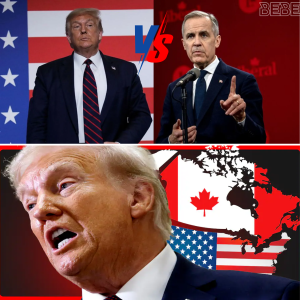
For decades, the Arctic existed beyond public politics, governed by quiet cooperation and invisible understandings among allies. That balance shattered when U.S. President Donald Trump openly suggested that Greenland could be taken by force if necessary. The moment transformed the Arctic from a peripheral region into a frontline geopolitical crisis, not between NATO and its rivals, but within the alliance itself. A NATO power had publicly questioned the sovereignty of another, forcing every Arctic nation to confront a scenario long considered unthinkable.

Canada reacted faster and more decisively than Washington anticipated. Rather than issuing cautious statements, Ottawa publicly aligned with Denmark, declaring that if a choice had to be made, Canada stood with Danish sovereignty over Greenland. The move stunned diplomatic circles and rewired Arctic assumptions overnight. Silence, Canada concluded, was no longer neutral—it was dangerous. Within days, Ottawa announced plans to establish a permanent diplomatic presence in Nuuk, Greenland’s capital, turning political support into physical, institutional commitment.
That single decision altered the strategic map. A Canadian consulate in Greenland is not symbolism; it means continuous diplomacy, intelligence coordination, and security cooperation on the ground. Greenland instantly shifted from a U.S.-assumed security space into a shared sovereignty zone backed by another G7 power. Denmark was no longer isolated, and Washington’s leverage narrowed as the issue became multilateral rather than bilateral. Across Europe, allies began reaffirming Greenland’s status openly, transforming quiet alignment into visible unity.
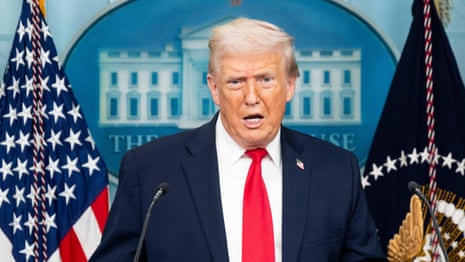
Trump’s security argument quickly unraveled under scrutiny. The United States already maintains full military access to Greenland through Pituffik Space Base, formerly Thule Air Base—one of the most critical early-warning and missile-detection installations in the Western world. There is no denial of access, no hostile blockade, and no legal barrier to U.S. defense operations. Analysts increasingly concluded that the push was less about security and more about control, leverage, and precedent.
Control, however, is precisely where resistance hardened. Greenland sits at the heart of Arctic airspace, sea lanes, and undersea routes linking North America and Europe, including the strategically vital GIUK gap. Instead of responding with force, NATO states pivoted toward surveillance and coordination—shared monitoring, maritime patrols, satellite tracking, and constant visibility. In a fully monitored Arctic, unilateral action becomes politically radioactive. As Greenland’s own leaders made clear, sovereignty and self-determination are not negotiable commodities.
By standing with Denmark and Greenland, Canada reshaped the crisis into a defining moment for modern power politics. The episode revealed the limits of pressure when it replaces protection and showed how coordination can defeat coercion without confrontation. Greenland became the line the alliance would not let Trump cross—not through threats or force, but through unified refusal. The Arctic is no longer invisible, and the lesson now echoes far beyond the ice: in today’s world, power without trust no longer works.