Canadian Airlines Redirect Capacity to Mexico as U.S. Routes Shrink in 2026 Amid Trade Tensions
MONTREAL — Canadian carriers are quietly reshaping North American aviation networks, slashing flights to the United States while pouring resources into Mexico for the 2026 season. The pivot, driven by softened demand for U.S. travel and stronger bookings southward, has removed thousands of transborder seats and flights, with ripple effects threatening U.S. tourism economies reliant on Canadian visitors.
Air Canada, the nation’s flag carrier, announced in February an 18% increase in seat capacity to Mexico for summer 2026 compared with the prior year. The expansion includes new year-round nonstop service from Montreal Trudeau International Airport to Guadalajara, starting June 2 with three weekly flights. Frequencies are rising on established routes: Montreal to Cancun jumps to 11 weekly from seven; Toronto to Monterrey to four from three; Vancouver to Mexico City to 11 from seven; and Vancouver to Puerto Vallarta doubles to two weekly. The moves, Air Canada said, support Canada’s trade diversification strategy and align with growing commercial ties between the two nations.
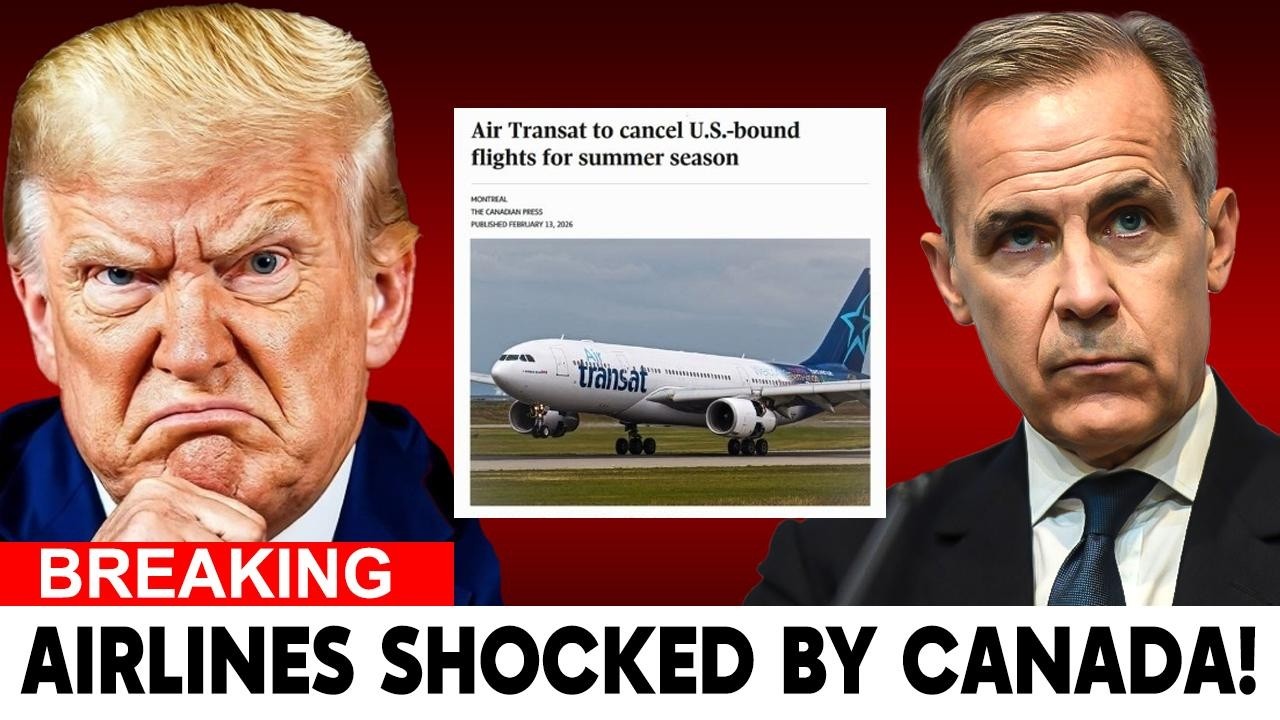
WestJet has followed suit aggressively. After cutting nearly 3,500 U.S.-bound flights and suspending 15-16 city pairs—including Vancouver to Boston and Toronto to Los Angeles—the airline added more than 4,500 flights to Mexico in the first half of 2026, a 59% surge. New routes from Calgary include Guadalajara, Riviera Nayarit, Cozumel, Puerto Escondido and Mazatlán. Air Transat has taken the boldest step, exiting the U.S. market entirely by June 2026, suspending its final Florida routes to Orlando and Fort Lauderdale to focus on international sun destinations and Europe.
Industry data from OAG and Cirium confirms the trend. Scheduled capacity between Canada and the United States fell 6% year-over-year in the first half of 2026, equating to over 6,000 fewer flights, with sharper 9% declines in the first quarter. In contrast, Canada-Mexico capacity surged approximately 46%, adding thousands of seats and flights. Porter Airlines contributed with new Embraer deployments to Mexican markets.
The shift stems from multiple pressures. Trade tensions under President Donald Trump, including tariffs on Canadian goods and threats of further economic measures, have eroded consumer confidence. A YouGov poll cited in reports found 62% of Canadians less inclined to visit the U.S., with 57% pointing to the political climate. Statistics Canada data shows January return trips from the U.S. down 24% year-over-year, including sharp drops in air and auto travel. Currency fluctuations have also made American vacations costlier for Canadian households, while Mexico offers competitive pricing, robust resort infrastructure and growing business appeal.
Canadian officials have reinforced the redirection. Dominic LeBlanc, minister responsible for Canada-U.S. trade and intergovernmental affairs, highlighted direct air links as key to expanding trade missions with Mexico. Candace Laing of the Canadian Chamber of Commerce emphasized diversification and new partnerships.

The consequences for U.S. destinations are mounting. Florida, Arizona and other snowbird havens have long depended on seasonal influxes from Quebec and Ontario, fueling hotels, restaurants, rental cars and local taxes. Reduced airlift signals weaker forward bookings, potentially pressuring occupancy rates, staffing and supplier contracts. Corporate travel faces fewer nonstop options, complicating business agreements and alliance partnerships.
Airlines operate on thin margins, reallocating aircraft where yields and load factors are strongest. The Mexico pivot appears to protect revenue stability, with frequency increases on proven routes reflecting deep demand rather than promotional experiments. Yet the transborder corridor remains one of the world’s busiest, anchored by major hubs and business flows.
Whether the rebalancing proves temporary or structural hinges on geopolitical developments, currency stability and consumer sentiment through 2026. For now, route maps tell the story: fewer flights north to south across the 49th parallel, more metal flowing toward Mexican beaches and cities. As Canadian travelers vote with their bookings, the economic stakes for U.S. border states grow clearer—and more urgent.