On a gray February morning at Keflavik Air Base, six Swedish fighter jets taxied into position against a backdrop of lava fields and North Atlantic wind. The rotation itself was routine — another three-month shift in NATO’s long-running Icelandic Air Policing mission. But the insignia on the fuselage marked a quiet milestone. For the first time since joining NATO, Sweden was not merely contributing aircraft to the alliance’s air defenses. It was leading the detachment.
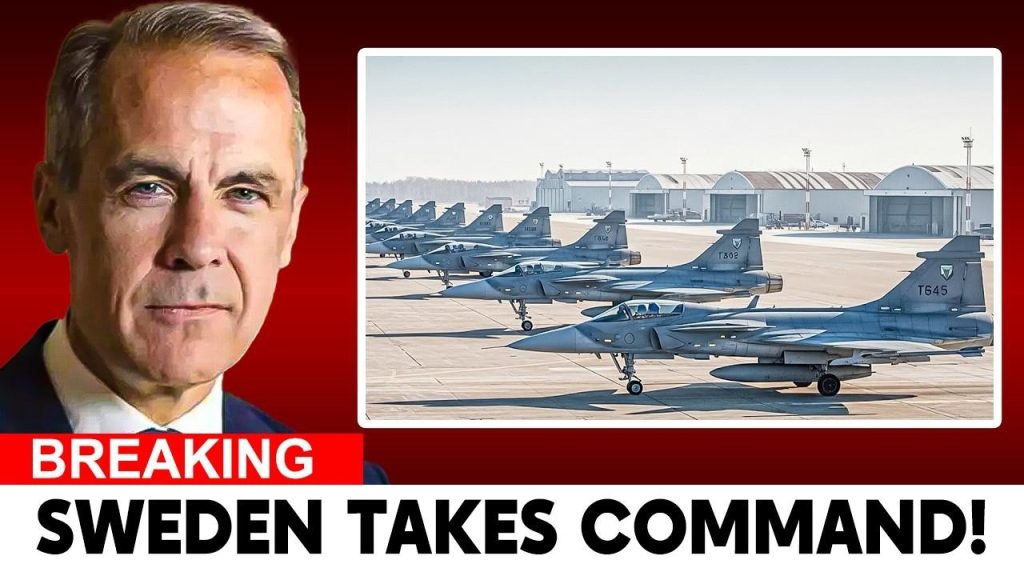
The aircraft are JAS 39 Gripens, produced by the Swedish aerospace firm Saab, and they now sit on quick reaction alert in a country that has no air force of its own. Iceland, a founding member of NATO, has relied on allied rotations to patrol its airspace since 2008, when Russian long-range aviation activity in the North Atlantic began to increase. The mission requires constant readiness: fighters must be able to launch within minutes to identify and shadow approaching aircraft that often fly without filed flight plans or radio contact.
Until recently, Belgium’s F-16s held the watch. The handover to Sweden was seamless, reflecting NATO’s standardized procedures for interoperability. But the significance lies less in the mechanics than in the symbolism. Sweden joined NATO in March 2024 after more than two centuries of military non-alignment. Less than two years later, its pilots are commanding a standing alliance mission — a signal of rapid integration and trust.
The strategic geography explains why the Iceland rotation matters. The island sits astride the Greenland-Iceland-United Kingdom gap, a corridor long monitored for Russian naval and air movement. During the Cold War, it was a choke point. Today, as Moscow continues bomber patrols and reconnaissance flights along NATO’s northern approaches, it remains a focal line of surveillance and deterrence. The aircraft that launch from Keflavik do not engage in combat, but their presence underscores a simple proposition: the airspace is watched.
For Sweden, the deployment marks both continuity and departure. The country long maintained a robust domestic defense industry and an air force designed for territorial resilience. The Gripen was built with dispersed operations in mind — capable of taking off from short runways or even stretches of highway, serviced by small teams, and sustained at lower operating costs than larger fifth-generation fighters. Those features once reflected a doctrine of self-reliance. Within NATO, they now contribute to burden sharing.

The choice of platform is itself instructive. NATO’s most advanced aircraft, including the F-35, draw attention for their stealth and sensor fusion. But daily air policing does not always demand the most technologically complex jet. It demands availability, endurance and cost efficiency. A capable fourth-generation fighter can identify and escort foreign aircraft effectively, preserving higher-end assets for other contingencies. In this sense, the Gripen’s presence highlights the alliance’s layered approach to capability.
Sweden’s rapid assumption of a leadership role also speaks to institutional preparedness. Interoperability is not automatic; it requires secure communications, standardized data links and training within NATO’s rules of engagement. That Swedish crews transitioned swiftly suggests that the groundwork was laid long before formal accession. In defense terms, membership is less a ceremonial act than a technical transformation. By early 2026, Sweden had moved from candidate to contributor.
The broader Nordic picture reinforces the shift. Finland joined NATO in 2023, and Norway and Denmark have long been members. With Sweden’s accession, the entire Nordic region — including Iceland — now operates within a single collective defense framework. Regional planning becomes more streamlined, Arctic coordination more cohesive. The northern flank, once a mosaic of alignments, now forms a contiguous strategic arc.
At Keflavik, however, the work remains methodical rather than dramatic. Pilots study radar tracks; maintenance crews inspect airframes between sorties; controllers scan the horizon for unidentified contacts. When Russian aircraft approach NATO airspace, Swedish fighters scramble, establish visual identification and escort them along established routes. The encounters are professional, governed by international law and alliance procedures.
Milestones in NATO history are often marked by summits and treaties. Yet the durability of the alliance is built in quieter moments — in rotations that pass without incident, in aircraft that launch on time, in command relationships forged through routine. Sweden’s leadership in Iceland is one such moment. It reflects not a shift in dominance but an expansion of shared responsibility. In the steady rhythm of takeoffs and landings over the North Atlantic, collective defense continues to function — now with a new flag at the front of the formation.