Mumbai — Prime Minister Mark Carney used a major address in India to outline what he described as a new phase in Canada’s economic strategy, emphasizing diversification, resilience, and long-term partnership building in response to rising global trade pressures.
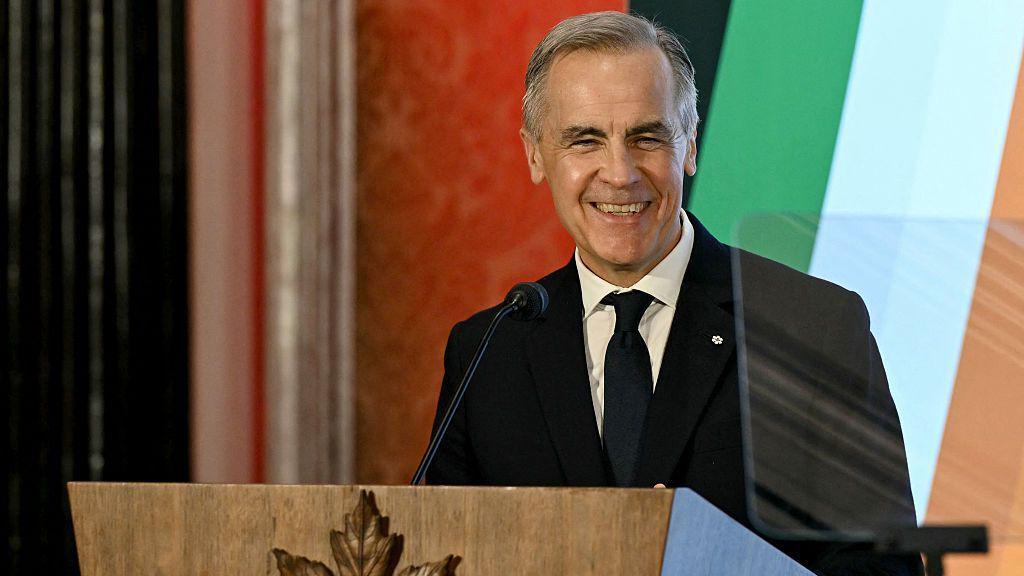
Speaking to business and policy leaders, Carney framed the past two decades as a period marked by financial instability, public health disruption, energy shocks, and geopolitical strain. These developments, he argued, have exposed vulnerabilities created by extreme global integration and overreliance on singular markets.
In measured remarks, Carney noted that some major economies have increasingly used tariffs, regulatory changes, and financial systems as instruments of leverage. While he did not directly reference U.S. President Donald Trump, his comments come amid renewed discussion in Washington about baseline tariffs on imported goods and conditions attached to market access.
“The rules-based system has been under strain,” Carney said, adding that when multilateral mechanisms weaken, countries must strengthen their own foundations.
The speech marks one of the clearest articulations yet of Canada’s emerging doctrine of strategic autonomy — an approach centered on reducing exposure to policy shifts in any one country while expanding economic partnerships elsewhere.
Responding to Trade Pressure
When asked about the possibility of higher U.S. tariffs, Carney acknowledged that Washington has signaled that access to its market may increasingly come with financial or regulatory expectations. He suggested that while some measures may be temporary, longer-term outcomes would likely be shaped through more conventional trade negotiations.
Rather than focusing on short-term adjustments, Carney emphasized structural competitiveness. He highlighted new federal measures including a broad-based 100 percent investment write-off for manufacturing assets, research and development, clean energy projects, and critical infrastructure. Additional tax credits across the clean electricity supply chain are intended to further reduce costs for investors.
According to the government, these measures bring Canada’s marginal effective tax rate for investment to 13 percent, below current U.S. levels and significantly lower than the G7 average. The administration has also committed to accelerating approvals for major projects, with a target timeline of two years in coordination with provincial authorities.
The objective, Carney indicated, is not to counter tariffs directly but to make Canada structurally more competitive and less vulnerable to external policy shifts.
Diversification and Indo-Pacific Engagement
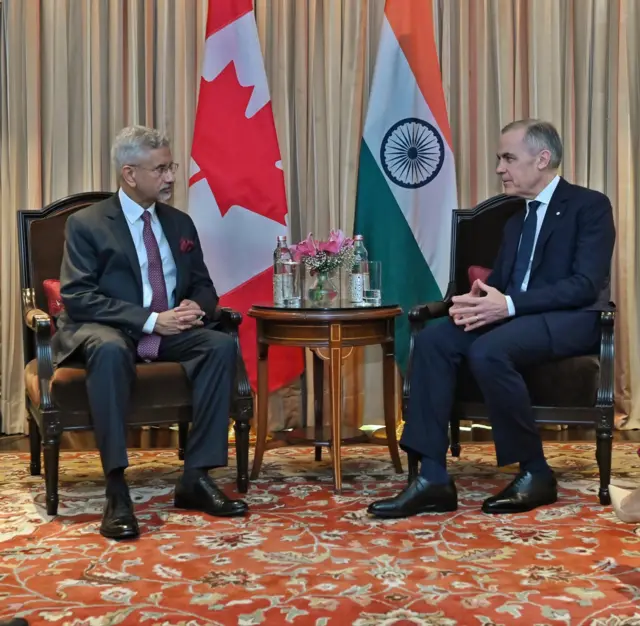
Carney’s remarks in Mumbai also underscore Canada’s deepening engagement with the Indo-Pacific region. India, one of the world’s fastest-growing major economies, represents a key pillar in Ottawa’s diversification strategy.
Both countries have expressed interest in expanding cooperation in energy, technology, and critical minerals. Canada’s resource base — including oil, liquefied natural gas, uranium, and rare earth elements — aligns with India’s growing infrastructure and energy demands.
Carney pointed to the importance of building “relationships you can rely on for the long term,” suggesting that sustained partnerships can provide stability in an environment characterized by market volatility and evolving trade policies.
India itself has been pursuing a broader trade diversification agenda, seeking to balance relationships across North America, Europe, and Asia. This convergence of interests provides a foundation for expanded economic ties.
Analysts note that the prime minister’s speech reflects a broader recalibration in Canada’s global positioning. Rather than responding incrementally to policy changes elsewhere, Ottawa appears to be pursuing a proactive strategy centered on supply chain resilience, domestic capacity, and diversified export markets.
Carney also referenced expanded defense investment and industrial strategy initiatives totaling hundreds of billions of dollars over time. These measures aim to strengthen domestic production capabilities while supporting high-value sectors such as clean technology and advanced manufacturing.
The approach signals a shift from reliance toward optionality — ensuring that Canada maintains multiple pathways for growth regardless of fluctuations in any single bilateral relationship.
A Changing Global Landscape
The global trading system remains in flux. Multilateral institutions such as the World Trade Organization face operational challenges, and major economies are reassessing supply chain dependencies exposed during recent global disruptions.

Within this context, Carney’s message emphasized confidence rather than confrontation. He described discussions with international partners as constructive and forward-looking, suggesting that many countries are seeking practical cooperation over reactive policy measures.
For Canada, the strategy appears designed to balance continued engagement with the United States — its largest trading partner — while steadily expanding relationships across Europe and Asia.
Long-Term Stakes
Carney’s India address may ultimately be remembered less for specific policy announcements and more for the doctrine it outlined. By prioritizing strategic autonomy, competitive investment conditions, and diversified partnerships, Canada is positioning itself for a period of sustained global uncertainty.
Whether this approach will significantly reduce exposure to trade pressure remains to be seen. Much will depend on the durability of new agreements, investor response to tax incentives, and the trajectory of global economic conditions.
What is clear is that Ottawa is signaling a long-term shift: resilience through diversification, strength through competitiveness, and stability through expanded partnerships. In an era defined by evolving trade dynamics, Canada appears intent on shaping its own trajectory rather than reacting to events beyond its borders.