🔥 JUST IN: CANADA QUIETLY REALIGNS $780B IN TRADE FLOWS — WASHINGTON CAUGHT OFF GUARD 🇨🇦📦🇺🇸
As President Donald J. Trump renewed threats to impose tariffs on Canadian fertilizer, the proposal initially appeared to be another episode in a familiar cycle of trade brinkmanship. Standing before reporters, Mr. Trump suggested that the United States could levy “very severe” tariffs on fertilizer imports from Canada in order to stimulate domestic production. He offered few details, but the signal was clear: a sector long integrated across the northern border could soon face new barriers.
What followed, however, was less a public confrontation than a gradual strategic shift.
Canada is the dominant global supplier of potash, a potassium-rich mineral essential to modern fertilizer production. More than 90 percent of the potash used by American farmers is imported from Canada, according to industry estimates. Because potash has no ready substitute in large-scale agriculture, even modest disruptions can reverberate through crop yields and food prices.
In recent years, Canadian potash had been exempted from certain broader trade duties imposed on other countries, reflecting Washington’s recognition that domestic production could not quickly replace imports. The renewed tariff rhetoric therefore unsettled agricultural markets on both sides of the border, particularly in the American Midwest, where predictable fertilizer pricing is central to planting decisions.
In Ottawa, the reaction was measured but consequential.
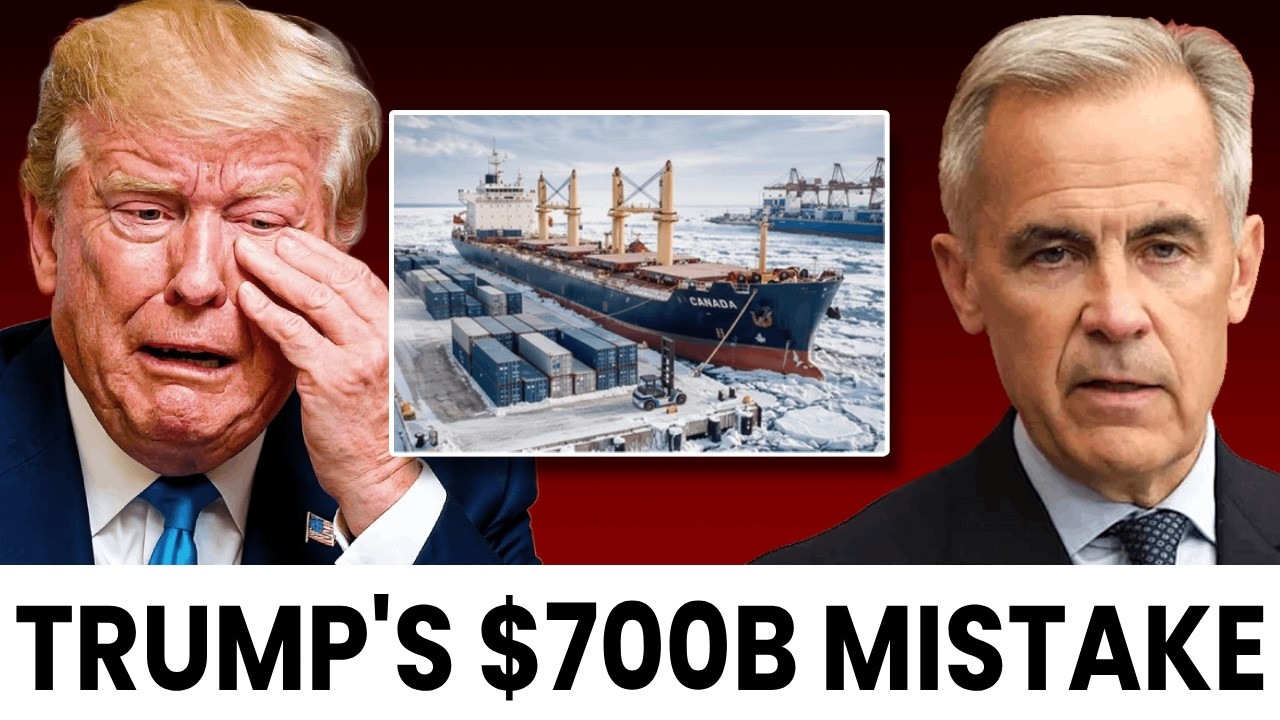
Rather than respond with retaliatory tariffs or public escalation, Canadian officials and producers accelerated plans that had lingered for decades: reducing reliance on American transportation corridors and expanding domestic export infrastructure. At the center of that effort is the Port of Churchill, a deep-water facility on Hudson Bay in northern Manitoba.
Built in the 1930s as a northern shipping gateway, Churchill once symbolized Canada’s ambition to diversify trade routes. Over time, however, underinvestment and shifting economic priorities diminished its role. Much of Canada’s potash — extracted primarily in Saskatchewan, which holds roughly 40 percent of global reserves — has traditionally traveled south by rail into the United States before reaching Gulf Coast ports and crossing the Atlantic.
That routing generated significant business for American railways, ports and logistics firms. It also reflected habit and scale: American infrastructure was familiar, efficient and deeply integrated into continental trade flows.
But familiarity can also create vulnerability.
In March 2025, Genesis Fertilizers announced a partnership with Arctic Gateway Group, the consortium that owns and operates the Port of Churchill. The plan calls for importing phosphate through Churchill, manufacturing finished fertilizer in Saskatchewan and exporting product back through the same Arctic corridor. Initial volumes are projected at 300,000 metric tons annually, with plans to scale toward one million tons.
The Canadian government has pledged approximately 180 million Canadian dollars over five years to modernize Churchill’s facilities, expand storage capacity and improve rail connections. Icebreaker support and logistical upgrades are intended to extend the port’s shipping season, long constrained by Arctic conditions.
For European buyers, the Hudson Bay route can shorten transit times by several days compared with shipments routed through Vancouver or the U.S. Gulf Coast. For Canadian producers, it offers something equally valuable: insulation from political risk in Washington.
The shift extends beyond fertilizer. Canada exports roughly 27 million metric tons of wheat annually, much of it traditionally routed through congested Pacific terminals or U.S. infrastructure. Even a partial reallocation of that volume northward would redirect billions of dollars in shipping and handling revenue over time.

When projected over a decade — accounting for potash, grain, fertilizer products and potentially critical minerals — Canadian analysts estimate that trade flows worth hundreds of billions of dollars could gradually bypass American transit networks. The figure often cited in political discourse, roughly $700 billion to $800 billion over ten years, reflects cumulative trade value rather than a single-year diversion. Still, the symbolism is potent.
“There’s no dramatic break,” said one Canadian trade economist. “It’s infrastructure. Once contracts are signed and supply chains reorient, they tend to stay that way.”
The broader geopolitical implications are subtle but significant. For decades, North American trade has functioned on an assumption of interdependence anchored by U.S. logistical dominance. If Canada demonstrates that alternative corridors are viable, that leverage diminishes.
At the same time, American farmers face their own constraints. Tariffs on Canadian potash would likely raise input costs in the short term, even as Washington promotes domestic production. Establishing new mines and processing facilities requires years of investment and environmental review, leaving limited near-term flexibility.
Trade tensions have also coincided with shifts in migration patterns and labor markets along the border, adding complexity to an already delicate relationship. While these issues are distinct from fertilizer policy, they form part of a broader recalibration in cross-border dynamics.
Mr. Trump has framed tariff threats as tools of economic sovereignty and bargaining leverage. Canadian officials, by contrast, increasingly describe diversification as a matter of resilience.
The Port of Churchill, once dismissed as peripheral, has thus become a symbol of strategic autonomy. Steel rails, grain elevators and ice-strengthened ships may lack the drama of diplomatic summits, but they shape economic geography in enduring ways.
Whether the redirection of trade will approach the upper estimates circulating in policy debates remains uncertain. Much depends on commodity prices, Arctic shipping conditions and the durability of political will in both capitals.
But one lesson is already evident: in an era of tariff threats and shifting alliances, infrastructure decisions can quietly redraw the map of influence. Power, as history often shows, does not always change hands through confrontation. Sometimes it moves along new routes, one shipment at a time.