JUST IN: CARNEY OPENS $6B BRIDGE TRUMP TRIED TO BLOCK — TRADE SHOCKWAVES BEGIN
A major North American trade flashpoint erupted after Donald Trump threatened to block the opening of the Gordie Howe International Bridge, a $4.7 billion Canada-funded project linking Windsor, Ontario and Detroit, Michigan. The bridge, set to open this year, is designed to double capacity at the busiest commercial land border crossing on the continent. Trump claimed the project used “virtually no U.S. materials” and demanded compensation, igniting immediate backlash from Canadian and U.S. officials alike.
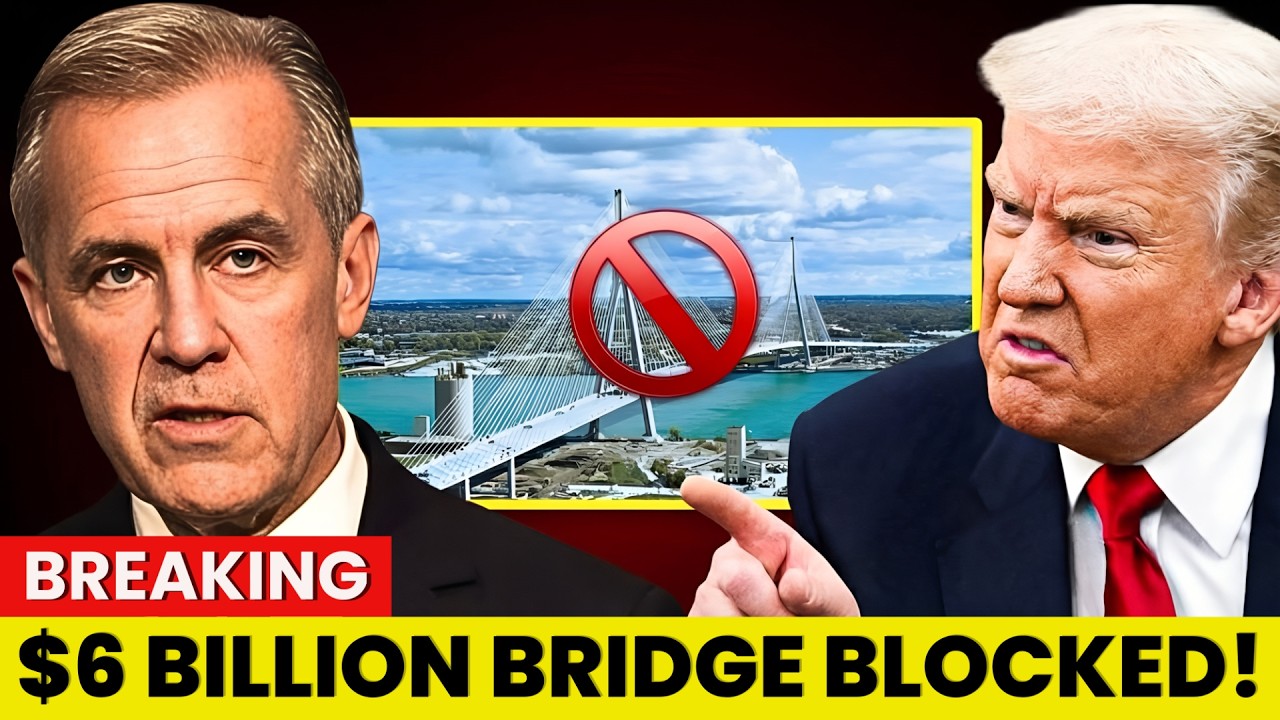
The threat stunned trade observers because the bridge has been under construction for seven years under a legally binding agreement signed in 2012 between Canada and the state of Michigan. Canada paid the full construction cost upfront, while Michigan receives 50 percent of net toll revenues once Canada recovers its investment. The project was previously praised by Trump himself in 2017, making the sudden reversal both politically charged and economically disruptive.
Ontario Premier Doug Ford publicly dismantled Trump’s claims, confirming that roughly 25 percent of the steel and 25 percent of the concrete were sourced from the United States, with the entire Michigan-side interchange built by American workers using American materials. The bridge is jointly owned by Canada and Michigan, a fact documented in public records for more than a decade. Industry groups warn that blocking or renegotiating the project could destabilize tightly integrated auto, manufacturing, food, and medical supply chains on both sides of the border.

Behind the political rhetoric lies a powerful commercial interest. The privately owned Ambassador Bridge currently dominates truck traffic between Windsor and Detroit, generating enormous revenue. Once the Gordie Howe Bridge opens, that near-monopoly ends. Reports that billionaire interests connected to the Ambassador Bridge met with U.S. officials just hours before Trump’s post have intensified scrutiny, though no formal response has been issued by those parties.
While the controversy escalated in Washington, Mark Carney responded with calculated restraint. Speaking to reporters, Carney calmly laid out the facts: Canada funded the bridge, ownership is shared with Michigan, and both Canadian and U.S. workers and materials were used throughout construction. He emphasized the project as a symbol of bilateral cooperation, not confrontation, signaling that Canada would not renegotiate settled agreements under political pressure.
The bridge dispute now sits within a wider trade standoff, as broader Canada–U.S. negotiations remain frozen and new tariff threats loom. Yet the core reality remains unchanged: the bridge is built, connected, and essential to North American commerce. As officials on both sides acknowledge, the real question is no longer whether the bridge will open—but what this confrontation reveals about the future tone of Canada–U.S. economic relations when it does.