Canada’s Trade Gamble Signals a Subtle Shift in North American Power
Last night’s State of the Union address was meant to project steadiness. Instead, it revealed strain.
Not from the president’s prepared remarks, but from the sharper edge of America’s trade posture. The United States trade representative made clear that any new agreement with Canada would require Ottawa to accept higher tariffs while further opening its markets to American goods. In effect, the message was blunt: accept the terms or forgo the deal.
For decades, that formula might have worked.
The United States remains Canada’s largest trading partner by a wide margin. Nearly three-quarters of Canadian exports flow south. Geography alone has long reinforced economic gravity. When Washington applies pressure, the assumption in many corners of American policymaking is that Ottawa will ultimately accommodate.
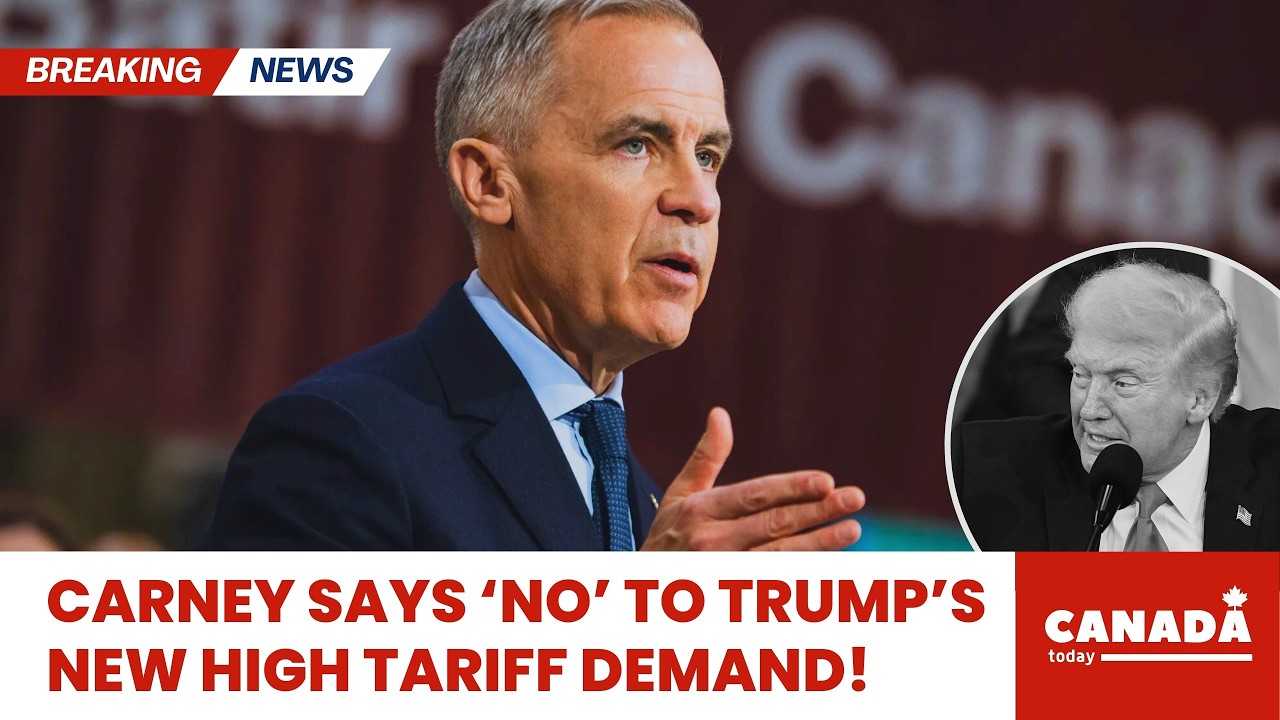
But this time, the response from Prime Minister Mark Carney’s government has been notably restrained — and notably different.
Rather than publicly sparring with President Trump or denouncing the tariff threats as coercive, Canadian officials have framed the moment as an inflection point. The country’s trade minister has emphasized diversification targets: an additional $300 billion in non-U.S. exports over the coming years. Recent trade missions have focused on Asia, the Gulf states and Europe. Agreements in agriculture, energy infrastructure and defense procurement have been highlighted not as symbolic wins, but as structural rebalancing.
In other words, Ottawa appears to be shifting from reaction to repositioning.
Mr. Trump’s negotiating style has long relied on leverage asymmetry. Apply tariffs. Create urgency. Force concessions. The method assumes that the counterparty needs access to the American market more than the United States needs access to theirs. In many cases, that assumption has proved correct. Smaller economies often move quickly to secure exemptions or avoid escalation.
But leverage depends on dependency. And dependency can change.
Canada cannot sever its economic ties with the United States without enormous cost. Nor is it attempting to do so. What it is attempting, however, is to reduce vulnerability. That distinction matters.
India’s expanding consumer base offers long-term demand growth. Japan provides high-technology industrial integration. Australia represents a partner in both resources and Indo-Pacific security alignment. The European Union, already bound to Canada through a comprehensive trade agreement, offers further room for defense and procurement collaboration.
Each relationship on its own cannot replace the American market. Collectively, they can dilute its dominance.
This is not a dramatic rupture. There have been no retaliatory tariff barrages announced in Ottawa. No nationalist rhetoric aimed at inflaming domestic sentiment. Instead, the shift has been administrative, technocratic and incremental — precisely the kind that tends to endure.
From Washington’s perspective, the harder line on tariffs reflects domestic political commitments. Protective measures resonate with segments of the American electorate who view globalization as having hollowed out industrial communities. Framing higher tariffs as necessary to “bring jobs home” fits squarely within that narrative.
Yet if Canada successfully expands alternative markets, the pressure mechanism weakens. Tariffs lose potency when the target can absorb or redirect the shock. Markets notice such resilience. So do other governments.
There is also a broader geopolitical undercurrent. In recent years, many middle powers have recalibrated their foreign and economic policies to hedge against volatility in Washington. Europe has spoken more openly about “strategic autonomy.” Asian democracies have strengthened regional trade architecture. Canada’s move may be part of that same pattern — less defiance than insurance.
The risk for Ottawa is real. Diversification takes time. Infrastructure must adjust. Supply chains must be rewired. Political goodwill in new markets can be fragile. And the American market, despite its unpredictability, remains uniquely deep and proximate.
The risk for Washington is subtler. If longstanding partners conclude that reliance on the United States carries excessive uncertainty, they will build alternatives not out of hostility, but prudence. Over time, that could erode the very leverage American negotiators seek to preserve.

Trade disputes are often framed as zero-sum contests of will. In reality, they are tests of endurance and adaptability. Canada’s strategy suggests a belief that long-term flexibility outweighs short-term concessions. The United States’ strategy suggests confidence that its market power remains decisive.
Both assumptions cannot simultaneously hold at full strength.
The immediate outcome of the tariff standoff remains uncertain. Talks will continue. Statements will harden and soften in cycles. But beneath the headlines lies a quieter transformation: a middle power seeking structural independence in a world where economic gravity is no longer singular.
If Canada succeeds, North America’s trade relationship will not collapse. It will evolve — from dependence toward interdependence recalibrated on more equal footing.
And that evolution, more than any single tariff rate, may define the next decade of continental economics.